
 Available in US
Content
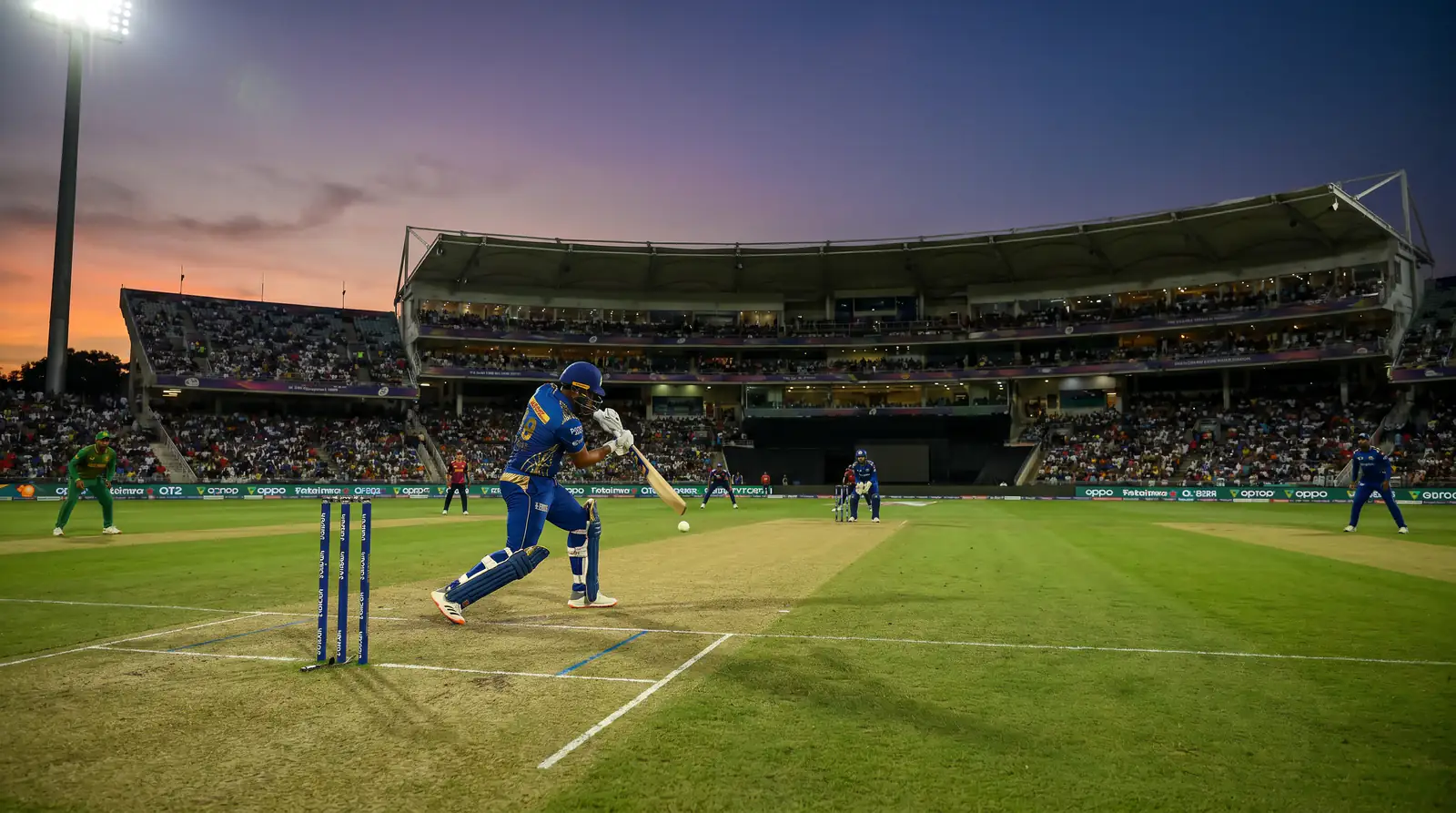
The one-day international is the format that taught me to trust the chase. Fifty overs a side is long enough for the better team to recover from a stumble, yet short enough that a single inspired innings still decides things, and that balance between quality and chaos makes the ODI the most readable of the limited-overs formats. It rewards the bettor who understands tempo, par scores and the strange psychology of a run chase, and punishes the one who treats it like a longer T20.
ODI betting covers the markets built around the 50-over international game: the two-way match result, the phase and powerplay markets that carve the innings into segments, individual performance bets, and the totals markets that hinge on reading par for the conditions. The defining feature is that an ODI almost always produces a winner, which makes the result market cleaner than a Test’s three-way puzzle, and the genuine skill lies in pricing the tempo of an innings rather than wrestling with the draw.
The Two-Way Result Market and Its Clean Logic
The relief of betting an ODI result after a Test is hard to overstate. There’s no draw lurking to swallow a dominant performance; the side that scores more wins, and your bet lives or dies on the scoreboard rather than on the clock or the weather. That two-way clarity is the format’s gift to the result-market bettor, and it changes how you can approach a winner bet entirely.

Because the result is two-way, the implied probabilities of the two sides sit close to a fair 100 per cent plus a thin margin, and the headline ODI markets are among the sharpest in cricket, kept honest by huge volumes of money on the marquee internationals. That sharpness means the value rarely sits in simply backing the better team at a short price; it sits in reading conditions and matchups the broad market underweights. A side built for the surface, a chase that suits a particular team’s temperament, a venue where one team’s bowling attack is uniquely effective: these are the edges, not the bald question of which team is stronger on paper.

It’s a format with enormous and growing money behind it. The global cricket betting market alone was valued at around 76.5 billion US dollars in 2023 and is forecast to climb past 151 billion by 2032, and the showpiece ODI events, World Cups especially, draw a vast slice of that turnover. The cricket segment is forecast to be among the fastest-growing in the whole betting market, driven by the short formats, and the 50-over game rides that wave. That depth is double-edged: it sharpens the headline prices but it also deepens the phase and performance markets, giving the studious bettor more places to find value than the result market alone ever offers.
Powerplay and Phase Betting Across the Innings
The innovation that transformed ODI betting was the carving of the innings into phases, and it’s where I do much of my work. Rather than betting the whole 50 overs, you can bet the powerplay runs, a specified block of overs, the wickets in a phase, isolating the passages of play where conditions and tactics produce the most predictable patterns. It rewards a granular feel for how an ODI innings actually unfolds.
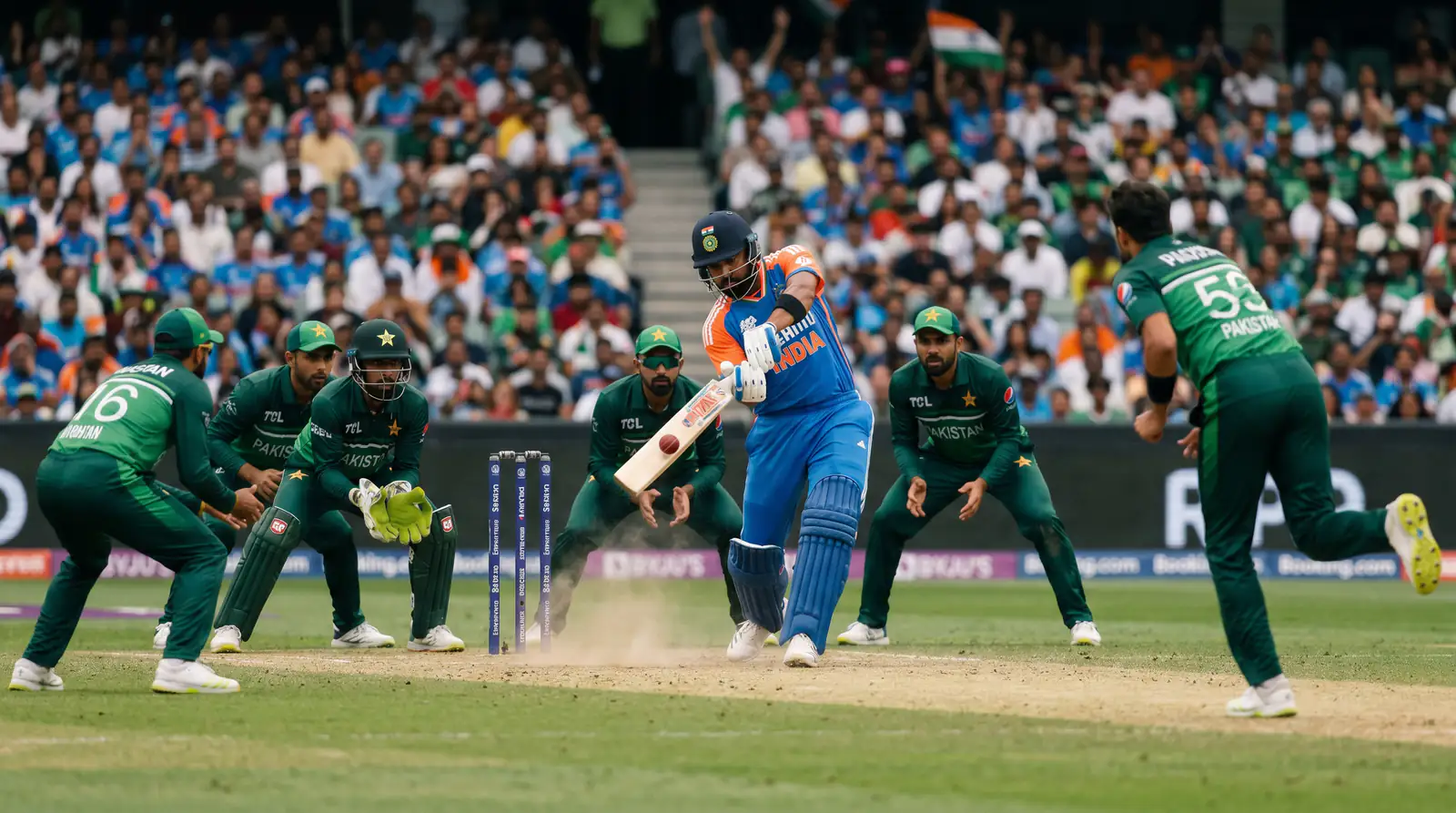
The 50-over innings has a well-understood shape: an aggressive powerplay with field restrictions, a consolidation phase through the middle overs, and an explosive finish at the death. Each phase has its own scoring tendencies, its own matchups, its own risk profile, and the phase markets let you bet on the part of the innings you read best. I find the powerplay markets particularly tractable, because the field restrictions and the new ball create conditions that are consistent enough to price with confidence, and a team’s powerplay intent, whether they’ll attack or preserve wickets, is often readable from their squad and their match situation before a ball is bowled.
The phase markets also segment the integrity risk in a way worth understanding, because isolated passages of play are easier to manipulate than whole results. The discipline of picking your spots rather than betting every phase the bookmaker offers matters here, but the deeper contrast is with the format at the other end of the spectrum: where the ODI hands you a clean two-way result, the five-day game adds the draw and a tactical richness that reshapes every bet, which I’ve drawn out fully in my guide to Test match betting. Treat the phase markets as a precision tool for the segments you genuinely read, not as an invitation to bet the constant churn.
Chasing, Par Scores and the Psychology of the Second Innings
The single most important concept in ODI betting is par, the score that represents a fair, competitive total on a given surface, and reading it correctly is what separates the sharp ODI bettor from the crowd. Get your sense of par right and you can judge, at the innings break, whether the chasing side is favourite or in trouble, often before the market has fully adjusted.
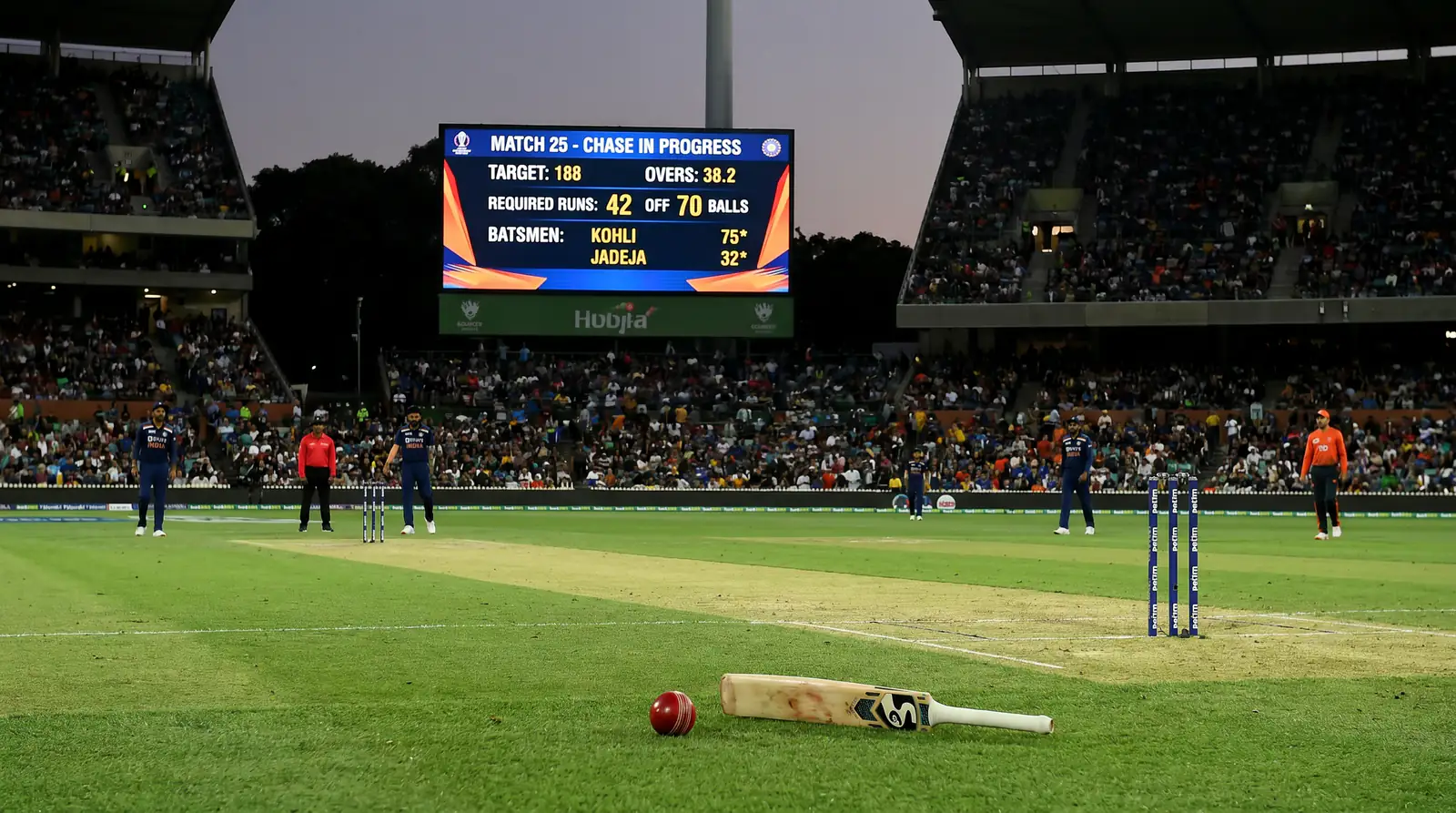
Par isn’t a fixed number; it shifts with the pitch, the boundaries, the weather and the quality of the attacks, and the chasing side’s price hinges entirely on whether the first-innings total is above or below it. A team that posts a total comfortably above par for the conditions has the game in hand, and the chasing side’s price should drift accordingly; a total below par flips the advantage to the chasers, who now know exactly what they need and can pace the chase. The bettor who has formed an independent view of par before the chase begins can pounce when the market’s price lags the true difficulty of the run chase.
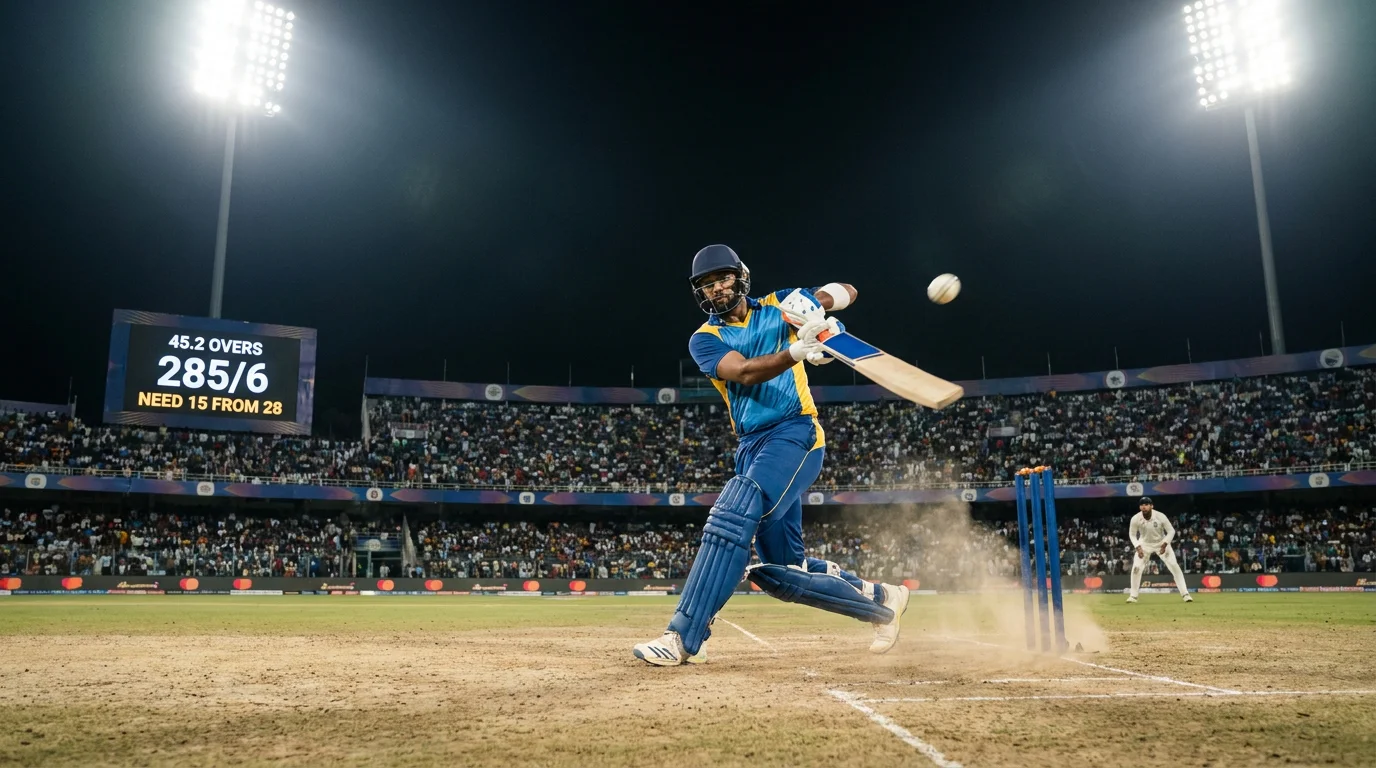
There’s a psychological layer that makes the second innings genuinely different from the first, and it’s where real value hides. A chasing side bats with a target, which both clarifies and pressures: clarity, because they know the rate they need and can plan around it; pressure, because the asking rate climbs relentlessly if they fall behind, and wickets in a chase carry a weight they don’t in a first innings. Some teams chase superbly, pacing the innings with cool heads; others crumble under the mounting required rate. Knowing which is which, and pricing the second innings accordingly, is a durable edge, because the broad market tends to treat all chases alike when the temperament of the chasing side is often the decisive factor. The ODI is, at heart, a format about reading tempo and pressure, and the bettor who masters par and the psychology of the chase reads it better than the crowd ever will.
Why does the team batting second often shorten in price?
Because once the first innings is complete, the target is known and the chasing side can pace its innings with certainty, which removes a layer of uncertainty the team batting first never had. If the first-innings total is below par for the conditions, the chasers gain a clear advantage and their price shortens to reflect it.
What is a par-score market?
It’s a market built around the score considered fair and competitive for the conditions on a given pitch. Par isn’t fixed; it shifts with the surface, boundaries, weather and the quality of the attacks. Reading par correctly lets you judge at the innings break whether the chasing side is genuinely favourite, often before the market fully adjusts.
