
 Available in US
Content
- Why Every Price Is Really a Percentage in Disguise
- Decimal Odds, the Format I'd Hand a Beginner Every Time
- Fractional Odds, the British Classic You Still Need to Know
- Turning Odds Into Returns You Can Actually Trust
- Reading a Cricket Market Board at a Glance
- What Makes a Cricket Price Move and Why You Should Care
For my first two years betting on cricket, I read odds the way most people read a foreign-language menu: I recognised a few words, guessed at the rest, and hoped I’d ordered the right thing. I knew that 2.00 meant something close to a coin flip and that long numbers meant an underdog, but ask me what 11/8 actually paid and I’d have shrugged. That ignorance cost me, not in dramatic losses but in a steady drip of bad value I never noticed I was leaving behind. Learning how to read cricket betting odds properly was the single upgrade that turned betting from a guessing game into something resembling a craft.
Here’s the thing that took me far too long to grasp. An odds figure is not a payout instruction. It’s a statement of probability wearing a numerical disguise. Every price a bookmaker shows is fundamentally a claim about how likely an outcome is, dressed up in a format that also happens to tell you what you’d win. Once you see odds as compressed probability, everything else falls into place: why prices move, why two formats describe the same bet, why some prices represent value and others are a quiet rip-off. This guide is about developing that lens. It builds on the basic mechanics of getting a bet down, but where that’s about clicking and confirming, this is about understanding what the number you clicked actually meant.
The reason this matters so much in cricket specifically is the sheer range of prices you’ll encounter. A heavily favoured team in a Test might be 1.30. A wildcard top-batsman pick might be 15.00. Reading those numbers fluently, knowing instantly that one implies a strong probability and the other a long shot, is what lets you judge whether a bet is worth taking before you’ve even thought about the cricket. The sport’s anti-corruption people have watched this world balloon in complexity, observing that advancing technology and rising popularity have driven a substantial increase in both the amount and the sophistication of betting on cricket matches, and prices are the language all that activity speaks. The global market gives a sense of scale here: sports betting worldwide was valued at over 112 billion dollars in 2025 with online betting making up roughly three quarters of it, and every penny of that turnover flows through prices like these. Learn to read them and you’re no longer a tourist. You’re reading the language the whole industry speaks.
Why Every Price Is Really a Percentage in Disguise
Ask a roomful of new bettors what odds of 4.00 mean and most will tell you “you win four times your money”. They’re not wrong about the payout, but they’re missing the more important half. What 4.00 really says is that the outcome has roughly a one-in-four chance of happening. The payout and the probability are two sides of the same coin, and the probability side is the one that makes you money.
The logic is mechanical once you see it. Take the decimal odds and divide one hundred by them. Odds of 4.00 give you 100 divided by 4, which is 25%. Odds of 2.00 give 50%, a coin flip. Odds of 1.25 give 80%, a strong favourite. That single sum, the implied probability, is the most useful calculation in betting, because it translates a price into a chance you can actually reason about. When a bookmaker offers a team at 4.00, they’re telling you they think the team wins about a quarter of the time. Your entire job as a bettor is to decide whether you agree.

This reframing changes how you look at a board. Instead of seeing a list of payouts, you start seeing a list of probabilities, and you start asking whether they’re right. If you genuinely believe a team priced at 4.00 has a better than one-in-four chance, that’s a bet worth examining. If you think they’re being generously priced and really win less often than the number implies, you pass. The price isn’t telling you what to do. It’s telling you what the market believes, and your edge lives entirely in the gap between that belief and reality. I’ll only touch the surface of turning prices into percentages here, because it deserves a full treatment of its own, and I’ve written exactly that in my breakdown of how implied probability works in cricket.
Decimal Odds, the Format I’d Hand a Beginner Every Time
If I were teaching someone to read odds from scratch tomorrow, I’d start with decimals and possibly never leave them. There’s a reason the betting exchanges and most modern apps default to this format, and once you’ve felt how clean the arithmetic is, fractional odds start to look like a charming antique.
Decimal odds express your total return per unit staked, stake included. Odds of 3.50 mean that for every pound you stake, you get three pounds fifty back if you win, and that figure already contains your original pound. So the profit is 2.50 and the returns are 3.50. To work out any bet, you multiply your stake by the decimal price and that’s your total return, full stop. Stake twenty pounds at 3.50 and you get seventy back, of which fifty is profit. No fractions to wrestle, no mental gymnastics, just multiplication.
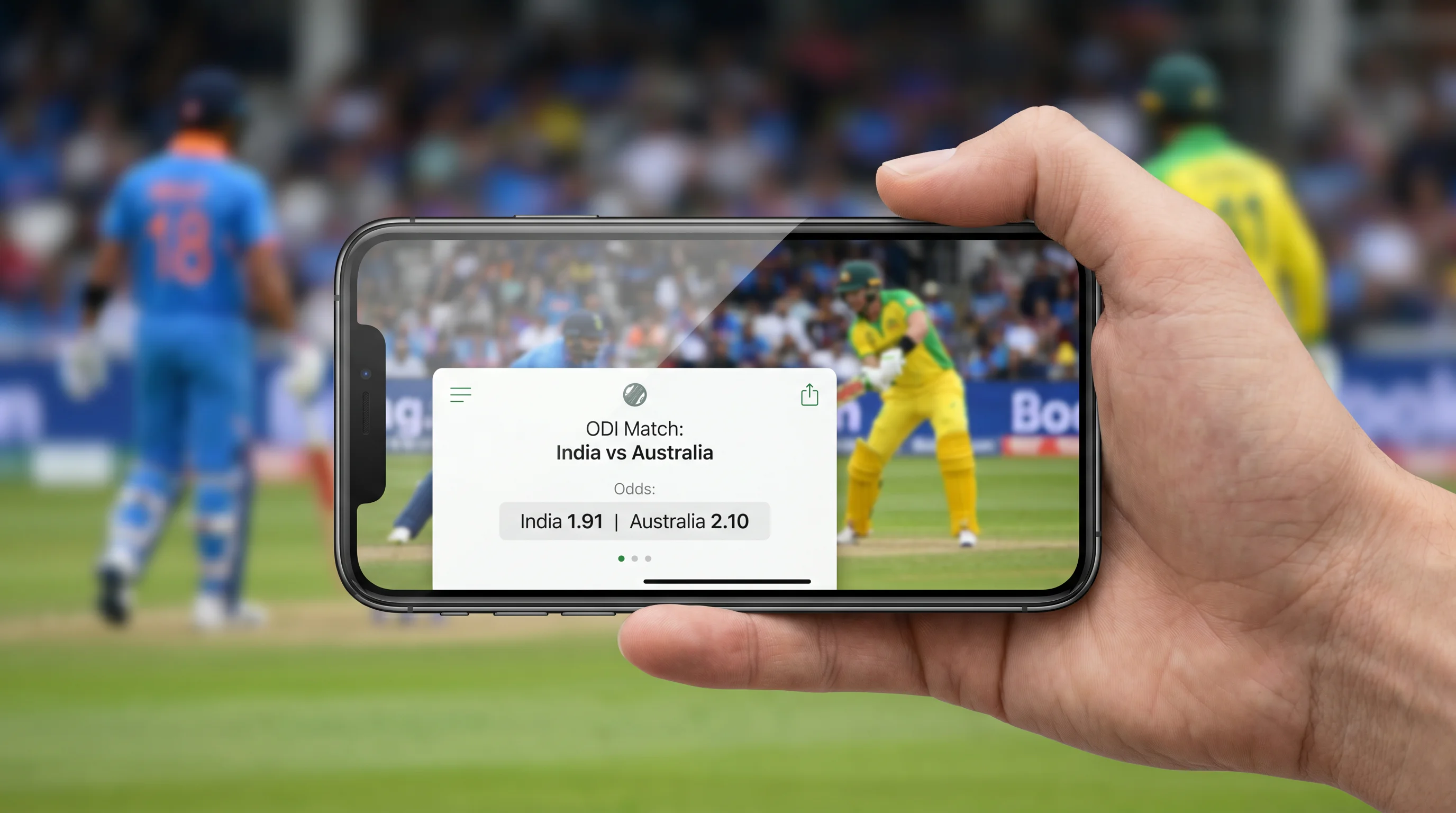
This is why decimals shine in cricket, where prices come in awkward shapes. A team might be 1.91, or 2.37, or 6.50. Multiply your stake by any of those and you instantly know your return. Try expressing 1.91 as a fraction and you’ll see the problem, it becomes something ungainly like 91/100, which tells you nothing at a glance. Decimal odds also make comparison effortless: a higher number is always a bigger payout and a longer shot, a lower number is always shorter and more likely. There’s no ambiguity, no need to compare 4/5 against 5/6 and squint to work out which is better.
The one mental adjustment is remembering that the stake is baked in. Newcomers sometimes see 2.00 and expect to double their profit, when in fact 2.00 returns exactly double your stake, meaning your profit equals your stake. An “evens” bet, the true fifty-fifty, is 2.00 in decimal. Anything below 2.00 is odds-on, a favourite where you risk more than you stand to win in profit. Anything above is odds-against, where the profit exceeds the stake. Hold those three reference points, 2.00 is evens, below is favourite, above is underdog, and you can place a decimal price on the probability spectrum instantly.
Fractional Odds, the British Classic You Still Need to Know
Walk into any betting shop in Britain, or watch the odds flash up during a Test on the radio rundown, and you’ll meet fractional odds whether you like them or not. They’re the traditional UK format, and while I lean decimal for calculation, you cannot call yourself fluent in cricket betting without reading fractions on sight. So let’s demystify them.
A fractional price like 5/1 reads as “five to one” and tells you your profit relative to your stake. For every one unit you stake, you win five in profit if the bet lands, plus your stake back. So 5/1 on a ten-pound bet returns sixty pounds: fifty profit plus your tenner. The number on the left is what you win, the number on the right is what you stake to win it. This is the crucial difference from decimals, fractions show profit only, not total return, so you always add your stake back on top.
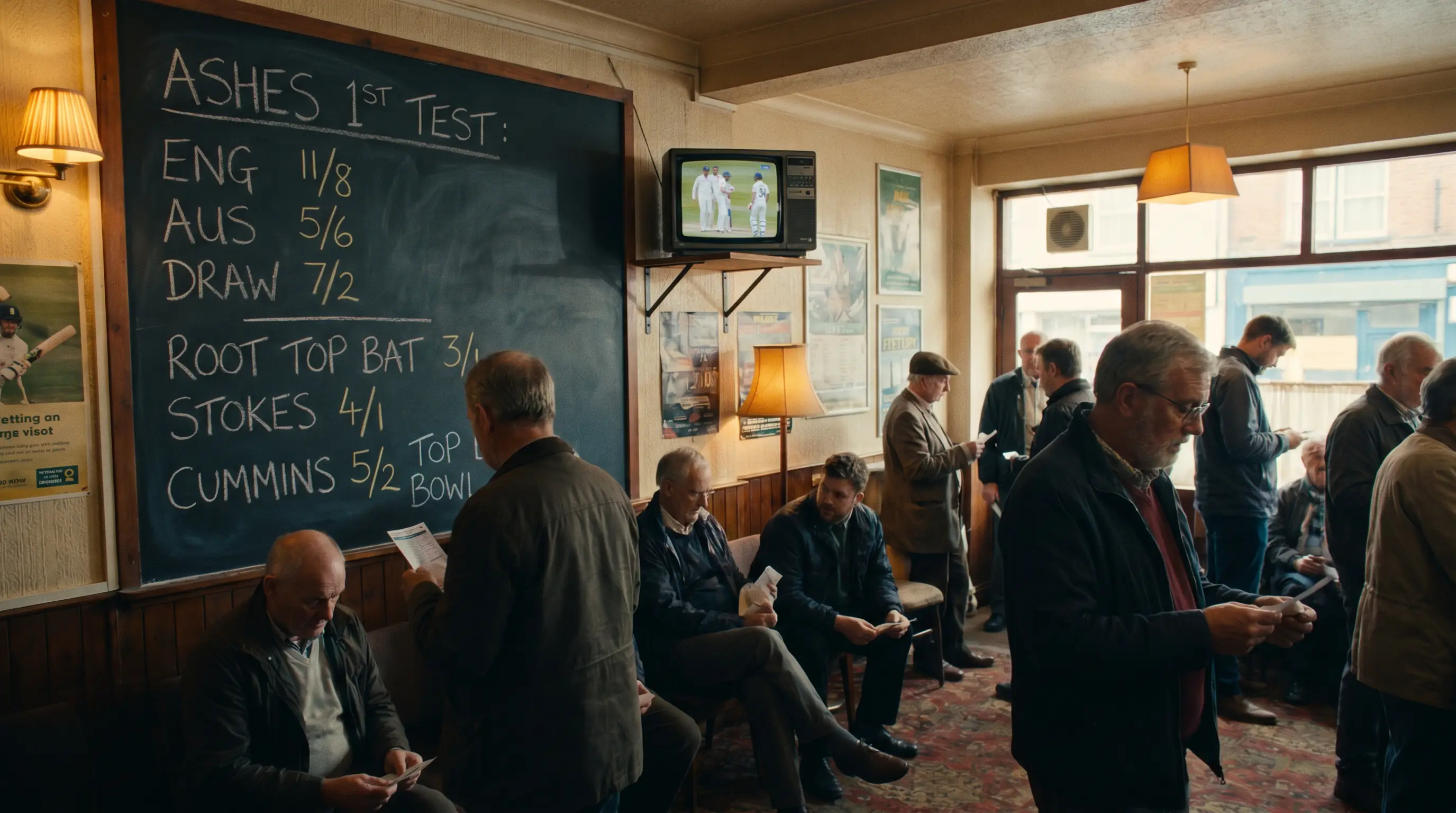
It gets fiddly when the fractions aren’t whole. Odds of 11/8 mean you win eleven for every eight staked. To handle these, I divide the left by the right and add one to convert to decimal thinking: 11 divided by 8 is 1.375, plus one is 2.375, so 11/8 is fractionally better than 2.37 in decimal. That little conversion, divide and add one, is the bridge between the two formats and worth committing to muscle memory. Odds-on fractions flip the relationship: 4/6 means you stake six to win four, a favourite, equivalent to 1.67 in decimal. The smaller the left number relative to the right, the stronger the favourite.
The term that confuses everyone at first is “evens”, written as 1/1 or simply “Evs”. It means you win exactly what you stake, the true fifty-fifty, identical to 2.00 in decimal. From there, the language of the betting world unfolds: an “odds-on favourite” is anything shorter than evens, an “outsider” is a long fractional price like 12/1 or 20/1. Cricket throws up plenty of both, and being able to glance at 6/4 and 9/2 and immediately know which is the bigger underdog, without reaching for a calculator, is the fluency you’re building. It comes with repetition, the same way you stopped sounding out words as a child and just read them.
Turning Odds Into Returns You Can Actually Trust
The most expensive misunderstanding in betting isn’t picking the wrong team. It’s not knowing what your bet pays before you place it. I’ve watched people stake money with a genuinely wrong idea of what they stood to win, and the disappointment when reality landed was entirely self-inflicted. Calculating returns correctly is not optional. It’s the floor.
For decimals, as we covered, you multiply stake by odds and that’s your total return. Stake fifteen pounds at 2.40 and you get thirty-six back, of which twenty-one is profit. The calculation is so clean there’s almost nothing to say, which is precisely its virtue. For fractions, you take the fraction, multiply your stake by the left number, divide by the right, and that’s your profit, to which you add your stake for the total return. A twenty-pound bet at 7/2 gives profit of twenty times seven divided by two, which is seventy pounds, plus your twenty back, for ninety total. Get into the habit of always landing on both numbers, profit and total return, because confusing them is how disappointment happens.
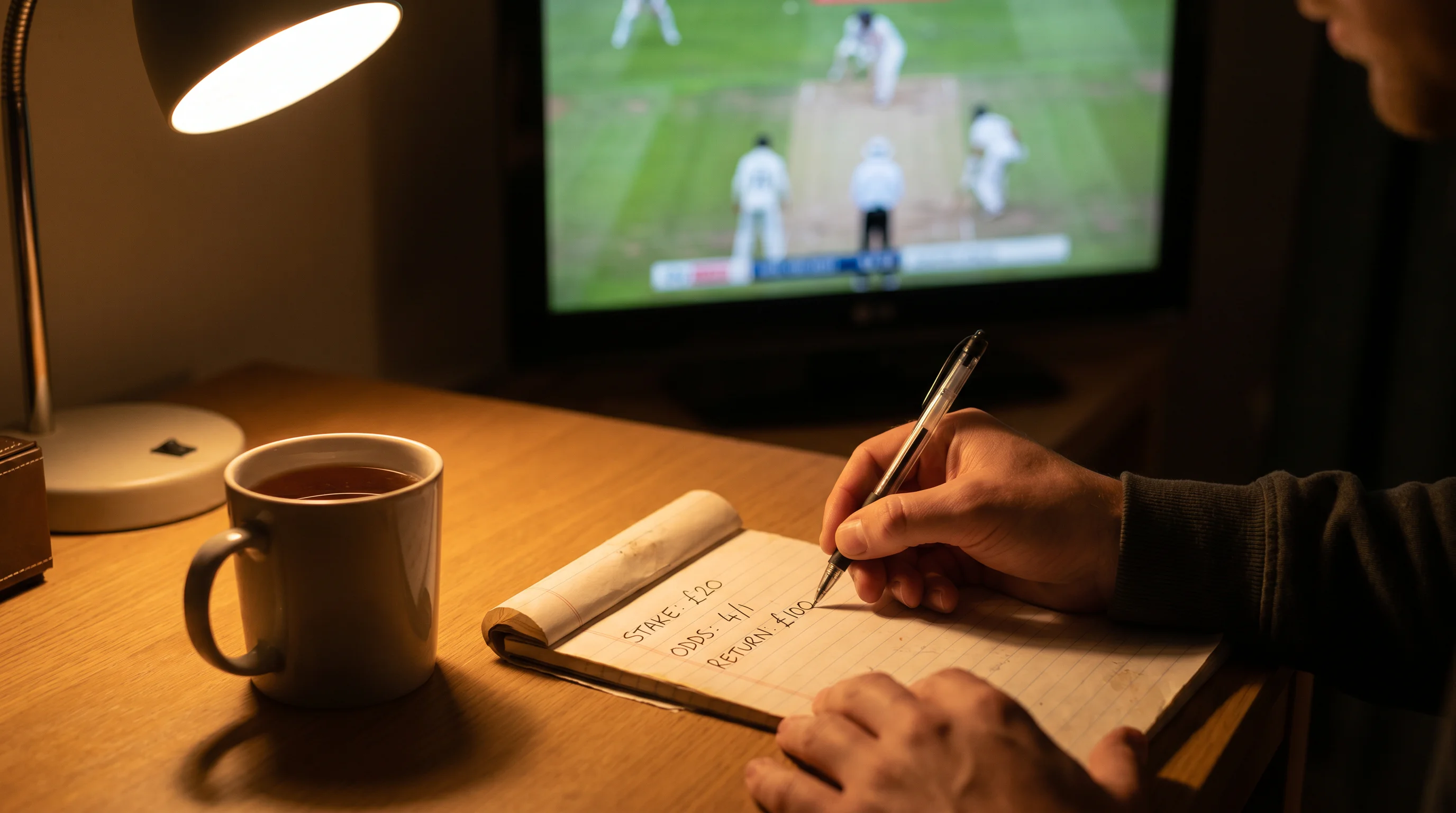
I want to slow down on one worked example, because it’s the kind of thing that clicks when you see it laid out fully. Say you fancy a side in a one-day international at 9/4. You stake twelve pounds. Profit is twelve times nine divided by four, which is twenty-seven pounds. Add your twelve-pound stake back and the total return is thirty-nine pounds. Now convert 9/4 to decimal to sanity-check yourself: nine divided by four is 2.25, plus one is 3.25. Twelve pounds times 3.25 is thirty-nine pounds, the identical total return. The two formats describe the very same bet and arrive at the very same number by different routes, which is exactly why neither is more correct than the other. Whenever your fractional and decimal workings disagree, you’ve made an arithmetic slip, not discovered a discrepancy.
This is also where the bookmaker’s hidden cut becomes visible, and it’s the part most guides skip. If you add up the implied probabilities of every outcome in a market, they total more than one hundred percent. That excess is the bookmaker’s margin, the overround, built into the prices so the operator profits regardless of result. In a two-way cricket market you might see implied probabilities adding to 104 or 105 percent, and that extra few percent is money skimmed off every bet. It’s the reason long-term betting is hard, and it’s why I obsess over getting the best available price. The mechanics of that margin run deeper than I can fairly cover here, but knowing it exists changes how you read every board, because you realise the prices are never a fair reflection of true probability, they’re always tilted in the house’s favour.
Once you can convert any price to its return and you understand that the prices are shaded, you’ve crossed the threshold from passive punter to someone reading the market actively. You start noticing when one operator’s price on the same outcome is meaningfully longer than another’s. You start sensing when a number looks too short for the cricket you’re watching. That instinct, the ability to look at a price and feel whether it’s fair, is the whole point of learning to read odds. It doesn’t come from a single calculation. It comes from doing the maths so many times that you stop needing to.
Reading a Cricket Market Board at a Glance
The first time I opened a full cricket page during a busy day of fixtures, I nearly closed it again. Dozens of markets, hundreds of prices, numbers in two formats stacked on top of each other. It looked like a stock exchange having a breakdown. The trick to reading a market board isn’t reading everything, it’s knowing what to ignore and what to focus on.
A cricket board is organised in layers. At the top sit the headline markets, match winner first, then totals and major player markets. Below them sprawl the secondary and novelty markets, top batsman, method of dismissal, session runs, dozens of micro-bets. For reading purposes, anchor yourself to the match-winner prices, because those are the cleanest expression of how the market rates the two sides. If one team is 1.40 and the other 3.00, the implied probabilities tell you the board sees a clear favourite at roughly 71% against a 33% outsider, and yes, those add to over 100, that’s the overround winking at you.
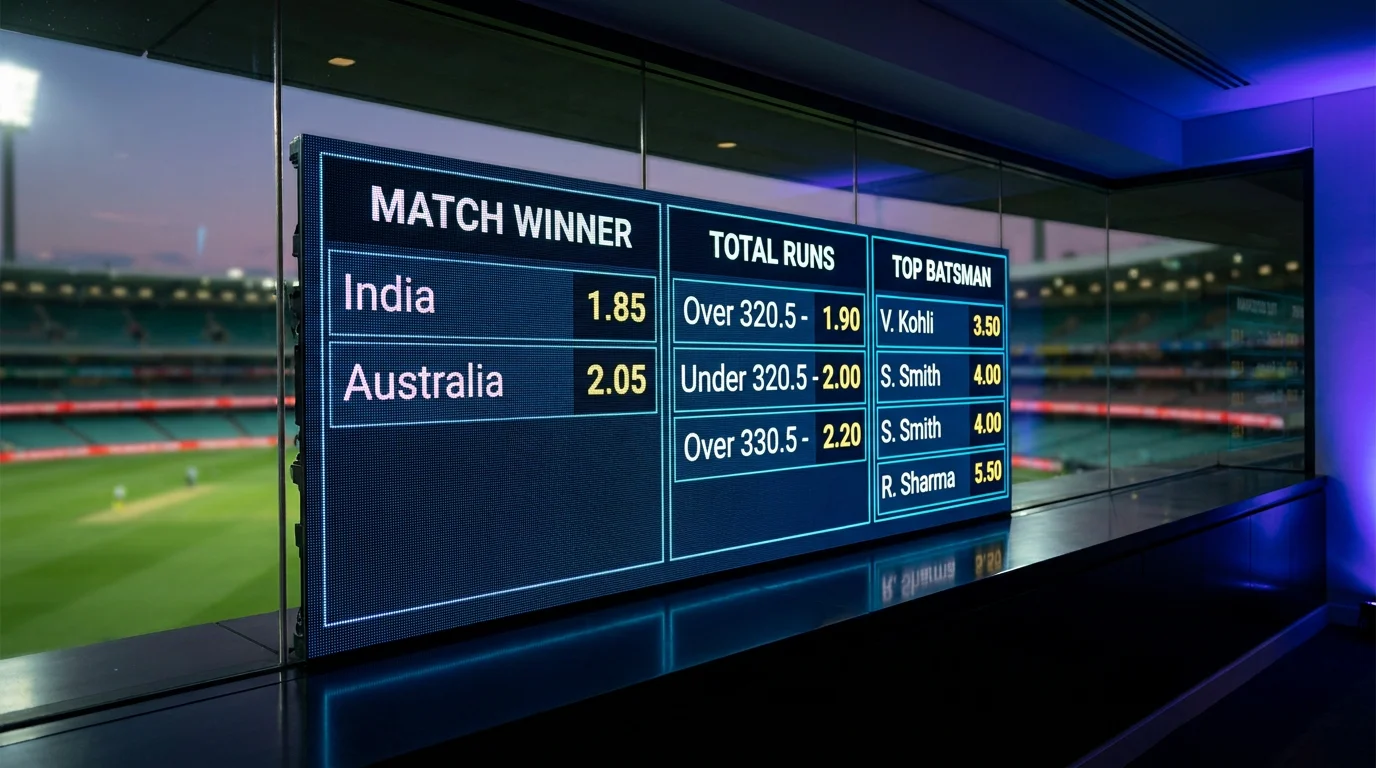
The volume of money flowing through these boards is genuinely vast, which is why they update so relentlessly. The UK gambling sector generated 4.5 billion pounds in gross gambling yield in the final quarter of 2025 alone, 3.3 billion of that excluding lotteries, and a meaningful share of betting turnover runs through exactly the kind of board you’re learning to read. That liquidity is why prices on popular markets are sharp and why they shift the instant new information arrives. The busier the market, the more the price reflects genuine collective opinion rather than a bookmaker’s lone guess.
My practical advice for reading a board is to filter ruthlessly. Find the market you came for, read the prices in whichever format your eye handles fastest, convert the key ones to implied probability in your head, and ignore the rest until you have a reason to look. A board is designed to tempt you into bets you didn’t plan, the novelty markets and micro-bets glittering at the edges. The disciplined reader treats the board like a reference document, not a menu of impulses. You look up what you need and you close it.
What Makes a Cricket Price Move and Why You Should Care
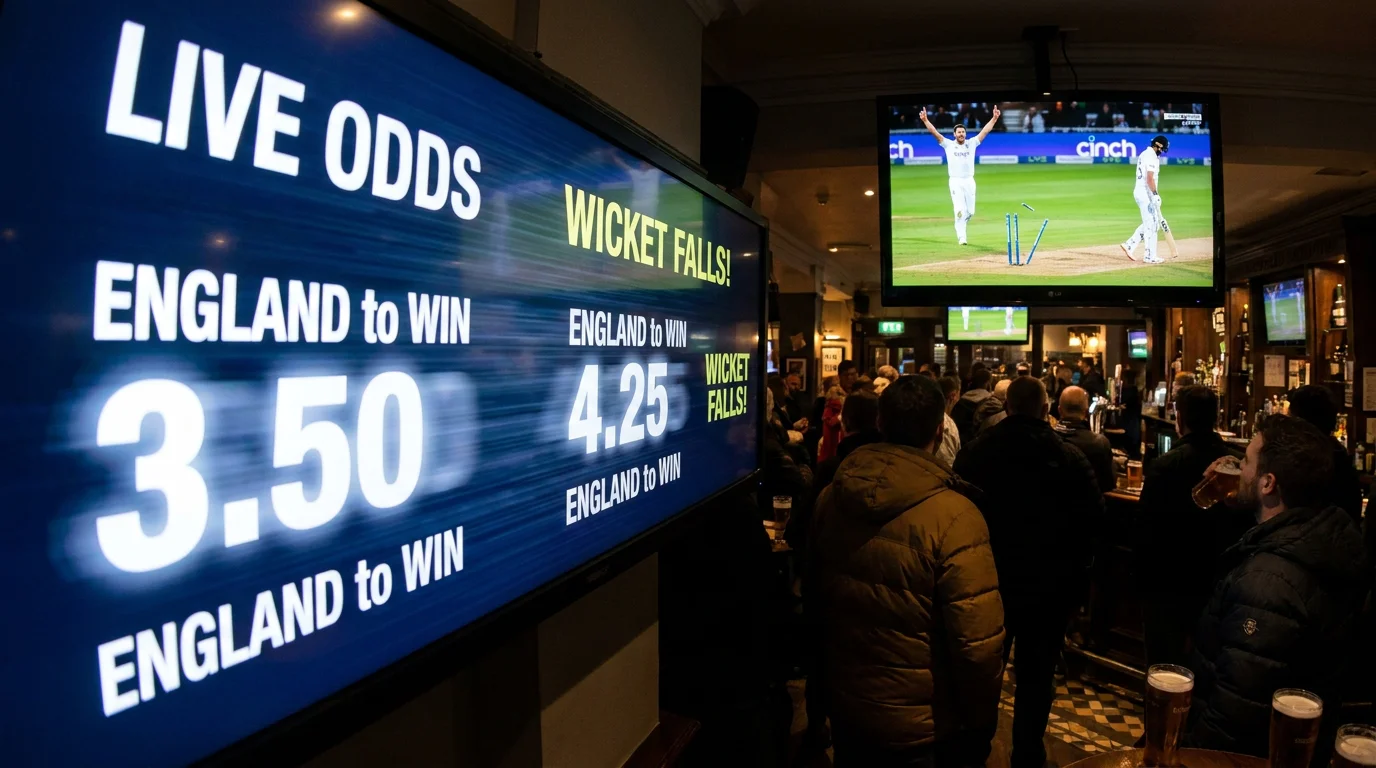
The most instructive thing I ever did as a young bettor was watch a single Ashes match-winner price for an entire day without betting. I just observed. It drifted, it shortened, it lurched when a wicket fell, it crept back when a partnership steadied. By close of play I understood more about how odds breathe than any guide had taught me. Prices are not fixed. They’re alive, and reading their movement is the advanced skill that separates the fluent from the merely literate.
Odds move for two reasons: new information and new money. When a key batsman is dismissed, the price on their team lengthens because their probability of winning just dropped. When heavy money piles onto one side, the bookmaker shortens that price to balance their book, regardless of whether the cricket has changed. Distinguishing these two drivers is genuinely hard, and it’s where the market’s collective intelligence reveals itself. A price that drifts on no obvious cricketing news might be telling you that informed money is moving against it.
Concentration in the UK market shapes how these movements ripple. William Hill and Bet365 together captured over half of UK betting search clicks in early 2026, and when dominant operators move a price, smaller books often follow, so movement can cascade across the market quickly. This is a factual feature of the landscape rather than a recommendation, but it matters for reading, because it means a price shift you see on one major site is likely to appear everywhere within moments. There’s rarely a leisurely window to grab a stale price once the big books have moved.
For the reader, the lesson is to treat price movement as information, not noise. If a price is shortening fast, the market is gaining confidence in that outcome. If it’s drifting, confidence is leaking away. You don’t have to act on every flicker, but you should understand what it’s saying. The bettors who lose patience and chase a moving price usually end up taking a worse number than if they’d waited or passed. The ones who read movement calmly, who understand that a price is a living consensus rather than a fixed offer, are the ones who consistently get down at numbers worth taking. That patience, more than any formula, is what fluency in odds finally buys you.
Why are UK cricket odds shown as fractions and not decimals?
Fractions are the traditional British format and remain the default in betting shops and on much UK broadcast coverage, which is why you’ll see prices like 5/2 or 11/8 quoted out of habit. Most online platforms and all betting exchanges let you switch to decimal in the settings, and many now default to it. Neither format is more accurate, they describe the same probability, so use whichever your eye reads fastest and convert when you need to compare.
What does ‘evens’ mean on a cricket match?
Evens, written as 1/1 in fractions or 2.00 in decimal, means the bet pays out exactly what you stake in profit, plus your stake back. It represents a true fifty-fifty in the bookmaker’s eyes, an implied probability of 50%. A ten-pound bet at evens returns twenty pounds, ten profit and your ten back. Anything shorter than evens is an odds-on favourite, anything longer is an underdog.
How do I quickly convert fractional odds to decimal in my head?
Divide the left number by the right number and add one. So 5/2 becomes 5 divided by 2, which is 2.5, plus one equals 3.50 in decimal. For 4/6, that’s 4 divided by 6, roughly 0.67, plus one equals 1.67. The ‘add one’ step accounts for fractions showing only profit while decimals include your returned stake. With a little practice this becomes automatic for the common cricket prices.
