
 Available in US
Content

There’s a betting edge that sits invisibly on the grass after dark, and most punters never see it until it has already decided the match. Dew, the moisture that settles on a ground during evening cricket, is one of the most powerful and underappreciated factors in day-night matches, quietly handing the chasing side an advantage that the casual bettor mistakes for skill or luck. Learn to read the dew and you’re reading a variable the crowd doesn’t even know is there.
Dew factor betting means anticipating how evening moisture will affect a day-night match and pricing the consequences: a wet ball that won’t grip for the bowlers, an outfield that speeds up, and a chasing side that benefits from conditions easing exactly when they bat. It’s a specialist read, most relevant in the formats and venues where heavy dew is common, and where it applies it can be the single most decisive factor in the match.
What Dew Does to the Ball and the Game
The first time I properly understood dew, I was watching a side defend a healthy total under lights and wondering why their bowlers had suddenly become unplayable in reverse, gripping nothing, the ball squirting off the bat to the boundary. It wasn’t a collapse in skill. It was water. Once I grasped what the dew was doing to the ball, that kind of evening capitulation stopped looking like a mystery and started looking like a bet.

When dew settles, it soaks the ball, and a wet ball is a transformed object. The seam softens and offers nothing to the seamers; the spinners, who rely on grip and revolutions, find the ball sliding out of their hand with no purchase, their stock delivery neutered. Bowling becomes markedly harder across the board, and the harder it gets, the easier batting becomes by comparison. The outfield speeds up too, as the wet grass lets the ball skid to the rope, so shots that would pull up short on a dry evening race away for four. The net effect is a pronounced shift in the balance of the game toward the batting side, occurring specifically in the later part of an evening match.
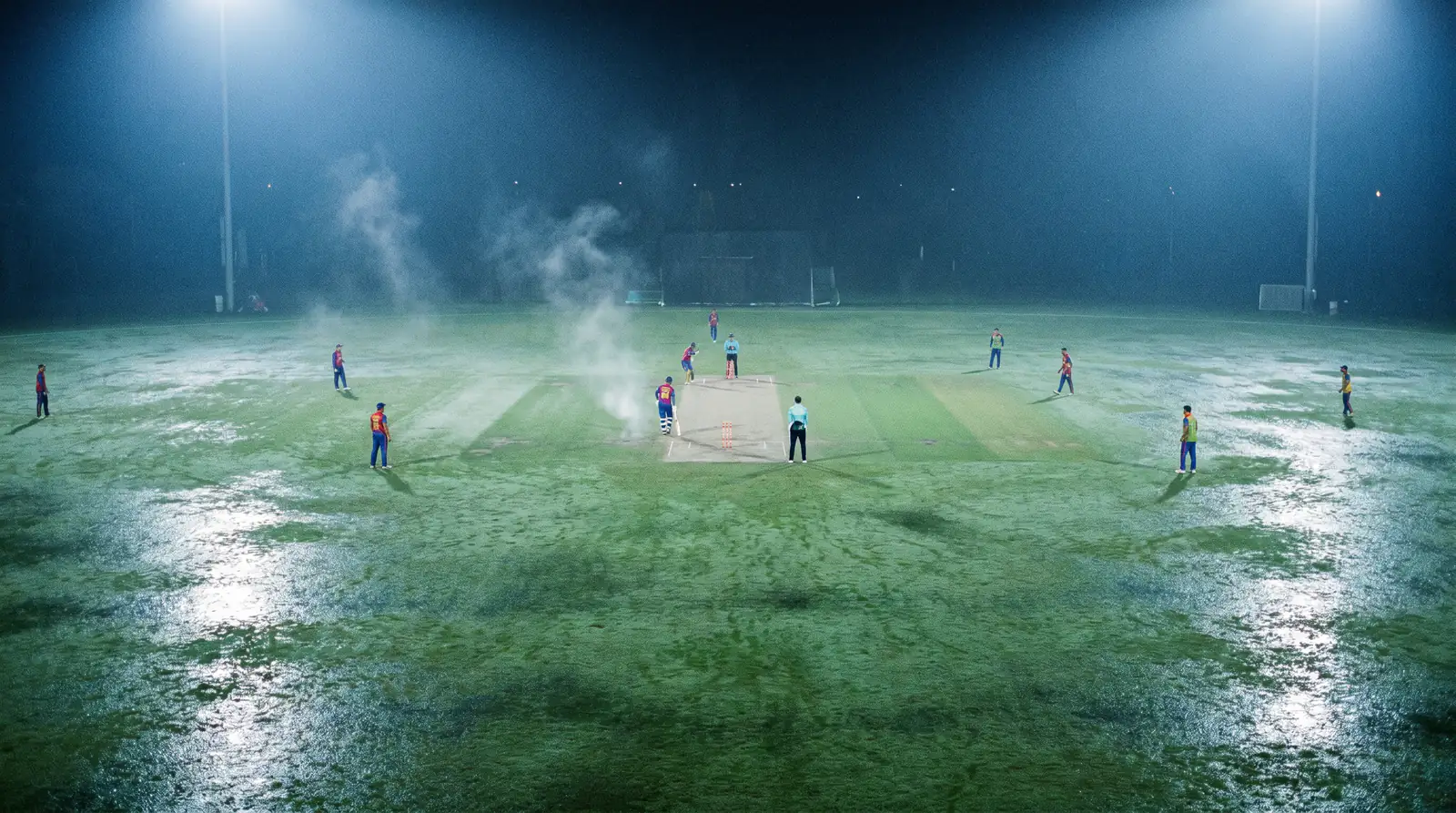
This isn’t a marginal effect that you can fold into a vague sense of conditions; in venues prone to heavy dew it’s frequently decisive, swinging matches that the daytime conditions and the team quality would never have predicted. The cricket segment is forecast to be among the fastest-growing in the betting market on the back of the short, day-night formats where dew matters most, which only sharpens the value of understanding it, and these evening games sit in the part of the calendar that integrity bodies watch most closely, with 59 suspicious cricket matches flagged in 2025, a notable rise on the year before, in a format whose results turn on conditions most viewers can’t read. The crucial point for bettors is the timing: dew arrives in the evening, which means it systematically favours whoever is batting second under lights, turning the toss and the bat-or-bowl decision into a question of enormous betting consequence. A side that knows heavy dew is coming will almost always choose to chase, and the bettor who knows the same thing can read their intention and the match’s likely shape before the market has caught up.
Dew and the Chasing Side’s Hidden Edge
The single most important consequence of dew is that it tilts day-night matches toward the chasing side, and this is where the betting value concentrates. When heavy dew is expected, the team batting second isn’t just chasing a known target with the usual second-innings clarity; they’re doing so in conditions that have actively eased, against bowlers whose wet ball won’t behave. That’s a double advantage the market doesn’t always fully price.

Consider the dynamics. A side bats first, posts what looks like a competitive total, and then watches the dew arrive as the second innings begins. Their bowlers can’t grip the ball, their spinners are reduced to rolling it up, the outfield is lightning fast, and the chasing batters find run-scoring easier than the first innings ever was. The total that looked competitive at the innings break can be revealed as well short of par once the dew is factored in, which means the chasing side’s price at that break is often more generous than the true difficulty of the chase warrants. Reading par in a day-night match means reading par with the dew built in, and the sharp bettor adjusts their sense of a defendable total downward when heavy dew is forecast.

The toss decision is the tell. In dew-prone conditions, captains almost universally choose to chase if they win the toss, precisely because they understand the advantage that the evening moisture will hand them. When you see a side win the toss and bowl in conditions where dew is expected, that’s confirmation of the read, and it sharpens the case for the chasing side. Conversely, a side forced to bat first in heavy-dew conditions is at a structural disadvantage that their daytime quality may not overcome. This connects directly to the coin-toss markets, where the bat-or-bowl decision carries real predictive weight in specific conditions, a relationship I’ve explored in my guide to toss betting in cricket. The dew turns what looks like a 50-50 toss into a meaningful lever on the match result.
Reading Dew Around UK Conditions and In Running
The honest caveat that every UK-focused bettor needs is that heavy dew is far more a feature of warm, humid subcontinental and equatorial conditions than of the typical English match, and applying dew logic indiscriminately to UK cricket will mislead you. Knowing when dew genuinely applies, and when it doesn’t, is as important as understanding its effect.

In England, the cooler, often breezier evenings produce far less dew than the still, humid nights of warmer climates, so for much of the domestic calendar the dew factor is a minor consideration rather than a decisive one. It becomes relevant for British bettors mainly when betting on overseas day-night cricket, where dew is a genuine and frequent match-decider, or in the warmer, stiller end of the English summer where some dew can form. The discipline is to apply the read only where the conditions actually support it: a still, warm, humid evening at a dew-prone venue is the scenario to watch, and a cool, breezy English night is not. Misapplying dew logic to conditions that don’t produce it is a classic way to talk yourself into a bad bet.
Where dew does apply, it also creates an in-running opportunity, because the effect intensifies as the evening wears on rather than arriving all at once. As the dew gathers, bowling gets progressively harder, and a bettor watching for the moment the ball starts misbehaving can back the chasing side or the over on remaining totals just as conditions tip, often before the live price has fully adjusted. The dew is a gradual, readable shift, and reading its onset in real time is the live-betting expression of the same edge. Treat dew as the specialist tool it is, decisive where conditions produce it, irrelevant where they don’t, and you’ll have a read on day-night cricket that the crowd, watching the same match without seeing the water on the grass, simply doesn’t possess.
Why does dew favour the side bowling second?
Because dew settles in the evening and soaks the ball, neutering the seamers and especially the spinners who can’t grip a wet ball, while a fast, wet outfield speeds up scoring. All of this eases batting in the second innings, so the side chasing under lights benefits from conditions that have actively shifted in their favour.
Do UK conditions produce much dew?
Generally far less than warm, humid subcontinental nights. England’s cooler, breezier evenings limit dew formation for much of the domestic season, so the dew factor is usually a minor consideration in UK cricket. It matters most to British bettors when betting on overseas day-night matches, where heavy dew is a frequent and decisive factor.
