
 Available in US
Content

There’s a moment in every close run-chase that I’ve come to recognise like an old friend. The required rate creeps up, a set batsman gets out, the fielding side smells blood, and the live odds lurch violently in a matter of three deliveries. I’ve watched a team go from 1.40 to 4.50 in the time it takes to bowl an over, then drift back as a new partnership steadies. That volatility is the entire appeal and the entire danger of in-play cricket betting, and learning to sit inside it without losing your head is one of the harder skills this sport demands.
In-play betting, also called live or in-running betting, is simply betting on a match while it’s happening, with odds that update continuously as the game unfolds. Where pre-match betting asks you to make one decision before a ball is bowled, in-play asks you to make decisions all the way through, against prices that move with every wicket, boundary and shift in momentum. It’s a fundamentally different discipline. Pre-match betting rewards homework and patience. In-play rewards reading the game in real time, keeping your composure, and crucially knowing when not to bet, which is most of the time. This guide is about the mechanics and the discipline of live betting in general. The specific timed markets within a session, and the deeper integrity questions, branch off into their own territory, but the foundation, how live odds work and how to bet them without self-destructing, is what we’ll build here.
The integrity dimension shadows everything in live betting, and the regulator has been blunt about why. The International Cricket Council’s Anti-Corruption Unit has noted that advancing technology and the growing popularity of the sport have driven a substantial increase in both the amount and the sophistication of betting on cricket matches, and nowhere is that sophistication more concentrated than in the live, in-running markets that resolve in seconds. I’ll return to what that means for you, but hold the thought from the start: the speed and granularity that make in-play exciting are exactly what make parts of it vulnerable. Bet live with your eyes open.
How Live Odds Update and Why They Sometimes Freeze
The first time I tried to place a live bet during a Test and the button greyed out on me mid-tap, I assumed the app had crashed. It hadn’t. It had done exactly what it was designed to do, and understanding that small moment unlocks how the entire live market functions.
Live odds are recalculated continuously by the bookmaker’s models as the match state changes. Every delivery feeds new information into the price: a wicket sharply lengthens the batting side’s odds, a boundary shortens them, a maiden over in a tight chase nudges them the other way. The price you see at any instant is the model’s current read on each outcome’s probability, refreshed faster than you can follow. In a fast-scoring T20 the match-winner price can swing dramatically over a single over, far more than the gentle drift you’d see across a day of Test cricket.
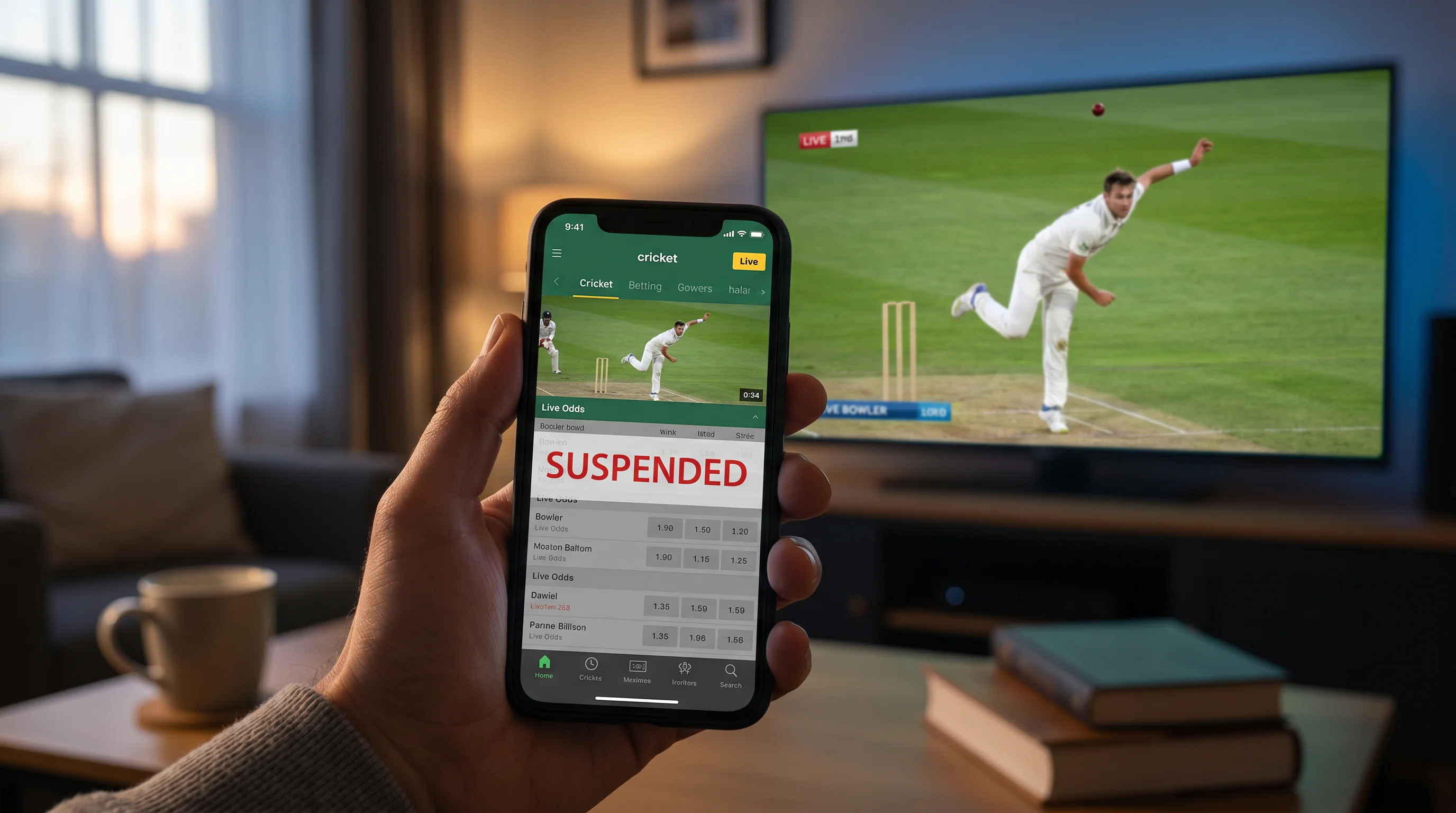
The freezing, or “suspension”, is the part newcomers misread. Around the moment a ball is actually bowled, the bookmaker suspends the market briefly, greying out the prices, because in that instant the outcome of the delivery is unknown and the existing price is stale. A wicket might have just fallen. Six runs might have just been hit. Letting bets through during that window would let people bet on events that have effectively already happened. So the market locks, the result of the ball registers, the prices recalculate, and betting reopens. This happens dozens of times an hour, and once you understand it, the rhythm becomes second nature: prices live between deliveries, frozen around them.
This rhythm has a practical consequence for how you bet. You cannot reliably snipe a price the instant a wicket falls, because the market will have suspended and reopened at a new number before your finger lands. The bettors who do well in-play aren’t reacting faster than the market, which is impossible, they’re forming a view on where the price should be and waiting for the market to drift to it. The model is fast and well-informed. Your edge isn’t speed. It’s judgement applied patiently across the natural pauses in the game.
Reading Momentum When the Scoreboard Lies
Cricket has a cruel habit of looking decided when it isn’t, and looking lost when it isn’t either. I’ve seen run-chases that felt over with fifty needed off thirty balls turn on two big overs, and dominant positions collapse in a single dramatic spell. Reading momentum in-running, the actual flow of the game rather than the snapshot of the scoreboard, is what separates a live bettor from a panicker.
Momentum in cricket is about pressure and resources, not just the current score. In a limited-overs chase, the variables that matter are wickets in hand, the required run rate, who’s at the crease and who’s to come, and which bowlers the fielding side has left. A team needing eight an over with nine wickets in hand and their best batsmen set is in a far stronger position than the raw equation suggests, while a team needing six an over but seven wickets down with the tail exposed is in trouble the rate alone won’t show you. The live odds attempt to capture all of this, but they capture the average case. Your reading of the specific case is where you might disagree with them profitably.
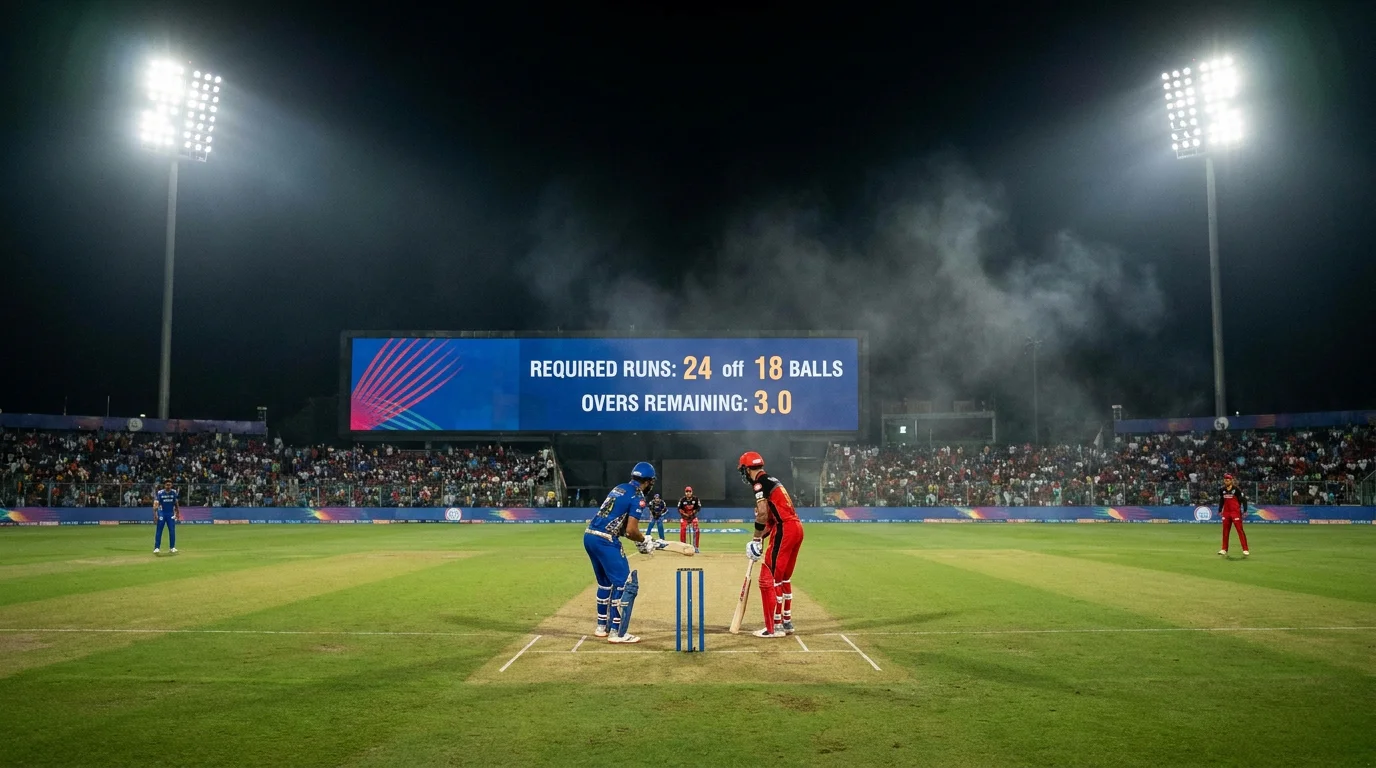
The trap is overreacting to single events. A boundary doesn’t mean the chase is on. A wicket doesn’t mean it’s over. Cricket is a game of phases, and the market sometimes lurches too far on one dramatic ball before settling back to reality. The disciplined live bettor learns to feel when a price has overshot, when a single wicket has lengthened a team’s odds further than the match situation truly warrants because the market is reacting emotionally to the drama. Those overcorrections are the genuine opportunities in live betting, but spotting them requires watching the match, not just the numbers. If you’re betting in-play off the odds feed alone without the cricket in front of you, you’re flying blind, and the model will beat you every time. The way momentum plays out across a defined block of overs is also the basis for one of the more specialised live markets, which I unpack fully in my guide to session betting in cricket.
Cash Out, the Feature That Feels Like Control and Often Isn’t
Let me confess something. For my first year of live betting, I treated cash out like a magic escape hatch, taking it constantly, convinced I was being clever. I was mostly just paying the bookmaker for the privilege of my own anxiety. Cash out is the most psychologically seductive feature in live betting, and understanding it clearly is essential to not being quietly fleeced by it.
Cash out lets you settle a bet before the market resolves, taking a payout based on the current live odds rather than waiting for the final result. If you backed a team pre-match at 3.00 and they’re now cruising, cash out might offer you a guaranteed profit smaller than your full potential win. If they’re struggling, it might offer you back part of your stake to limit the loss. It feels like control, like locking in a result, and that feeling is exactly why people overuse it. The crucial thing to understand is that the cash-out value is calculated from the live odds with the bookmaker’s margin baked in, so you are systematically offered slightly less than the mathematically fair value of your position. Take cash out repeatedly and that small haircut compounds against you.
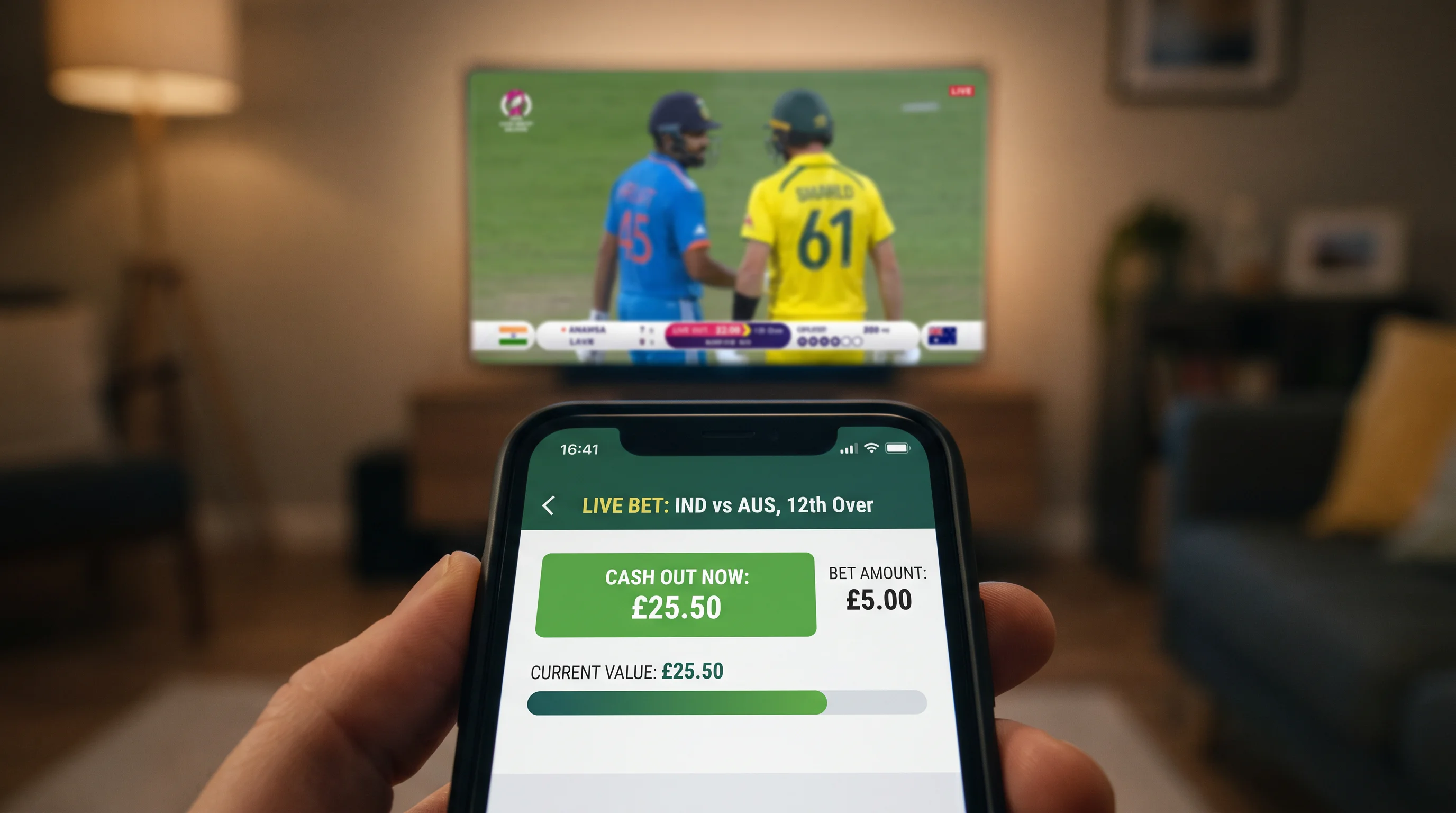
That doesn’t make it useless. Cash out has genuine uses: locking in a profit when the match situation has become genuinely precarious, or freeing up funds and emotional energy when you no longer have conviction in a bet. In a Test match in particular, where a position can hold for days, cash out can be a sensible way to bank value before a session that might unravel it. But it is not a substitute for getting your original bet right, and it is not a tool to be reached for every time a match gets tense. The bettors I respect use it deliberately and rarely. The ones who use it reflexively are usually managing their nerves rather than their bankroll, and the bookmaker is delighted to charge them for the comfort.
The Live Conditions That Shift Odds Under Your Feet
Pre-match, you assess conditions once. In-play, the conditions are actively changing while you bet, and the live bettor who ignores this gets repeatedly blindsided. The pitch, the light, the weather and the ageing ball all evolve through a match, and each shift moves the odds in ways you can anticipate if you’re paying attention.
The most dramatic live-conditions factor in limited-overs cricket is the way an innings ages. A pitch that offered the bowlers movement in the morning can flatten out under the sun, turning a low-scoring first innings into a high-scoring chase, and the team batting second can find conditions transformed. In day-night matches, the evening brings its own variable as the ball and outfield change with the falling temperature, often helping the side bowling later in tight conditions. These shifts are precisely the sort of thing a watching bettor can price before the market fully adjusts, because models capture the average pattern while you can see the specific surface in front of you.
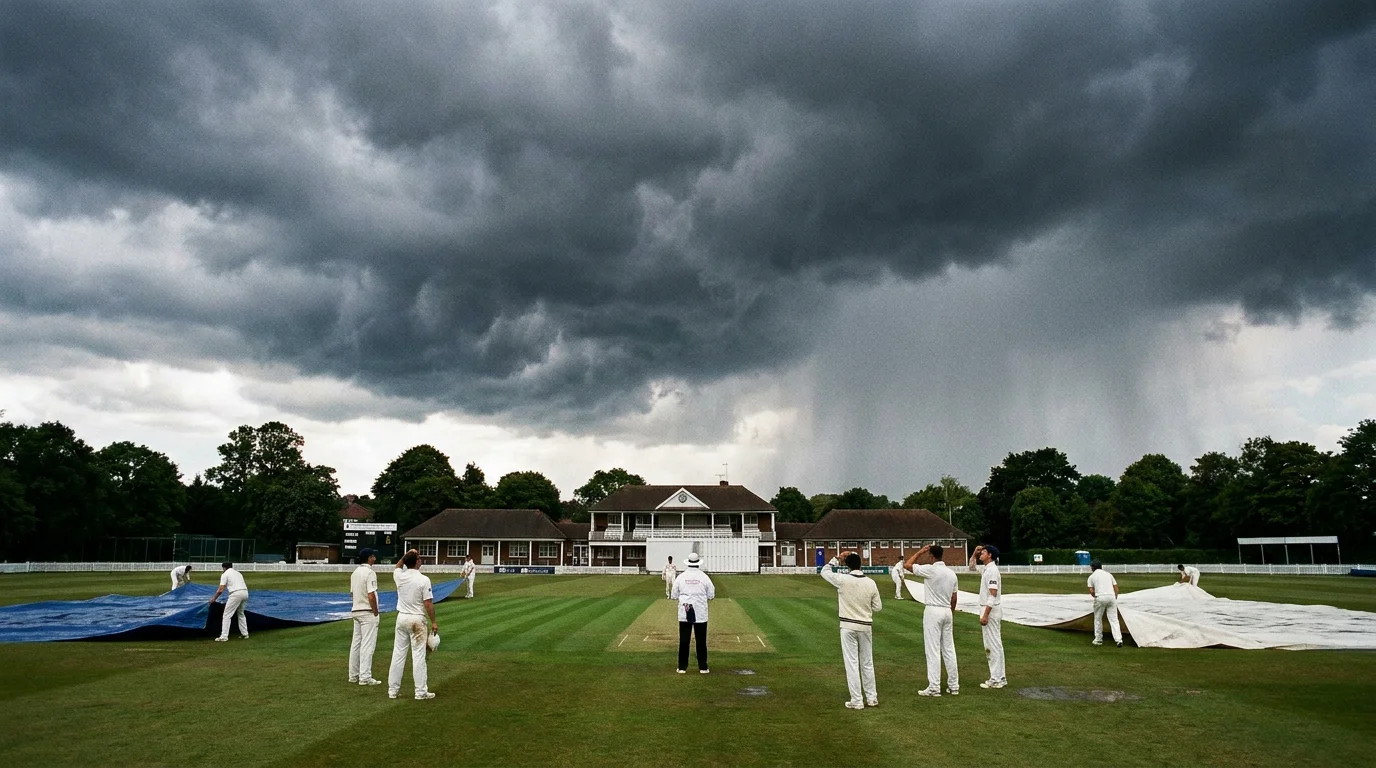
Weather is the live factor that overrides everything else. Rain doesn’t just stop play, it reshapes the entire mathematics of a limited-overs game through revised targets, and a forecast of an interruption hangs over every in-running price. A team that’s behind on the scoreboard might actually be ahead on the revised-target calculation if rain arrives, and live odds will reflect the probability of weather intervention. I’ve watched canny bettors back a “losing” side purely because the clouds were rolling in and the maths of a rain-shortened result favoured them, while the casual punter saw only the scoreboard and backed the side apparently in front. Reading a sky and a forecast becomes part of reading the match. The interplay of pitch, weather and the ageing ball is rich enough that each deserves its own study, but for live betting the headline is simple: the conditions you assessed before the toss are not the conditions you’re betting into three hours later. Keep reassessing, because the match is reassessing itself constantly.
Pace, Discipline and the Risk of Betting Every Ball
Here’s the statistic that should give every live bettor pause. When you strip out people who only play the lottery, overall gambling participation in Britain sits around 27% over a four-week window, and the structure of in-play betting is engineered to pull as many of those people as possible into betting more often than they intend. The continuous stream of markets, the constant fresh prices, the dopamine of a result every few minutes, all of it is designed to maximise the number of bets you place. Recognising that design is the first step to not being captured by it.
The single greatest risk in live betting isn’t picking the wrong outcome. It’s volume. Pre-match, you place a considered bet and wait. In-play, the bookmaker offers you a new betting opportunity every ninety seconds for hours, and each one feels small and harmless in isolation. Stacked together across a match, they add up to a level of staking and a frequency of decision-making that no bankroll discipline survives intact. I’ve seen people who would never dream of placing twenty pre-match bets in a day cheerfully place twenty in-running bets in a single T20, simply because the format invited them ball by ball.

The discipline that protects you is deciding, before the match, roughly how and when you’ll bet in-play, and treating everything outside that plan as noise. Maybe you’ll watch the first ten overs without betting and only act if the price diverges from your read. Maybe you’ll take one considered live position at a specific juncture. What you should never do is let the match dictate your betting frequency, reacting to every wicket and boundary with a fresh stake. The pace of cricket is gentle enough that you always have time to think, and the bettor who uses those natural pauses to do nothing, most of the time, is the bettor who lasts. The tools that licensed sites offer, deposit limits, reality checks, time-outs, exist precisely because in-play betting can erode discipline faster than any other format. Set them before a tense match, not after one.
The Integrity Risk That Lives in Live Markets
Of everything I want you to take from this guide, the integrity dimension of live betting is the part I’d underline twice. The granular, fast-resolving nature of in-play markets is exactly what makes them the favoured terrain for corruption, and as a live bettor you’re closer to that risk than you might like to think.
The scale of monitoring tells you how seriously the industry takes this. Integrity bodies tracked over a million sporting events across 70 sports in 2025 and flagged 1,116 as suspicious, and within cricket specifically the count of suspicious matches rose to 59 that year. The markets that fixers target are rarely the match result, which is hard to manipulate convincingly, but the small in-running events, a specific over going for a predetermined number of runs, a particular delivery, the micro-markets that resolve in seconds and can be fixed without altering who wins. These are precisely the live markets that a casual bettor finds most tempting because they pay out so quickly.

What does this mean for you in practice? It means treating obscure live micro-markets with real caution, because abnormal prices or strange movements in tiny markets are exactly the footprint that monitoring systems hunt for. It means understanding that the headline result markets, watched by far more eyes and far more money, are the safest place to bet live. And it means recognising that the integrity questions surrounding the smallest timed markets are serious enough that the whole subject of session betting and match-fixing deserves dedicated study rather than a passing mention here. The reassuring counterweight is that the overwhelming majority of cricket is clean and closely watched, with monitoring covering vast event volumes and more than 99.5% of sporting events worldwide in 2025 staying free of any suspicion of manipulation. You’re not betting in a den of thieves. But the live markets are where the thieves, when they appear, do their work, and a clear-eyed live bettor sticks to the well-lit, heavily-traded markets and leaves the shadowy corners alone.
This is, in the end, the throughline of everything I’ve said about betting in-running. The format rewards a particular temperament, calm, patient, watchful, comfortable doing nothing for long stretches and acting decisively only when the game and the price genuinely diverge. It punishes the opposite temperament, the impulsive, the reactive, the bettor who needs action on every ball, more severely than any other form of cricket betting. Get your temperament right and in-play becomes the most engaging way to bet a sport that’s already a slow-burning thriller. Get it wrong and it becomes the fastest way to turn a relaxing afternoon’s cricket into an expensive lesson in self-control.
Why do live cricket odds freeze between deliveries?
The market suspends briefly around each delivery because, in the instant a ball is bowled, the outcome is momentarily unknown and the displayed price is stale. A wicket or a boundary may have just occurred, so letting bets through would allow people to back events that have effectively already happened. Once the result of the ball registers, the model recalculates the prices and betting reopens. This suspension happens many times an hour and is a normal, designed feature, not a glitch.
Is cash out always worth taking in a Test match?
No. Cash out is calculated from the current live odds with the bookmaker’s margin included, so you are systematically offered slightly less than the fair value of your position, and taking it habitually erodes your returns. In a Test, where a position can hold for days, cash out can be sensible for banking profit before a session that might unravel, but it should be a deliberate, occasional decision rather than a reflex. Reaching for it every time a match gets tense usually means you’re managing your nerves, not your bankroll.
Does in-play betting carry higher integrity risk than pre-match?
The risk is concentrated in specific live markets rather than in-play as a whole. Fixers target small, fast-resolving in-running events, a particular over or delivery, because these can be manipulated without changing the match result, and cricket saw a rise to 59 suspicious matches in 2025. The heavily-traded headline markets like match winner are far better watched and far harder to fix. Sticking to popular, liquid live markets and avoiding obscure micro-bets keeps you well clear of the riskiest territory.
