
 Available in US
Content
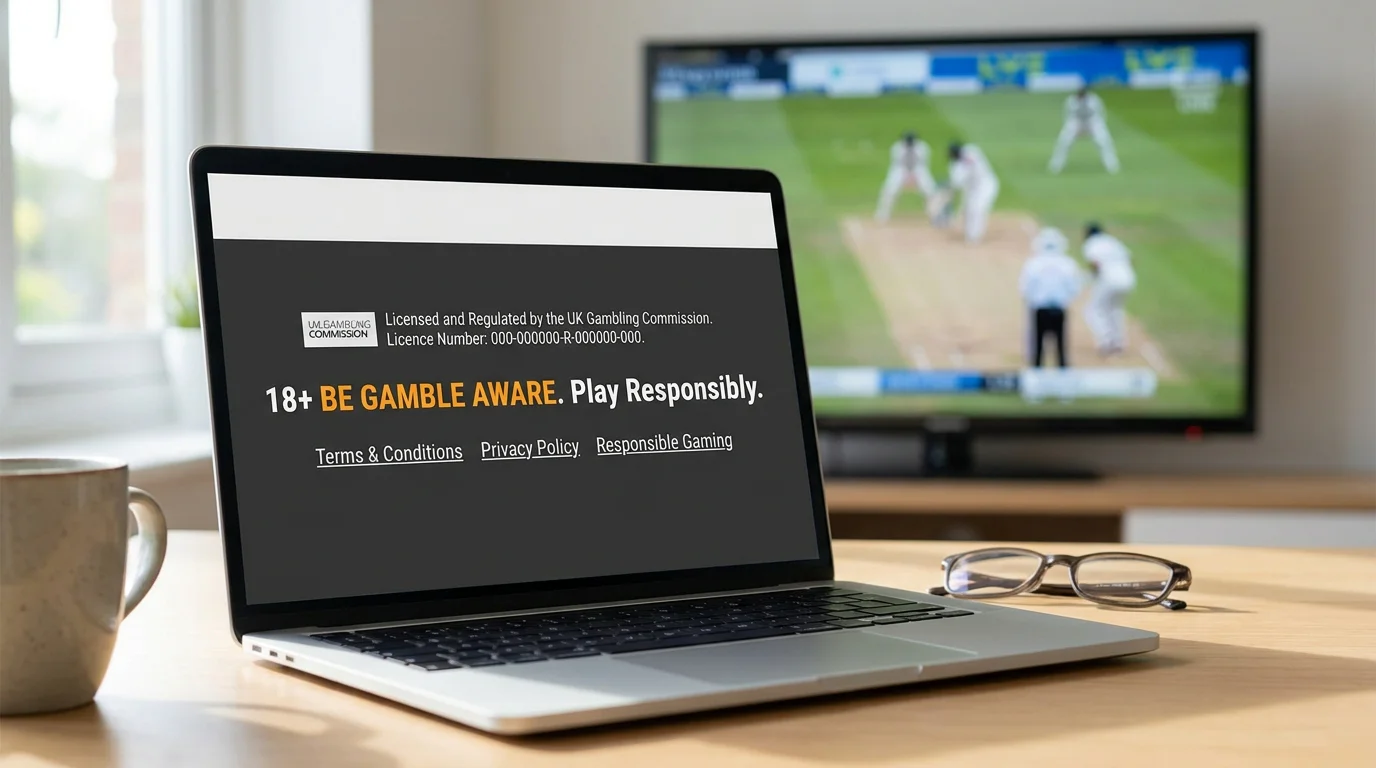
I get asked this question more than any other, and I understand why. There’s a nervousness around betting that other hobbies don’t carry, a vague sense that you might be doing something slightly illicit, and the marketing-heavy world of betting sites does nothing to clear it up. So let me answer it plainly before we go any further. Yes, betting on cricket is entirely legal in the United Kingdom, provided you’re 18 or over and you bet with an operator licensed by the UK Gambling Commission. That’s the whole answer. Everything else in this guide is detail, context and the genuinely important business of knowing how to tell a legal operator from a dangerous one.
What’s striking is how the person running the regulator describes the current era. The outgoing Chief Executive of the Gambling Commission reflected that it had been a privilege to lead the body through such an important period of change, expressing pride in the progress made to strengthen regulation, improve consumer protections and make gambling safer and fairer. That phrase, “a period of change”, is the key to understanding UK cricket betting in 2026. The legality has been settled for years, but the framework around it has just been through the most significant overhaul in two decades, and the rules that govern your betting today are meaningfully different from the rules of even three years ago.
This guide is about the law and the regulation, not about whether betting is safe for you personally or how to keep it healthy. Those are vital questions, but they’re a separate subject, the question of personal safety and responsible play, which I treat in its own right elsewhere. Here we’re concerned with the legal architecture: what the UKGC licence actually means, what the sweeping 2025 reforms changed, how the new levy and duties reshape the industry, and, most practically of all, how you spot an unlicensed site before it takes your money and leaves you with no recourse. Get this framework straight and you’ll bet with the confidence that comes from knowing exactly where you stand.
The UKGC Licence, the Single Thing That Makes a Bet Legal
If you remember one thing from this entire guide, make it this: in Britain, the legality of your bet hinges entirely on whether the operator holds a UK Gambling Commission licence. Not on the sport, not on the market, not on the amount. The licence is the dividing line between a fully legal, protected bet and a leap into the unregulated dark.
The UK Gambling Commission, the UKGC, is the statutory body that licenses and regulates commercial gambling in Great Britain under the Gambling Act 2005. Any operator wishing to offer betting to people in Britain must hold an operating licence, and that licence binds them to a thick book of conditions: holding customer funds appropriately, verifying age and identity, offering tools like deposit limits and self-exclusion, contributing to harm prevention, and submitting to the Commission’s oversight and enforcement. When you bet with a licensed operator, all of that protection wraps around your money automatically. When you bet with an unlicensed one, none of it does.

The regulated landscape is substantial and physically present, not some abstract online concept. As of September 2025 Britain had 8,254 licensed gambling premises, of which 5,782 were betting shops, and that bricks-and-mortar footprint sits alongside a vast licensed online market. So the legal way to bet on cricket is genuinely abundant, there’s no shortage of properly authorised operators competing for your custom. The challenge has never been finding a legal option. It’s that the illegal options can look almost identical from the outside, which is why knowing how to verify a licence, rather than assuming one exists, is the practical skill this whole question comes down to.
It’s worth understanding what the licence obliges an operator to do behind the scenes, because that’s where the real value to you sits. A UKGC-licensed bookmaker has to keep your funds separated to a defined standard, so your balance isn’t simply absorbed into the company’s working capital. It has to run anti-money-laundering checks, which is part of why verification can feel intrusive. It has to monitor for signs of harm and intervene. And it has to report to the Commission and submit to audits and enforcement that carry real teeth, up to and including the loss of the licence that lets it trade at all. None of this is visible on the betting page, but all of it is the difference between a regulated operator and an offshore one that answers to nobody. A licensed operator displays its Commission licence and links to the public register where you can confirm it. That verification step, not blind trust in a slick interface, is what keeps you on the right side of the line.
The 2025 Reforms That Rewrote the Rulebook
For nearly twenty years, UK gambling was governed by a framework written before smartphones existed, let alone the live, app-driven betting that dominates today. The reform of that ageing structure, set out in a government White Paper and rolled out across 2025, is the most consequential change to hit British betting in a generation, and it’s reshaped the environment you’re now betting in.
The headline measures targeted the highest-risk products rather than sports betting directly, but they signalled a wholesale shift in regulatory posture. New regulations introduced under the Gambling Act 2005 brought in a stake limit on online slots of 5 pounds per spin for those aged 25 and over, and a tighter 2 pound limit for 18 to 24 year olds. The reasoning was laid out bluntly by the government minister responsible, who described online slots as the highest-risk gambling product, with the highest rate of binge play and the highest average losses of any online product. Cricket betting wasn’t the target of these specific stake limits, but the philosophy behind them, that the regulator will now actively intervene to limit harm rather than merely set broad rules, governs the entire market you bet in.

The implementation followed a precise timetable that tells you how seriously this was taken. The 5 pound slots limit took effect by 9 April 2025, with the lower 2 pound limit for younger adults following by 21 May 2025. These weren’t aspirational targets, they were hard legal deadlines backed by the force of statutory instruments. For a cricket bettor, the direct effect is limited, your match-winner and totals bets aren’t subject to spin limits. But the indirect effect is significant: you’re now betting with operators who have been forced to demonstrate a far higher standard of player protection across their entire platform, and that raised floor benefits everyone, regardless of which product they bet on. The era of light-touch self-regulation is over, and the operator taking your cricket bet operates under genuine, enforced obligations now.
The Levy and the Duty, Where Your Bet Money Now Flows
Here’s something that genuinely changed how I think about the industry. For the first time in its history, the British gambling sector is being legally compelled to pay for the harm it causes, rather than funding prevention through voluntary donations it could withhold at will. The mechanism is a statutory levy, and it represents a philosophical shift dressed up as an accounting change.
The statutory levy on operators took effect on 6 April 2025, with the first payments due by 1 October 2025, and its design tells you exactly what it’s for. The money raised is distributed on a fixed split: 50% to treatment, 30% to prevention, and 20% to research conducted through the national research body. The scale is meaningful, the levy is expected to raise around 100 million pounds a year for research, prevention and treatment of gambling harm, with half of that flowing into the treatment system under the umbrella of the NHS. The campaigner who chaired the relevant parliamentary group captured the significance simply, observing that for the first time the industry would be mandated to pay for the harm it causes. Every cricket bet you place now contributes, through your operator, to a fund that didn’t meaningfully exist a few years ago.

Running alongside the levy is a change to the tax structure that’s reshaping operator economics. The remote gaming duty in the UK is rising to 40% from April 2026, a substantial increase that bites into the margins of online operators. Why should a bettor care about an operator’s tax bill? Because these costs flow downstream. Higher duties and levies pressure operators on pricing, promotions and the generosity of their odds, and over time the economics of the industry reshape what you’re offered. This isn’t a reason to bet more or less, it’s context for understanding why the betting environment of 2026 feels different from the free-spending years before the reforms. The industry is being made to internalise costs it previously externalised, and that changes the commercial calculus behind every price you see.
How to Spot an Unlicensed Site Before It Costs You
This is the most practically important section in the guide, so I’m going to be direct. The single greatest legal risk in cricket betting isn’t getting in trouble for betting, it’s accidentally betting with an unlicensed operator who isn’t bound by any of the protections we’ve discussed, and the regulator is fighting a constant, large-scale battle against exactly these sites.
The scale of that battle is genuinely eye-opening. In a single recent financial year the Gambling Commission issued 480 cease-and-desist notices, blocked or geo-restricted 504 sites, and removed more than 104,000 URLs belonging to illegal operators. That’s not a handful of dodgy sites, it’s an industrial-scale enforcement effort against a persistent black market that targets British bettors precisely because the legal market is so valuable. These illegal operators advertise aggressively, offer eye-watering bonuses the licensed market can’t match, and crucially owe you nothing, because they exist entirely outside the framework that protects regulated customers.

So how do you protect yourself? The verification is straightforward if you actually do it. First, check the footer of any betting site for a stated UK Gambling Commission licence, and don’t just accept a logo, follow the link to the Commission’s public register and search the operator’s name to confirm the licence is real and current. Second, be deeply suspicious of bonuses that seem far too generous, because the licensed market operates under constraints that cap how aggressive offers can be, and a bonus that dwarfs everything else is a red flag, not a bargain. Third, watch for the legal protections themselves: a genuine UK operator will offer clear self-exclusion, deposit limits and identity verification, because they’re required to. If a site lets you deposit and bet without ever verifying your age or identity, that’s not convenience, that’s an unlicensed operator skipping its legal obligations. The thirty seconds it takes to verify a licence on the public register is the cheapest insurance in this entire hobby, and skipping it is how people end up betting on offshore sites with no way to recover their funds when things go wrong.
There’s a subtler version of this risk worth naming, because it catches out even careful people. Illegal operators are increasingly sophisticated about appearing legitimate, copying the look of established brands, citing licences from jurisdictions that mean nothing for British customers, and buying advertising that places them right alongside genuine operators in search results. A licence from some far-flung regulator is not a UKGC licence, and only a UKGC licence brings British protections. The geographic origin of the site doesn’t matter either, what matters is whether it’s authorised to take bets from people in Britain, and that’s a binary the public register answers definitively. When the regulator removes more than 104,000 illegal URLs in a single year, you can be certain that for every one taken down, new ones appear. The enforcement effort is real and relentless, but it can’t catch everything in real time, which is precisely why the final check has to be yours. Treat every unfamiliar site as unlicensed until you’ve personally confirmed otherwise on the register, and you’ll never accidentally hand your money to the black market.
The Protections the Law Now Builds Around You
It’s easy to read all this regulation as a set of rules imposed on operators and forget that the entire point is to build protections around you, the person placing the bet. The law doesn’t just license operators, it mandates a specific architecture of consumer protection, and understanding what you’re entitled to is part of betting from a position of knowledge rather than vague trust.
Every UKGC-licensed operator must offer you tools to control your own betting: deposit limits you can set to cap what you put in, time-outs and self-exclusion to lock yourself out when you need to, and reality checks that interrupt long sessions. These aren’t optional extras the better operators choose to provide, they’re legal requirements baked into the licence. The funding behind the support system has been put on a statutory footing too, with the levy expected to raise around 100 million pounds a year directed at research, prevention and treatment, and half of that channelled into treatment under the NHS umbrella. So the protections aren’t just individual toggles in your account settings, they’re a whole funded infrastructure of help that the industry is now legally compelled to support. How to actually use those tools to keep betting healthy is a subject in itself, and I walk through it in my guide to responsible gambling for cricket bettors.

The reason I dwell on this is that knowing your protections changes your relationship with betting. You’re not a supplicant hoping an operator behaves well, you’re a customer with enforceable rights in a regulated market, betting with operators who face real consequences for failing you. That’s a fundamentally different position from betting on an unlicensed offshore site, where you have no rights, no recourse and no protection whatsoever. The legal framework, for all its complexity, exists to put you in the protected position, and the only way to forfeit that protection is to bet outside the licensed market.
Which brings me back to where we started, and to the genuinely important distinction this whole guide rests on. The question “is cricket betting legal in the UK” has a simple answer, yes, with a licensed operator and at 18 or over. But the more useful question, the one that actually protects you, is “am I betting with a licensed operator?” The legality of betting in general doesn’t protect you if you’ve wandered, knowingly or not, onto an unlicensed site. The framework is robust, the enforcement is real, and the protections are genuine, but every bit of that machinery only works for you if you’re inside the regulated market. Verify the licence, bet at the legal age, use the tools the law guarantees you, and the answer to “is this legal and protected” is an emphatic yes. The law has done its part. The one decision it can’t make for you is the choice to bet only where its protections actually reach.
Can I legally bet on cricket from the UK using an offshore site?
Using an offshore site that isn’t licensed by the UK Gambling Commission means betting entirely outside the protections of British law, even if you personally aren’t prosecuted for placing the bet. These operators owe you none of the safeguards, fund protection or dispute resolution that licensed sites must provide, and the Commission actively blocks and removes thousands of such sites. There’s no legal upside and considerable risk, so the sensible answer is to bet only with UKGC-licensed operators you can verify on the public register.
What is the minimum legal age to bet on cricket in Britain?
The minimum age to bet on cricket with a licensed UK operator is 18. This is a firm legal requirement tied to the operator’s licence, which is why every regulated site must verify your age and identity before you can bet. Operators face serious consequences for allowing under-18s to gamble, so age verification is non-negotiable and applies across all cricket markets without exception.
Did the 2025 stake limits affect cricket betting directly?
No. The 2025 stake limits, 5 pounds per spin for those 25 and over and 2 pounds for 18 to 24 year olds, applied specifically to online slots, which were identified as the highest-risk product, not to sports betting. Your cricket match-winner, totals and other bets aren’t subject to these per-bet caps. The wider reforms did, however, raise player-protection standards across every licensed operator’s whole platform, so you benefit indirectly even though the slot limits don’t touch your cricket bets.
