
 Available in US
Content

The man of the match award is the only major cricket market where a human being’s opinion decides whether you win. Every other bet settles on hard numbers, runs, wickets, results, but this one comes down to a judge in a commentary box weighing a glittering 70 against a match-turning five-wicket haul and picking a favourite. That subjectivity is exactly what most punters get wrong, and exactly where the value hides for anyone who learns to think like the person holding the trophy.
Man of the match, also listed as player of the match, asks you to back the individual who’ll be named the standout performer of the game. It’s not the top scorer and it’s not the leading wicket-taker, though it’s often one of them; it’s whoever the adjudicator decides had the most decisive influence. Understanding that distinction, performance versus impact versus a judge’s taste, is the whole key to a market that rewards cricketing nous over raw statistics.
It helps to remember who runs the show. Sir Geoffrey Boycott, never one to soften an opinion, once grumbled that the “only thing they are interested in is money. Cricket is run by Suits.” The awards themselves can carry that same whiff of theatre and narrative, and the canny bettor reads the market with one eye on the cricket and one on the story the game is telling, because the judge is human and humans love a story.
How the Award Is Actually Decided
I learned to respect the unpredictability of this market when I backed a bowler who took six wickets, watched him bowl his side to a crushing win, and then saw the award handed to a batter who’d made a breezy half-century in a chase that was never really in doubt. On the numbers, my man was the obvious choice. In the adjudicator’s eyes, the batter had “won the game” with style. That gap between statistical merit and human judgement is the defining feature of the market.

The award is decided by a nominated adjudicator, usually a commentator or former player, not by any fixed formula. They weigh runs, wickets, catches, the match situation and, crucially, the narrative impact of a performance. A century in a losing cause sometimes beats a workmanlike all-round display in a win; sometimes it’s the reverse. There’s no algorithm, which means there’s no perfectly priced market either, and that imperfection is where a thoughtful bettor operates. Importantly, the award can go to a player on the losing side, though it’s far less common, so don’t dismiss a brilliant individual performance just because their team came second.

The settlement is winner-take-all on the named player, with dead-heat rules rarely relevant because a single individual is chosen. What matters far more than the settlement mechanics is internalising that you’re not betting on who performs best by the numbers; you’re betting on who a human will decide performed best. Those overlap most of the time, which is why the obvious candidates are short-priced, but they diverge often enough that reading the likely narrative is a genuine edge.
Why All-Rounders Hold the Value
If I had to hand a newcomer one rule for this market, it would be: look at the all-rounders first. They are systematically undervalued by casual bettors who fixate on either runs or wickets, and they’re systematically loved by adjudicators who reward players that influence the game with both bat and ball. That mismatch is the most reliable source of value in the whole market.
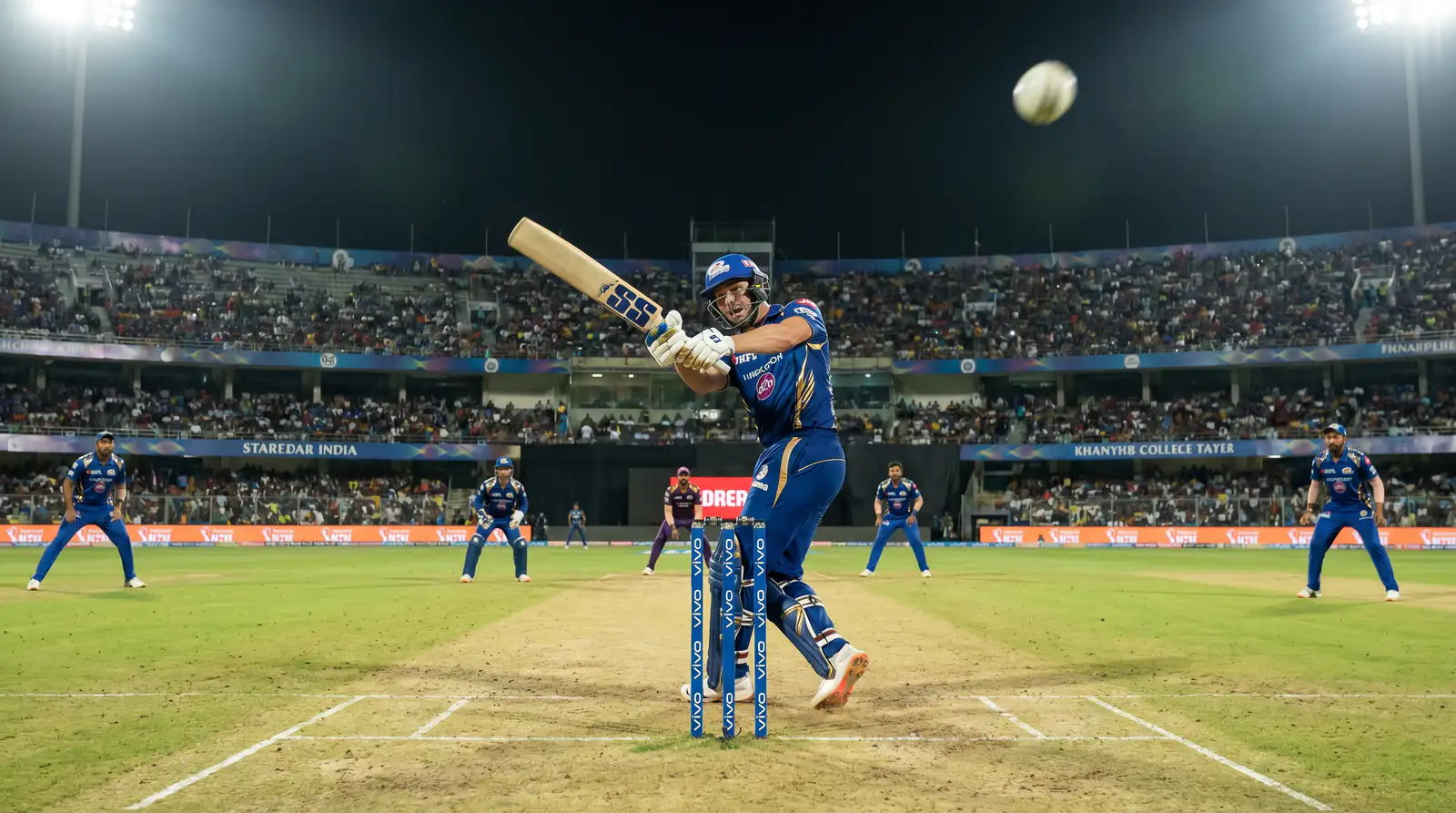
The reason is mathematical as much as cricketing. A specialist batter needs a big score to win the award. A specialist bowler needs a haul of wickets. An all-rounder can win it with a useful 40 and three wickets, a combined contribution that no single specialist matched, and adjudicators adore exactly that kind of two-way impact because it reads as “this player shaped the match more than anyone.” The all-rounder has two routes to the adjudicator’s eye where the specialists each have one, and yet the market often prices them as though they’re long shots in both disciplines rather than live contenders across the game. The explosion in granular player markets, fuelled by at least 165 betting sponsorship deals struck with cricket teams, tournaments and players between 2020 and August 2025, has made these markets ubiquitous, but it hasn’t made the casual money any smarter about all-rounders.
The practical move is to identify the genuine all-rounders in both line-ups, check they’re likely to feature meaningfully with both bat and ball given the conditions, and weigh their combined-impact price against the specialists’ single-route prices. On a pitch offering something for the seamers, a bowling all-rounder who also bats in the top seven is exactly the kind of dual-threat the adjudicator gravitates toward. I find more value here than in any other player market precisely because the crowd keeps backing the famous batter while the all-rounder quietly does enough in both disciplines to take the trophy.
How Man of the Match Shifts Across Formats
The same award means completely different things in a Test and in a 100-ball shootout, and treating them alike is a quick way to misprice the market. Format changes which kind of performance the adjudicator is likely to reward, because format changes what a decisive contribution even looks like.

In the longer formats, sustained excellence wins the award. A double-century, a ten-wicket match haul, a performance that dominates across days: these are the Test man-of-the-match displays, and they reward grinding, accumulating quality over flashes of brilliance. The short formats invert that. The arrival of The Hundred, launched by the ECB in 2021 as a deliberately compressed format shorter than even T20, and the County Championship’s long four-day tradition stretching back to 1890, bracket the full range of what the award can mean. In a 100-ball game, twenty minutes of clean hitting or a single devastating over can win the trophy, because the format is so short that one explosive cameo genuinely shapes the result. A player who’d never sniff the award over five days can take it inside half an hour of a short-format match.
What this means in practice is that I widen my net in short formats and narrow it in long ones. Over five days, the field of credible man-of-the-match candidates is small, the obvious performers tend to win, and the value is thin. In a frenetic short-format match, almost anyone in the top six or any frontline bowler can produce the decisive twenty minutes, the prices are bigger, and a well-judged bet on a destructive lower-order hitter or a death-overs specialist can pay handsomely. The shorter the game, the more chaotic and therefore more bettable the award becomes.

Keep this market clearly separate from its frequent companion, the top batsman bet, because they reward fundamentally different things and confusing them is a classic and costly error. Top scoring is pure runs within one team; man of the match is impact across the whole game as judged by a human, with bowling and fielding fully in the mix. I’ve drawn out exactly how the runs-only market behaves and where its value sits in my guide to top batsman betting, and reading the two side by side is the fastest way to stop mixing them up. Approach man of the match as a market about impact and narrative rather than raw numbers, hunt the all-rounders, adjust hard for format, and you’ll be reading it the way the person actually holding the trophy does.
Who decides man of the match and can it be a losing-side player?
A nominated adjudicator, usually a commentator or former player, makes the call based on overall impact rather than a fixed formula. A player from the losing side can win it when their individual performance was outstanding enough, though it happens far less often than an award going to the winning team.
Why are all-rounders short-priced here?
Because they have two routes to influencing the match, runs and wickets, where specialists have only one. Adjudicators consistently reward that combined impact, so a player contributing usefully with both bat and ball often wins ahead of a specialist with bigger single-discipline numbers, and sharp markets price that in.
