
 Available in US
Content

You don’t need to know who’ll win to make money on a cricket match. That single realisation is what draws so many sharp bettors to the over/under runs market, where the only question is how many runs get scored, not which side scores them. It’s a market that rewards reading conditions over reading teams, and for a certain kind of patient, observant punter, it’s the most consistently beatable corner of cricket betting there is.
Over/under runs, also called the totals or runs-line market, asks you to bet whether the runs scored will finish above or below a line the bookmaker sets. If they post a team total line at 165.5 and you back the over, you win if that team makes 166 or more. The half-run in the line is there to prevent a tie, so there’s always a clean winner. Simple to state, genuinely subtle to play well, and entirely independent of the result.
The breadth of cricket betting now is striking. As the head of the Gambling Commission put it, “discussions with operators are showing a widening out of the sports offering in particular, with sports beyond the traditional horseracing and football growing in use, such as cricket, basketball, NFL and a host of other US-based sports.” Totals markets are a big part of why cricket has widened like that: they give people a way to bet that doesn’t require backing a winner, which suits a sport where the conditions often matter more than the contestants.
How the Runs Line Actually Works
The first totals bet I ever won taught me something the result markets never could: I’d correctly read that a flat pitch and a fast outfield meant a big score, and I was right even though I had no idea who’d win. The team I’d mentally favoured actually lost. My over bet sailed home regardless. That disconnection between result and total is the whole appeal, and it’s worth dwelling on.
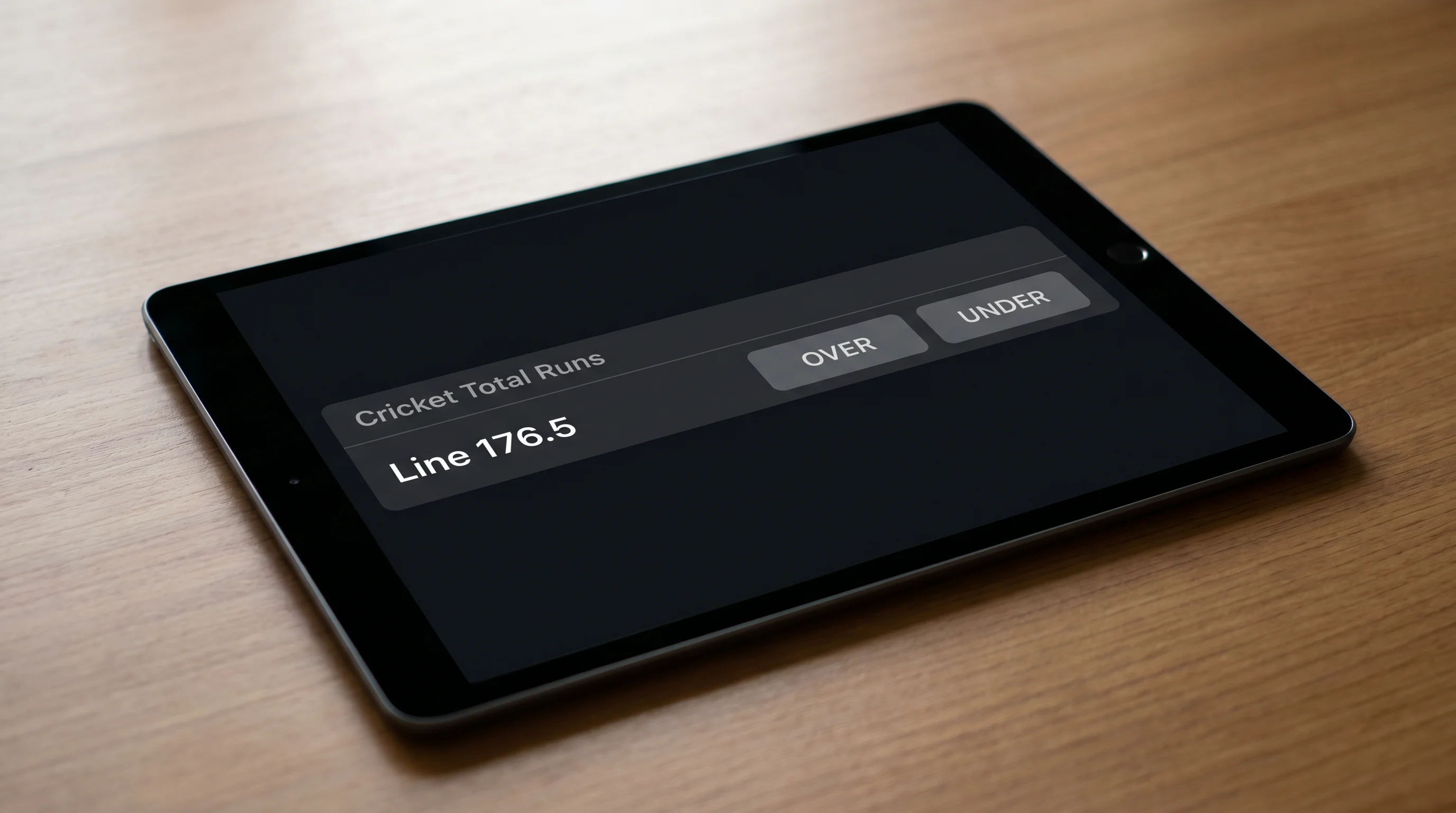
The bookmaker sets a line that represents their best estimate of the score, shaded with margin on both sides, and you take a view on whether reality lands above or below it. Most totals markets carry a price close to even money on each side of the line, because the line itself is doing the work of balancing the bet rather than the odds. That means the bookmaker moves the line, not just the price, to manage their book: heavy money on the over and they’ll nudge the line up to 168.5 to make the over harder to hit. Reading where the line sits relative to your own honest expectation is the entire skill.
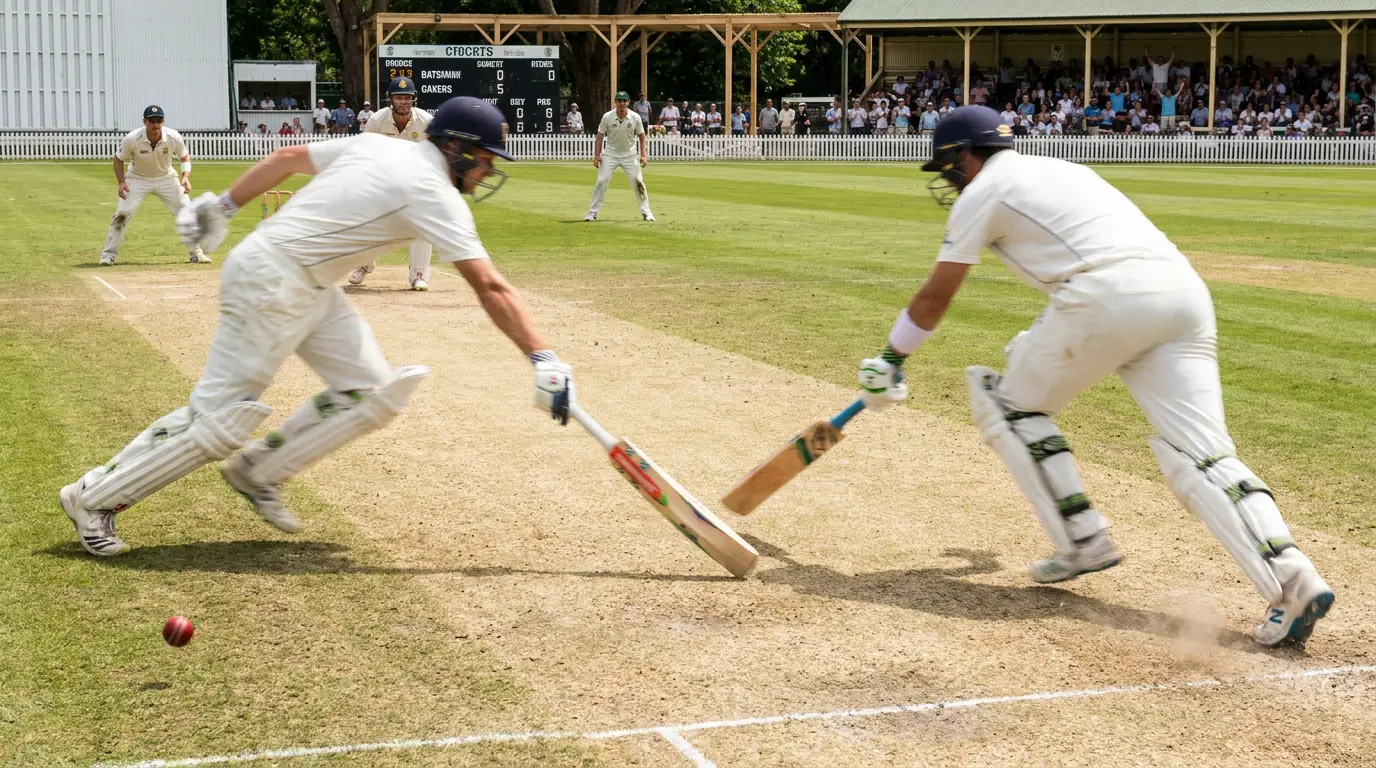
What you’re really betting on is scoring conditions, and that’s a more tractable problem than predicting a winner. A winner depends on two teams, the toss, the draw, a hundred human variables. A total depends largely on the pitch, the boundaries, the weather and the format, which are more stable and more readable. I find I’m right about totals far more often than about results, simply because I’m betting on physics and geography rather than on which set of players holds their nerve.
Innings Totals, Team Totals and Match Totals
There isn’t one runs line; there’s a whole family of them, and picking the wrong one is a classic beginner error. You can bet the first-innings total, a single team’s total, or the combined match total, and each carries a completely different risk profile that the similar-looking prices disguise.
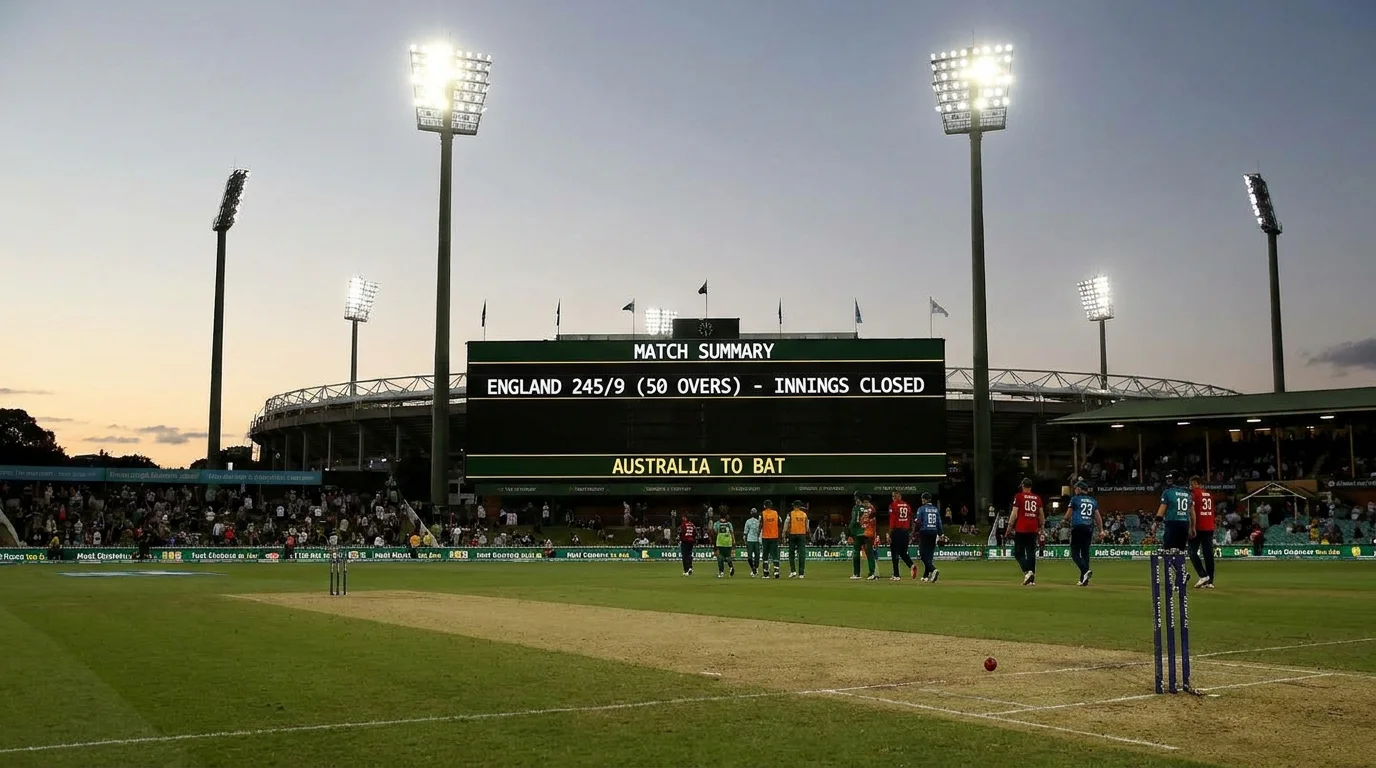
The first-innings total is the cleanest to read because it depends on the freshest conditions: the pitch at its truest, the new ball, the side batting first. There are fewer compounding variables, which is why I often start here. A single team’s total over a full innings is slightly more complex, since it folds in that team’s specific batting strength alongside the conditions. The combined match total is the wildest of the three, because it stacks every innings together and inherits all the uncertainty of weather interruptions, collapses, and how the surface changes over the course of the game. Bigger number, bigger price, and far more ways for the bet to go sideways.
There’s a settlement wrinkle that has stung more newcomers than almost anything else, and it’s about interrupted play. If you back the over on a team total and rain shortens the innings, those lost overs mean lost run-scoring opportunity, and your over bet can lose purely because the weather robbed the batters of time rather than because they underperformed. Most operators have clear rules on whether a runs-line bet stands, voids, or settles on a reduced basis when overs are lost, and reading those rules before you stake is not optional. Cricket’s relationship with the weather is uniquely punishing for totals bettors, and a forecast of showers should change how you approach an over bet entirely.
The Conditions That Push Totals Up and Down
Ask me to value a totals market and I’ll barely glance at the team names. I want to know the surface, the size of the ground, the recent scoring at the venue, and the format, because those four things explain the overwhelming majority of why one match produces 140 and another produces 220. Get a feel for them and you’re reading the market the way the trader who set it is.

Format is the loudest signal of all, and the launch of The Hundred by the ECB in 2021, with its deliberately compressed 10-by-10-balls structure shorter than even T20, has stretched the range of cricket totals dramatically. A 100-ball innings, a 20-over Blast match and a five-day Test produce scores on completely different scales, and the runs line moves accordingly. The mistake is mentally importing a sense of “high” or “low” from one format into another: a total that screams “huge” in The Hundred would be a modest first session in a Test. Always reset your scale to the format in front of you before you form a view.

Within a format, the surface and the ground do the rest. A flat, dry pitch with a fast outfield and short straight boundaries inflates totals; a green, seaming surface on a big square with long boundaries suppresses them. Early-season conditions in England, with grass on the pitch and movement in the air, regularly push totals lower than punters expect, while a baked midsummer surface does the opposite. These are the readable, physical signals that make totals so much more approachable than results, and they reward exactly the kind of homework most casual bettors can’t be bothered to do.
One important boundary to draw before you go further. Fixed-odds over/under, where your stake and potential return are both locked in when you bet, is a fundamentally different and safer beast from spread betting on runs, where your winnings or losses scale with how far the total lands from the line and your downside isn’t capped at your stake. People conflate the two and get badly hurt, so if your interest in runs markets is pulling you toward variable-payout products, read my warning-laden guide to cricket spread betting before you go near them. Stick to fixed-odds totals, learn to read conditions over teams, respect the weather, and you’ll have one of the most genuinely beatable markets in the sport working in your favour.
How is a runs line settled if an innings is rain-shortened?
It depends on the operator’s rules, which you should read before betting. Lost overs mean lost scoring opportunity, so an over bet can lose simply because the weather cut the innings short. Some books void the market, some settle on a reduced basis, and the terms vary, so never assume.
Why do T20 totals differ so much from Test totals?
Because the formats operate on entirely different scales of time and intent. A 20-over innings forces aggressive scoring across a fixed, short window, while a Test innings can stretch for a day or more at a steadier rate. Always reset your sense of a high or low total to the specific format in front of you.
