
 Available in US
Content
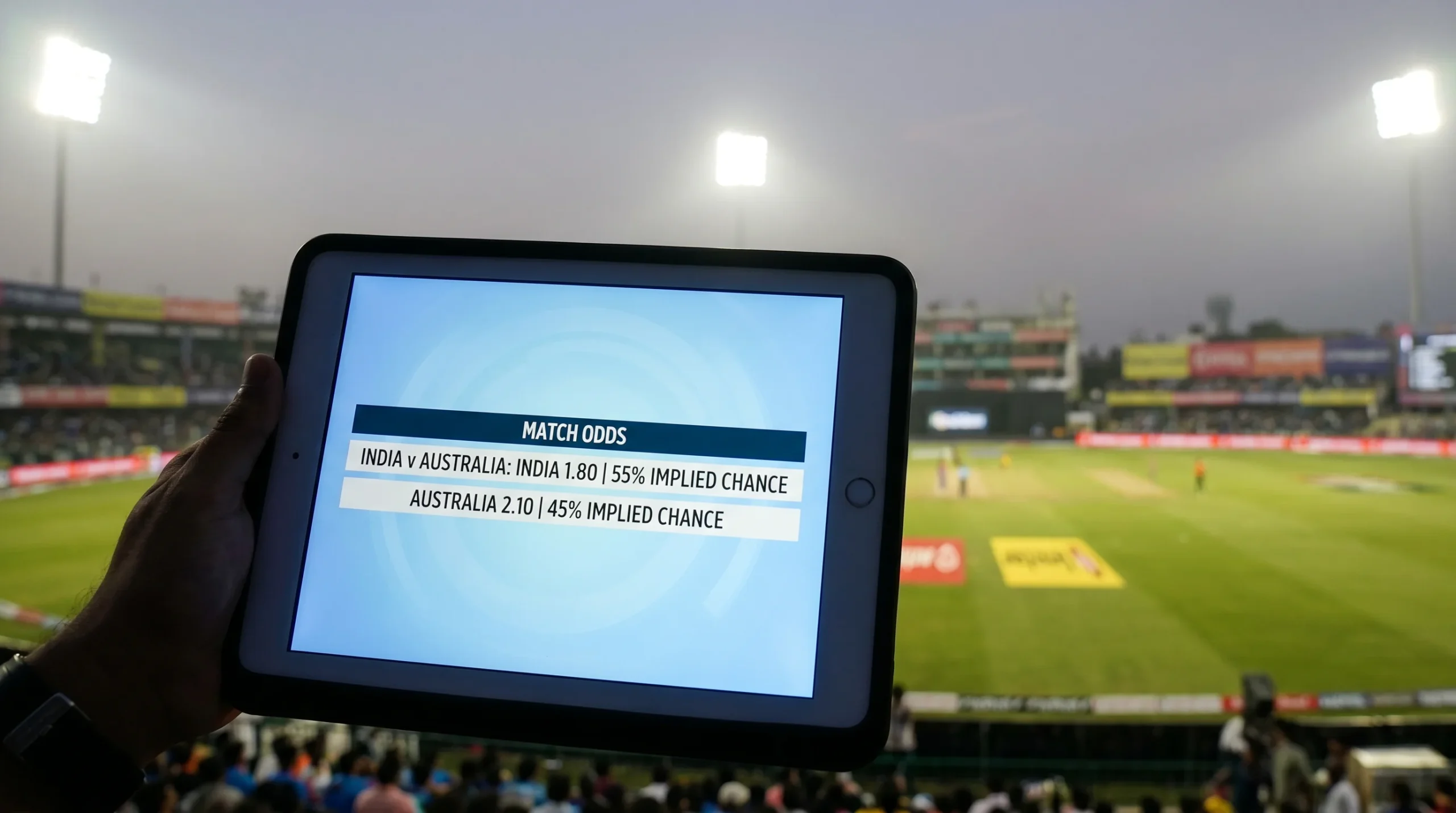
Every price you’ve ever been offered on a cricket match is a percentage in disguise. The bookmaker has decided, to the decimal point, how likely they think an outcome is, and then dressed that number up as odds so it looks like a deal rather than a forecast. Learn to undress it and you see the bet for what it really is: a claim about how often something will happen. That single skill, turning a quoted price back into the percentage chance hiding inside it, changed how I bet more than any tip, system or pundit ever has.
Implied probability is just that hidden percentage, the chance an outcome must have for the price to make mathematical sense. It’s the language a bookmaker actually thinks in before they convert it into the language they show you. When I look at England priced at 1.91 to win a one-dayer, I don’t see 1.91; I see roughly 52 per cent, and then I ask myself the only question that matters in betting: do I think they’re more likely than that to win, or less? Everything else is noise.
This isn’t an academic exercise. The global cricket betting market was valued at around 76.5 billion US dollars in 2023 and is forecast to reach more than 151 billion by 2032, which tells you how many billions of pounds are being staked against prices that most people never decode. The punters quietly winning in that market are, almost without exception, the ones who read every price as a probability first and a payout second.
Turning a Price Into a Percentage in Your Head
I once watched a friend stake a serious sum on a 5.00 shot because, in his words, “five to one, that’s a great price”. It wasn’t a bad price at all. The trouble was he had no idea what chance 5.00 actually represented, so he couldn’t possibly know whether it was generous or mean. He was betting on the size of the number, not the likelihood of the event. That’s the most expensive mistake in the game and it’s entirely avoidable with one division.
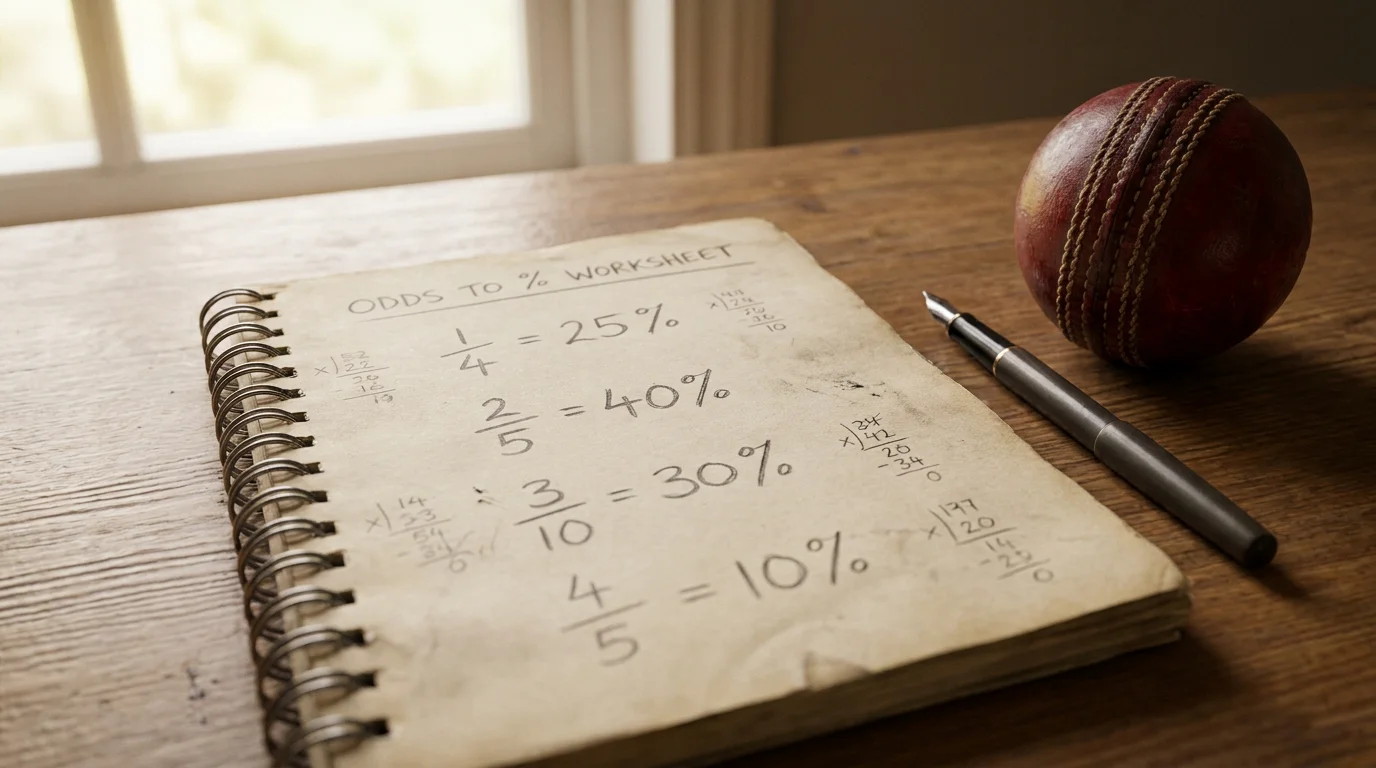
For decimal odds, the formula is as simple as it gets: divide 100 by the decimal price, and the answer is the implied probability as a percentage. England at 1.91 gives you 100 divided by 1.91, which is about 52 per cent. A 5.00 shot gives you 100 divided by 5, which is exactly 20 per cent. So my friend’s “great price” was the bookmaker saying the outcome happens one time in five. Whether that was value depended entirely on whether he thought it happened more often than that, and he’d never asked.
If you’re reading fractional odds, add the two numbers together to get your denominator and put the second number on top. So 4/1 becomes 1 divided by 4 plus 1, which is 1 divided by 5, which is 20 per cent. Evens, or 1/1, becomes 1 over 2, which is 50 per cent. The mechanics differ slightly by format but the destination is identical, so practise the conversion on whichever format your usual platform serves until the percentage falls out without thought.
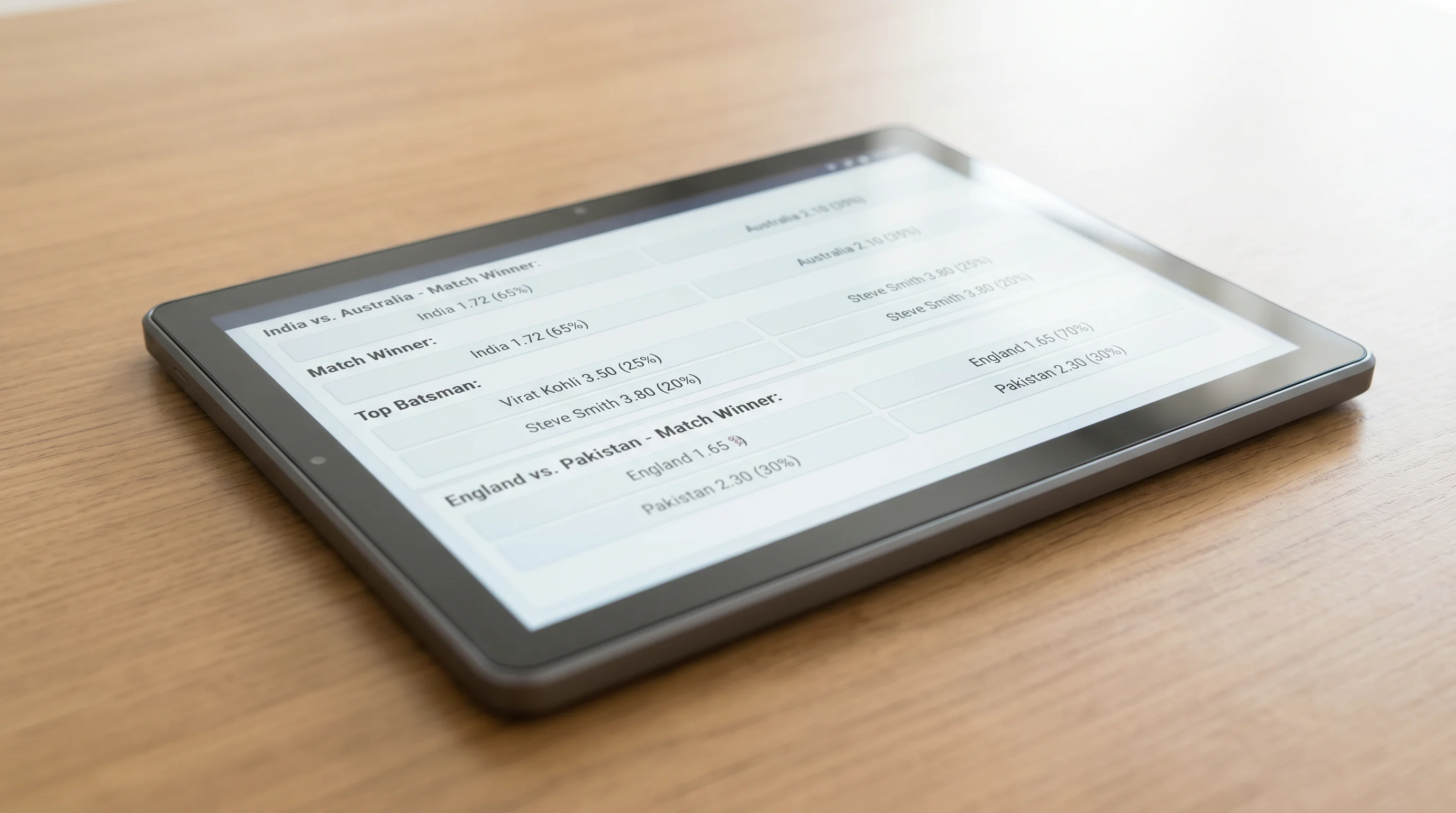
Practise this on real market boards rather than worksheets. Pull up any cricket market, glance at a price, and force yourself to say the percentage out loud before you do anything else. Within a fortnight you’ll be reading entire markets as a row of percentages, and prices that once looked like random numbers will start sorting themselves into “about right”, “too generous” and “robbery” almost automatically.
Spotting Value With the Percentage in Front of You
The whole point of converting odds to probability is that it gives you something to argue with. A price is the bookmaker’s opinion. Once it’s a percentage, you can hold it up against your own opinion and see, in plain numbers, whether you disagree enough to bet. This is the entire mechanism behind finding value, and it’s why I never place a bet without doing the conversion first.
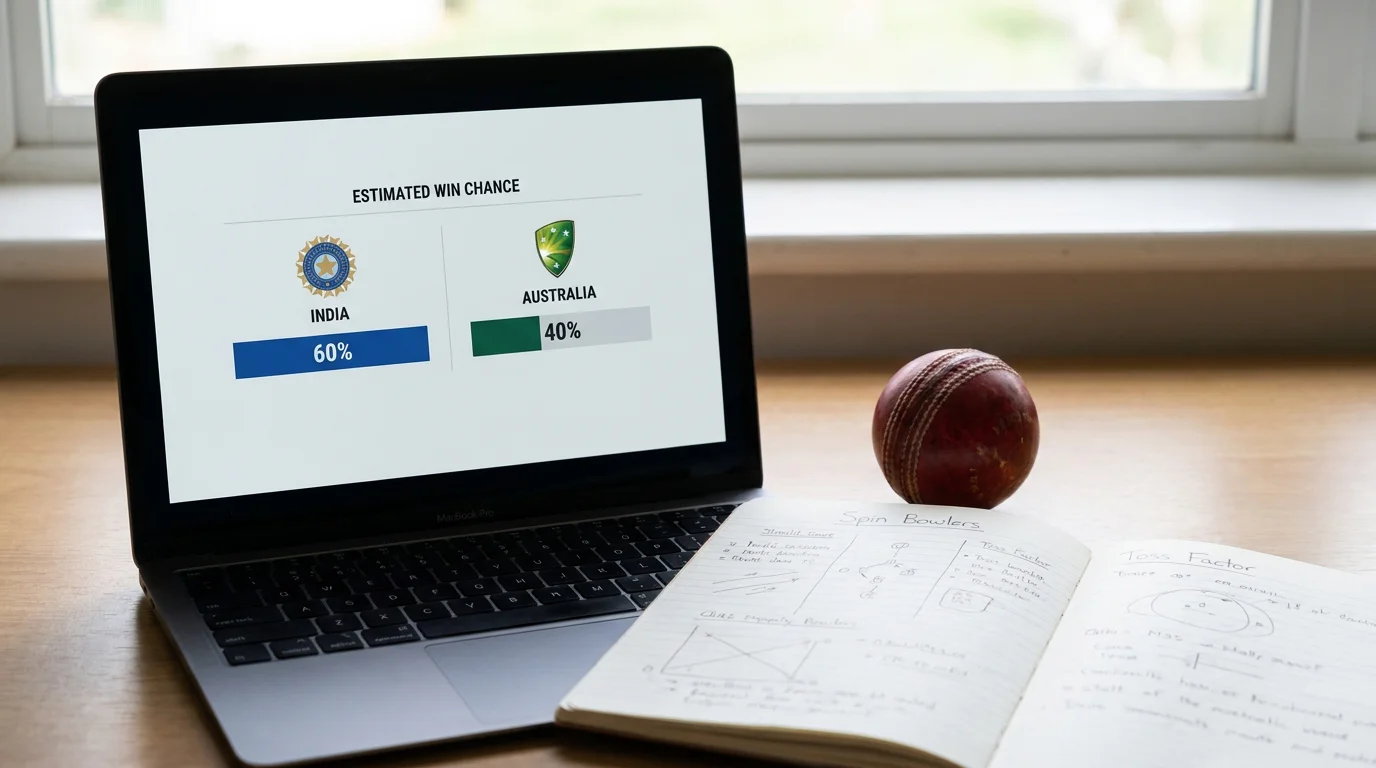
Say a bookmaker prices a batter to be their team’s top scorer at 4.00, which is 25 per cent implied. You’ve watched this player closely, you know they’re opening on a flat track against a depleted attack, and your honest read is that they’re closer to a one-in-three chance, call it 33 per cent. The price says 25, you say 33. That gap is value: the bet pays out as if the event were rarer than you believe it to be. Find enough of those gaps and bet them consistently and the maths works in your favour over time, regardless of any individual result.
The discipline cuts both ways, and this is where it earns its keep. Far more often, converting the price talks you out of a bet you fancied. You’ll see a tempting-looking 6.00 on some narrative-driven outcome, convert it to roughly 17 per cent, and realise on reflection that you don’t actually think it’s that likely. The percentage is a cold check against the warm pull of a good story, and cricket, with its endless subplots, is absolutely full of warm stories that don’t survive contact with a number.
One sharp word of caution before you go hunting. If you add up the implied probabilities of every outcome in a market, they won’t total 100 per cent; they’ll come to something more like 105 or 110. That overage is the bookmaker’s margin baked into the prices, and it means the implied probabilities you calculate are slightly inflated versions of the bookmaker’s true estimate. Accounting for that margin is its own skill and it’s where a lot of apparent value evaporates, so I’d treat the raw percentage as a starting point rather than gospel until you’ve got to grips with how the bookmaker margin in cricket odds distorts it.
How Probability Reading Shifts Across Cricket Formats
A 70 per cent favourite in a Test match and a 70 per cent favourite in a T20 are not the same animal, even though the number is identical, and treating them as equivalent has cost me real money over the years. The format changes how much you should trust the percentage, because it changes how much variance sits between the favourite and the result.
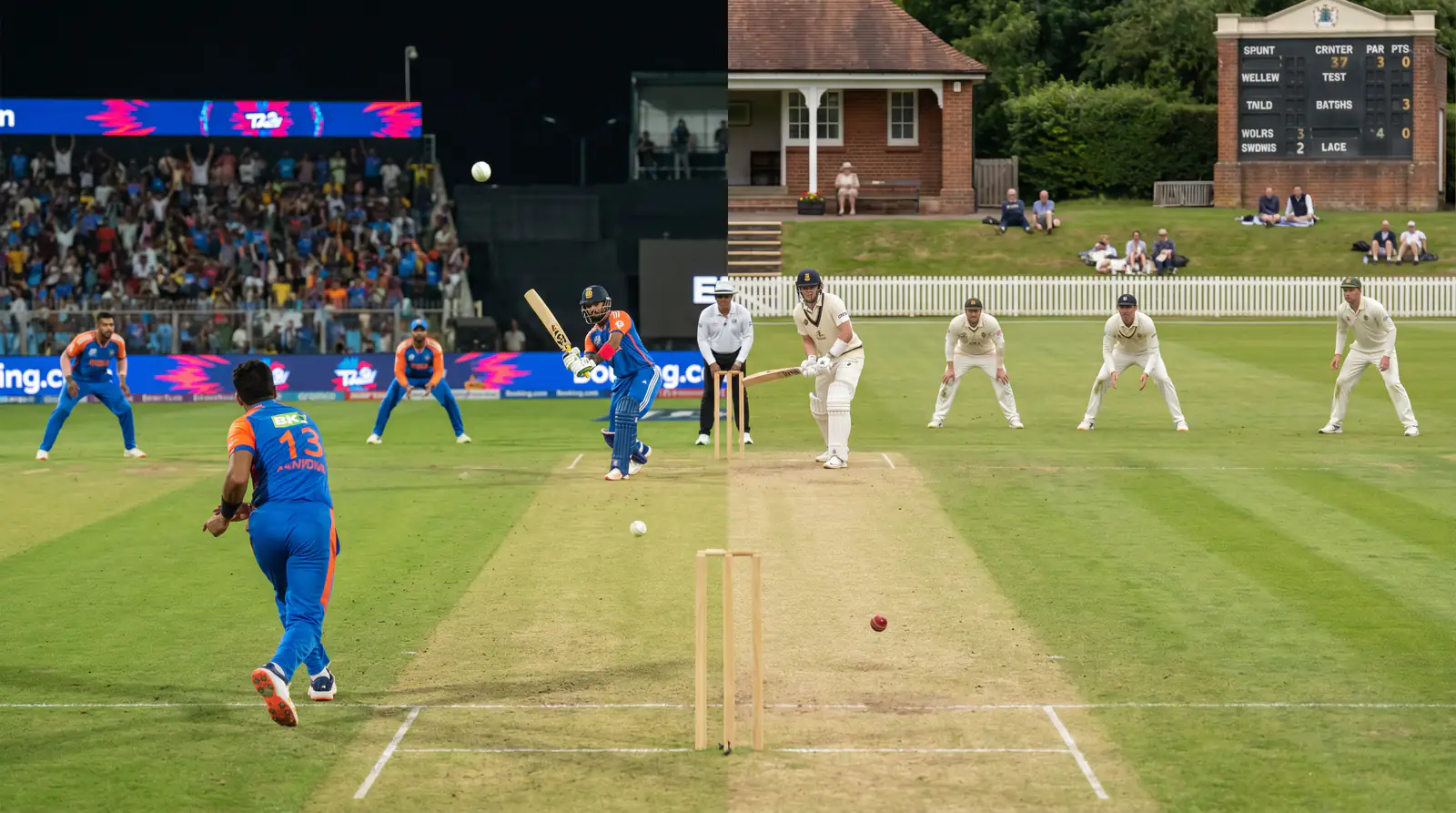
Cricket’s short formats are tearing ahead precisely because they’re so unpredictable, and the cricket segment is forecast to be among the fastest-growing in the betting market on the back of T20 and The Hundred’s popularity. That unpredictability is the whole point: a strong favourite in a 100-ball shootout can be undone by twenty minutes of clean hitting, so a 70 per cent implied chance there carries far more genuine risk than the same percentage stamped on a side dominating day three of a Test. The longer the game, the more the better team’s superiority has time to express itself, and the more reliable the favourite’s percentage becomes.
What this means in practice is that I demand more value from short-format bets than long-format ones. If I’m backing a favourite in a T20, I want the implied probability to look meaningfully meaner than my honest estimate, because I know a single passage of play can blow the percentage apart. In a Test, where time smooths out flukes, I’ll accept a tighter margin between the price and my own read. The percentage is the same arithmetic in both cases. The respect you give it is not.
Get this layered habit working and implied probability stops being a calculation and becomes a lens. You’ll glance at a price, see the percentage, weigh it against the format’s variance and your own view, and reach a decision in seconds. That’s not a trick or an edge that gets arbitraged away. It’s simply seeing the bet clearly while most of the market is still admiring the size of the number, and over a long cricket season, seeing clearly is the only edge that lasts.
Can implied probabilities across a market add up to more than 100 per cent?
Yes, and they almost always do. The total typically comes to 105 to 110 per cent, and that overage is the bookmaker’s built-in margin. It means the implied probability you calculate from a single price is slightly higher than the bookmaker’s true estimate of the chance.
How accurate is implied probability as a forecast?
It reflects the combined opinion of the bookmaker and the weight of money in the market, which is often sharp but never certain. Treat it as a well-informed estimate to test your own view against, not a guarantee, and remember it is inflated by the margin baked into the price.
