
 Available in US
Content
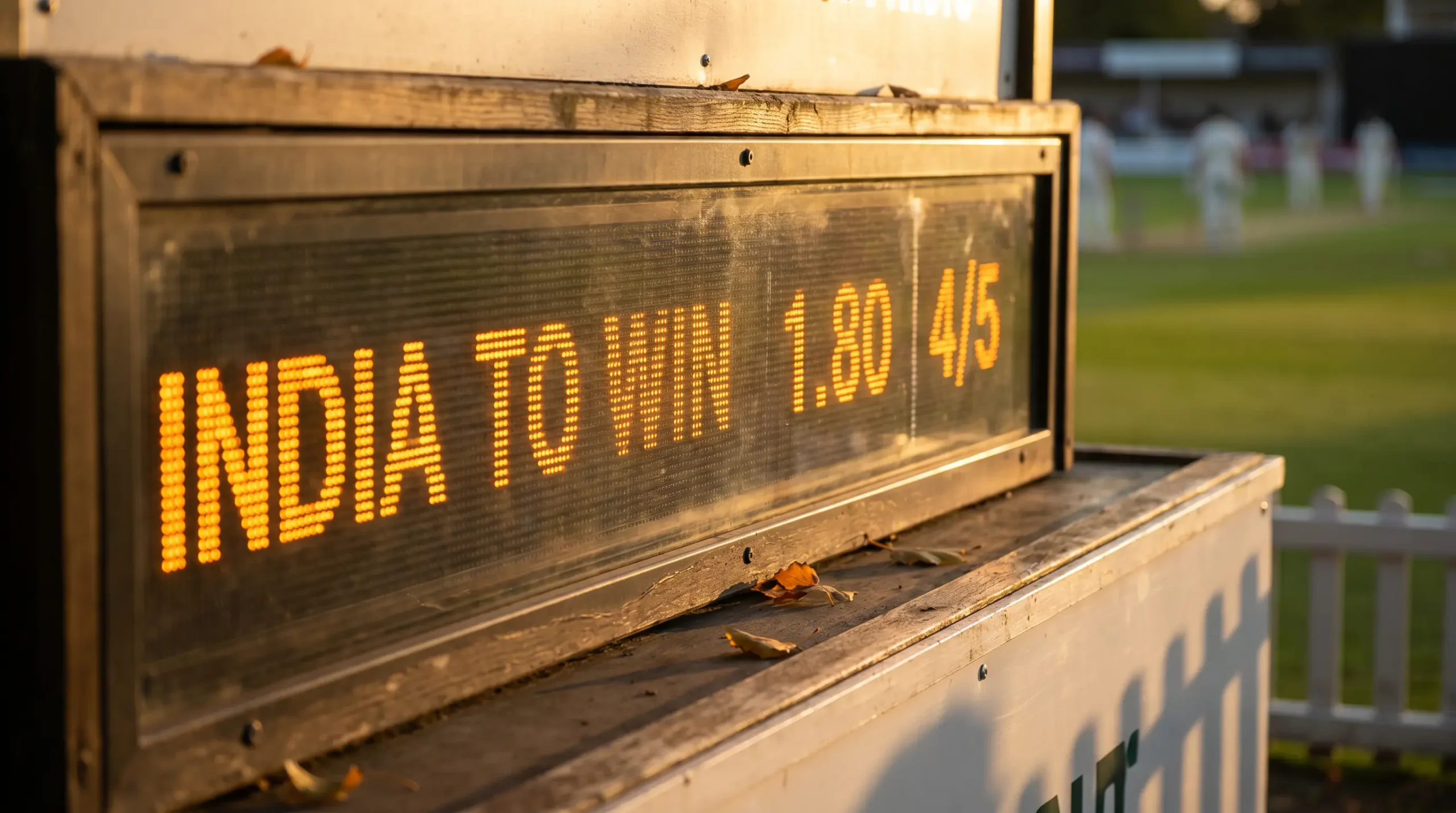
The first time I opened a betting exchange after years of staring at a high-street coupon, I genuinely thought I’d been quoted the wrong price. England to win was showing as 1.91, and my brain, trained on fractions, kept insisting that couldn’t be right because it didn’t look like anything I recognised. It was, of course, exactly the same price as the 10/11 I’d seen in the shop window an hour earlier. That moment of confusion is the whole reason this article exists, because nearly every UK punter hits it eventually.
Decimal and fractional odds are two different ways of writing down the same thing: how much a bookmaker thinks something is worth and what you stand to get back if you’re right. They are not two different prices. They are two different alphabets spelling the same word. Once that clicks, switching between them stops being a chore and becomes a quick mental flick, and you stop leaving value on the table simply because one site displays prices in a format you find harder to read. Seven years of doing this for a living, and I still default to whichever format lets me spot a mispriced market fastest, which is the only thing that actually matters.
Andrew Rhodes, who ran the Gambling Commission through a long stretch of reform, has talked about operators reporting a widening of the sports they take bets on, with cricket, basketball and a host of US sports growing in use alongside the traditional horseracing and football. That widening matters here because the newer, slicker apps drawing those punters in tend to lean decimal, while the betting heritage of British cricket is written in fractions. If you only read one, you’re only seeing half the market.
What Each Format Actually Shows You
Picture two people describing the same journey. One tells you the total distance door to door; the other tells you only the extra miles beyond your front gate. Both are accurate. You just need to know which one you’re being given before you plan your day. Decimal and fractional odds work precisely like that.
Decimal odds give you the total return per unit staked, your stake included. A price of 2.00 means that for every pound down, two pounds come back if you win: your original pound plus one pound of profit. A price of 1.50 returns one pound fifty for a winning pound, so fifty pence profit. The number always includes your stake, which is why decimal odds never dip below 1.00 and why a heavy favourite might sit at something like 1.20.
Fractional odds, the older British convention, strip your stake out and quote only the profit. Read 5/1 as “five profit for every one staked”, and 10/11 as “ten profit for every eleven staked”, which is your classic short-priced favourite where you risk more than you stand to win. The slash is just the word “to”. Evens, written EVS or 1/1, means a pound of profit for a pound staked, the exact midpoint where the two formats famously diverge in appearance: evens in fractions is 2.00 in decimals, and the gap between those two written forms trips up more newcomers than any other single thing in odds reading.
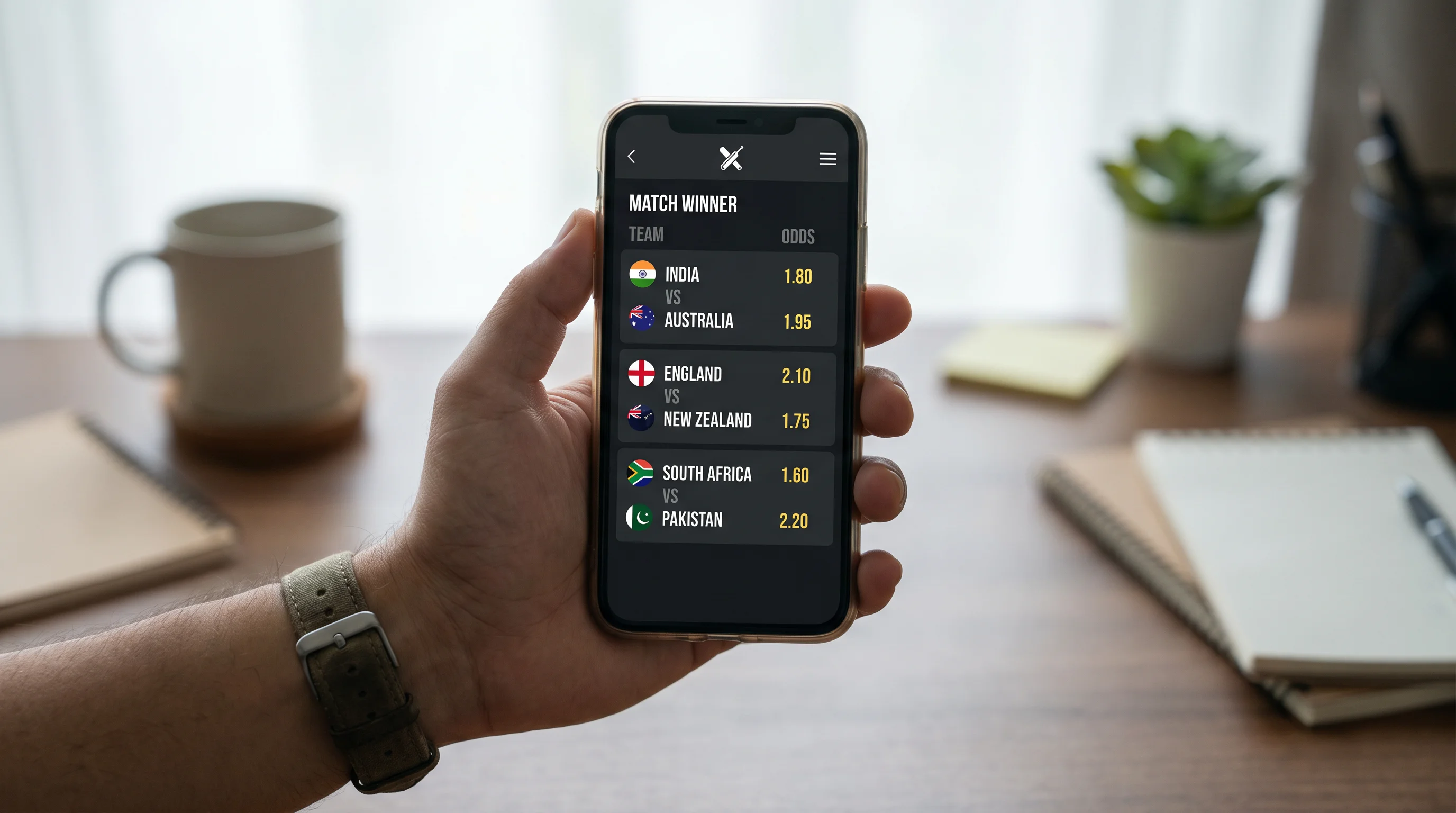
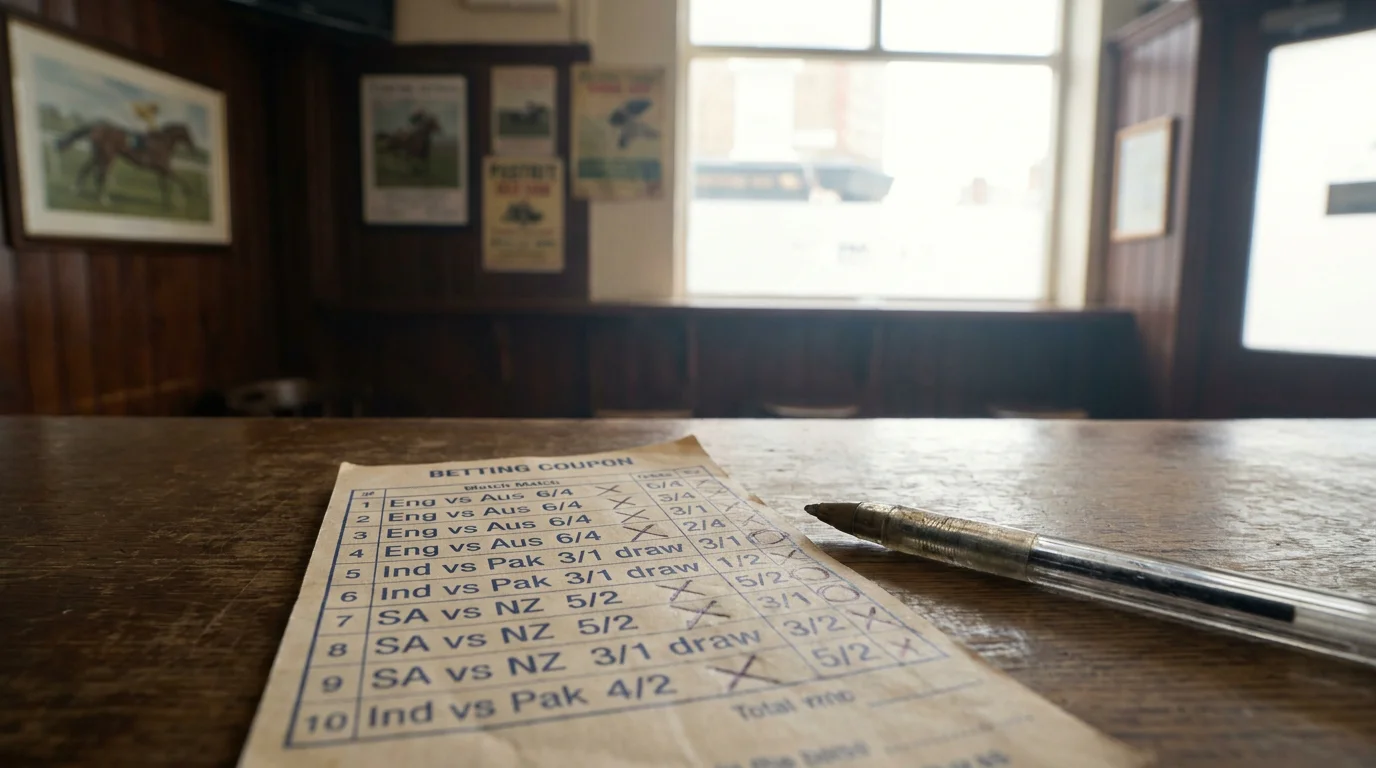
The conceptual difference is small but it drives a real behavioural one. Because decimals bake in your stake, they make total returns instantly obvious, which is why exchanges and most modern apps prefer them. Fractions force a tiny extra step to work out what lands in your account, but they make the profit ratio jump out, which is why the rails at a racecourse and a lot of traditional cricket coupons still speak fractions. Neither is better. They suit different reading habits.
Converting One to the Other Without a Calculator
Here’s a confession that still embarrasses me: for about a year early in my career I quietly used a conversion app under the table at the bookies because I didn’t trust my own arithmetic on a busy Saturday. I needn’t have bothered. The conversion is genuinely a two-second job once you’ve drilled it a handful of times, and doing it in your head is the difference between catching a price before it moves and watching it vanish.
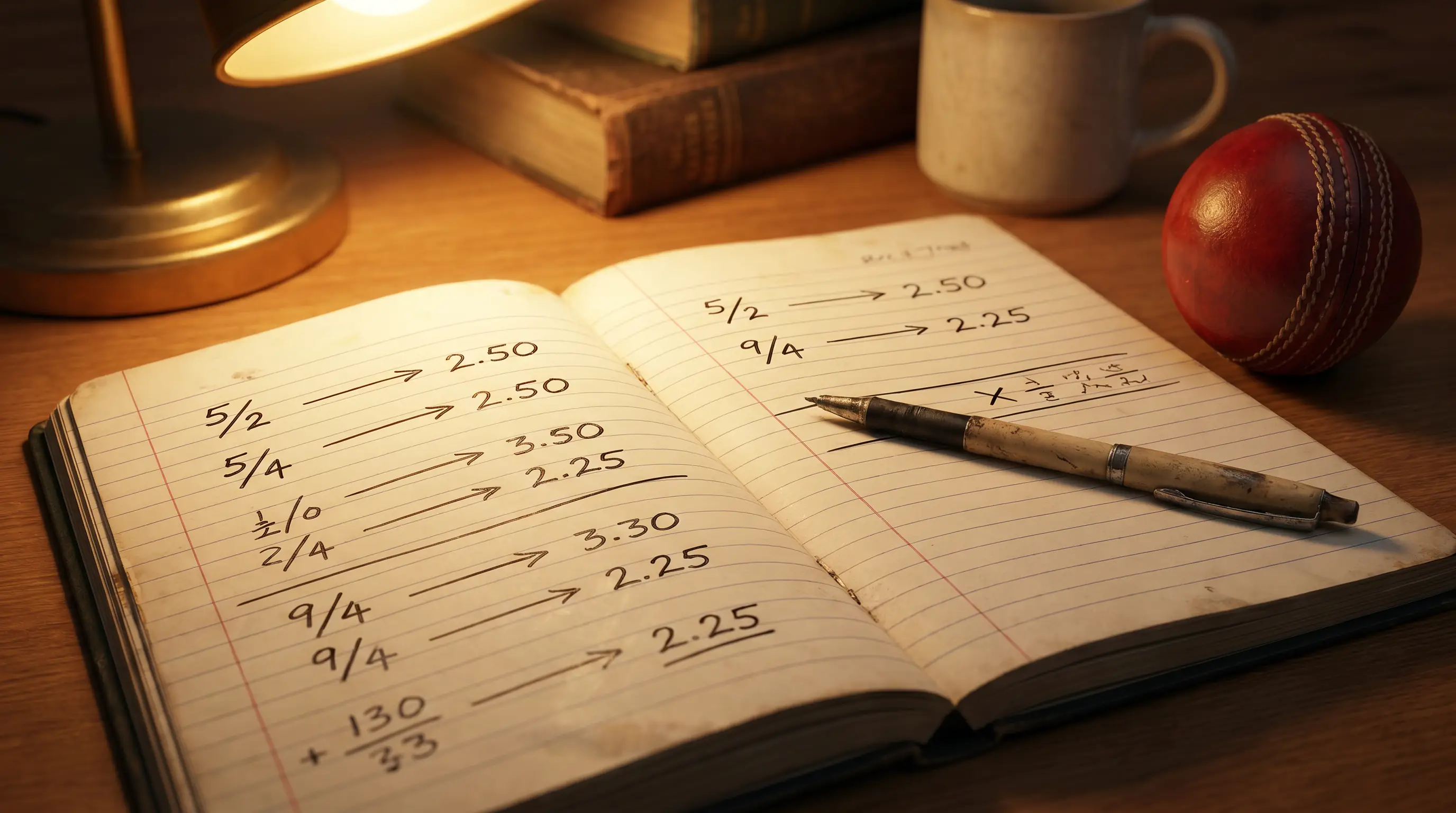
To turn fractional into decimal, divide the first number by the second and add one. So 5/1 becomes 5 divided by 1, which is 5, plus 1, giving 6.00. The “add one” step is just you putting your stake back into the number. Try 7/2: that’s 3.5, plus 1, equals 4.50. And 10/11: that’s 0.909, plus 1, equals 1.91, which is exactly the price that confused me all those years ago.
Going the other way, decimal to fractional, subtract one and then express what’s left as a fraction. A decimal of 3.50 loses its 1 to become 2.5, which you write as 5/2. A decimal of 1.91 becomes 0.91, near enough 10/11. The arithmetic is the same operation run backwards, and after a week of consciously converting every price you glance at, it becomes automatic. I now read a market board in whichever format it’s served and translate the interesting prices into my preferred format on instinct.
The reason this fluency pays off is that prices in cricket move, and they move on volume. William Hill and Bet365 between them have pulled in more than half of all UK betting search clicks in early 2026, which gives you a sense of how concentrated the liquidity is, and where liquidity concentrates, prices shift fastest. The same Q4 2025 stretch saw the whole British gambling sector turn over 4.5 billion pounds in gross gambling yield, 3.3 billion of that once you strip out lotteries, so these are deep, fast markets. If you have to stop and fumble a conversion every time a price catches your eye, you’ll consistently arrive late.
Which Format British Punters Actually Reach For
Ask ten cricket bettors in a UK clubhouse which odds format they prefer and you’ll get a clean generational split. The older hands, the ones who learned betting at the racecourse, think in fractions and find decimals oddly clinical. The younger crowd, raised on apps and exchanges, find fractions fiddly and slightly archaic. I sit awkwardly in the middle, which is probably the most useful place to be.

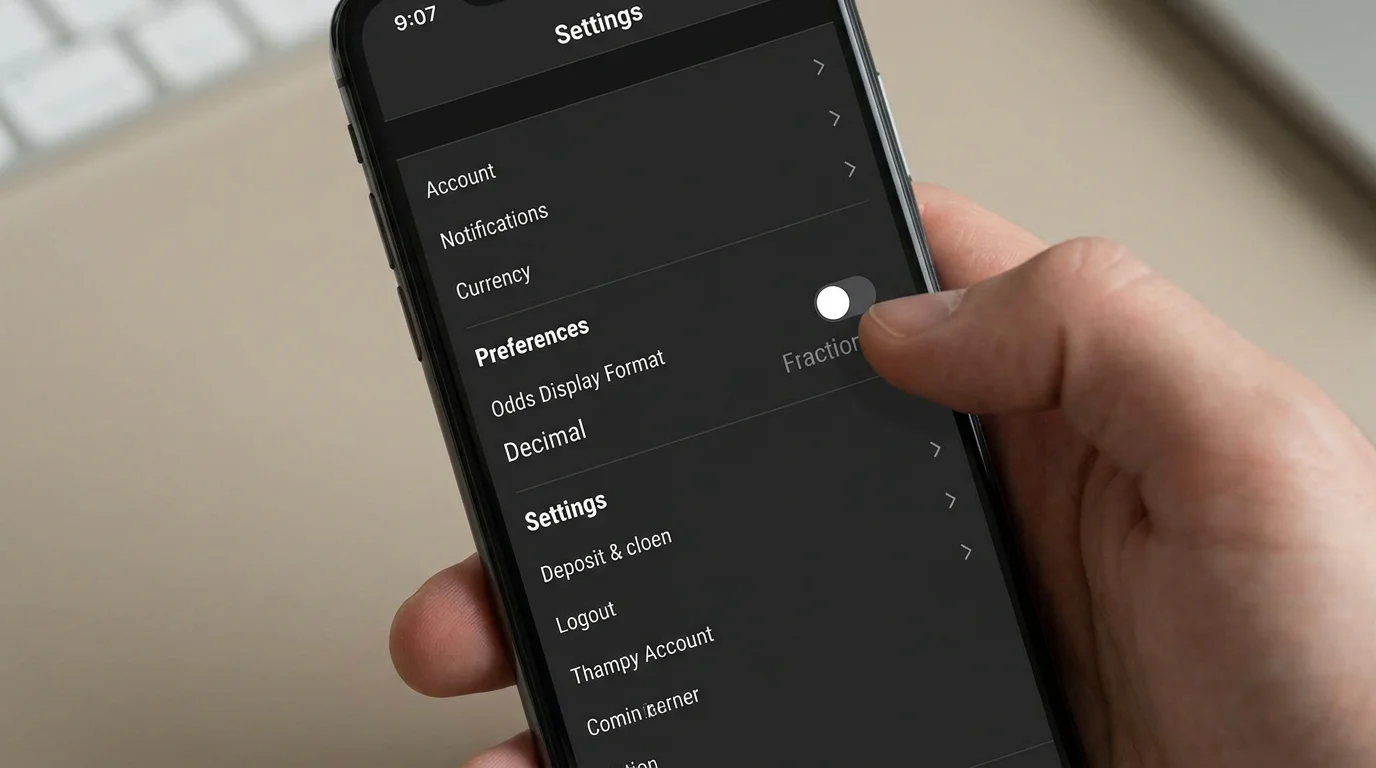
The practical reality is that the format you see is dictated by the platform, not by you. Traditional sportsbooks and printed cricket coupons lean fractional because that’s the British betting dialect. Betting exchanges default to decimal almost universally, because decimal makes the back-and-lay maths and the commission calculation far cleaner, and you simply cannot run an exchange efficiently in fractions. Most apps now let you toggle the display in settings, which I’d strongly encourage you to find and set to whichever you read faster.
My honest recommendation after years of this: learn to read both fluently, but pick one as your “thinking” format and convert everything into it. I think in decimal because it makes comparing value across an exchange and a sportsbook trivial, and because implied probability, the percentage chance a price represents, falls straight out of a decimal with a single division. If you want to go deeper on turning a price into a true percentage chance, that lives in its own piece, and there’s a fuller walkthrough of the whole skill in my guide to how to read cricket betting odds. For now, the takeaway is simpler than it looks: there is no good price hiding in one format that isn’t there in the other. There’s only your speed at reading it.
So the next time an exchange shows you 1.91 and the shop down the road shows 10/11, you’ll know instantly they’re the same bet, and you’ll put your money wherever the price is actually keenest rather than wherever it happens to look familiar. That’s not a trivial edge. Over a season, reading every market in every format the moment it appears is one of the quiet habits that separates people who break even from people who don’t.
Are decimal and fractional odds ever different values for the same bet?
No. They are two notations for one price. If a selection is 2.00 in decimal it is evens (1/1) in fractional, and the return is identical. Any apparent difference is a rounding artefact, because fractions snap to standard ratios like 10/11 while decimals can show 1.91 exactly.
Why do betting exchanges default to decimal?
Decimal odds make the back-and-lay maths and the commission deduction far cleaner to calculate, and total returns are obvious at a glance because your stake is already included in the number. Running an exchange in fractions would be needlessly clumsy, so almost all of them standardise on decimal.
