
 Available in US
Content

The twenty-two yards of soil in the middle decide more cricket matches than the eleven players standing on either side of it, and almost nobody bets accordingly. The pitch report, that short pre-match ritual where a presenter prods the surface and offers a verdict, is the single most valuable free information the broadcasters hand you, and the punter who learns to read it properly has an edge over the crowd that treats it as filler before the toss.
Reading the pitch for betting means translating the visible and reported characteristics of the surface, its grass, its hardness, its dryness, its history, into a forecast of how the match will play and which outcomes that favours. It’s pre-match work above all, done before a ball is bowled, and it underpins almost every other read you’ll make: totals, match result, top batsman, the lot. Get the pitch wrong and every downstream bet inherits the error.
What a Pitch Report Actually Tells You
I used to watch pitch reports the way most people do, half-listening while the presenter pressed a key into the surface and made vague noises about pace. Then I started actually decoding what they were saying, and matches began to make sense before they started. The report is a genuine intelligence briefing if you know the vocabulary, and the vocabulary isn’t hard.
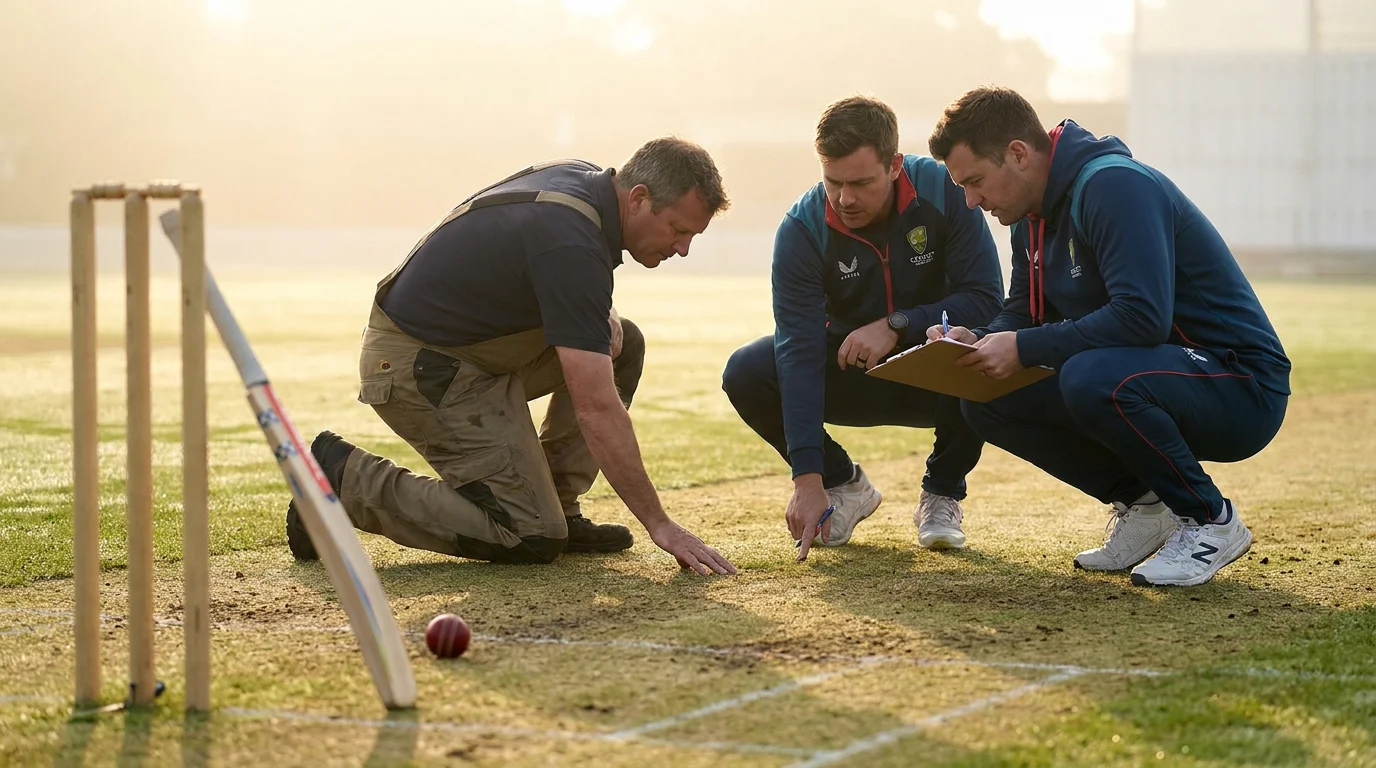
The presenter is telling you several specific things, each with direct betting consequences. Grass on the surface means movement for the seamers and a harder time for batters early on, which favours the side bowling first and suppresses the opening totals. Cracks and dryness signal a pitch that will deteriorate, taking spin and becoming treacherous to bat on later, which matters enormously for who wins the toss decision and how a Test’s fourth innings will play. Hardness and an even covering of short grass suggest pace and bounce that reward stroke-play, lifting scoring. Each observation maps onto a betting consequence, and the report hands you all of them for free, minutes before the market settles.

What makes this so valuable is that the pitch is largely a known quantity before play, unlike the weather or the form of an individual player. The surface is there to be read, the report describes it, and the historical scoring at the venue confirms or qualifies the read. Global sports betting was valued at over 112 billion US dollars in 2025, and the cricket segment is forecast to be among the fastest-growing of all, driven by the short formats whose outcomes the pitch heavily influences, yet the pitch report remains underused by casual bettors who’d rather argue about team selection. The information is sitting there. Most people just don’t listen.
Green Surfaces Against Dry Ones and What Each Favours
The clearest mental model for pitch betting is a spectrum running from green to dry, because almost every betting consequence follows from where a surface sits on it. Once you can place a pitch on that spectrum from the report, the likely shape of the match falls out almost automatically, and so do the bets that suit it.
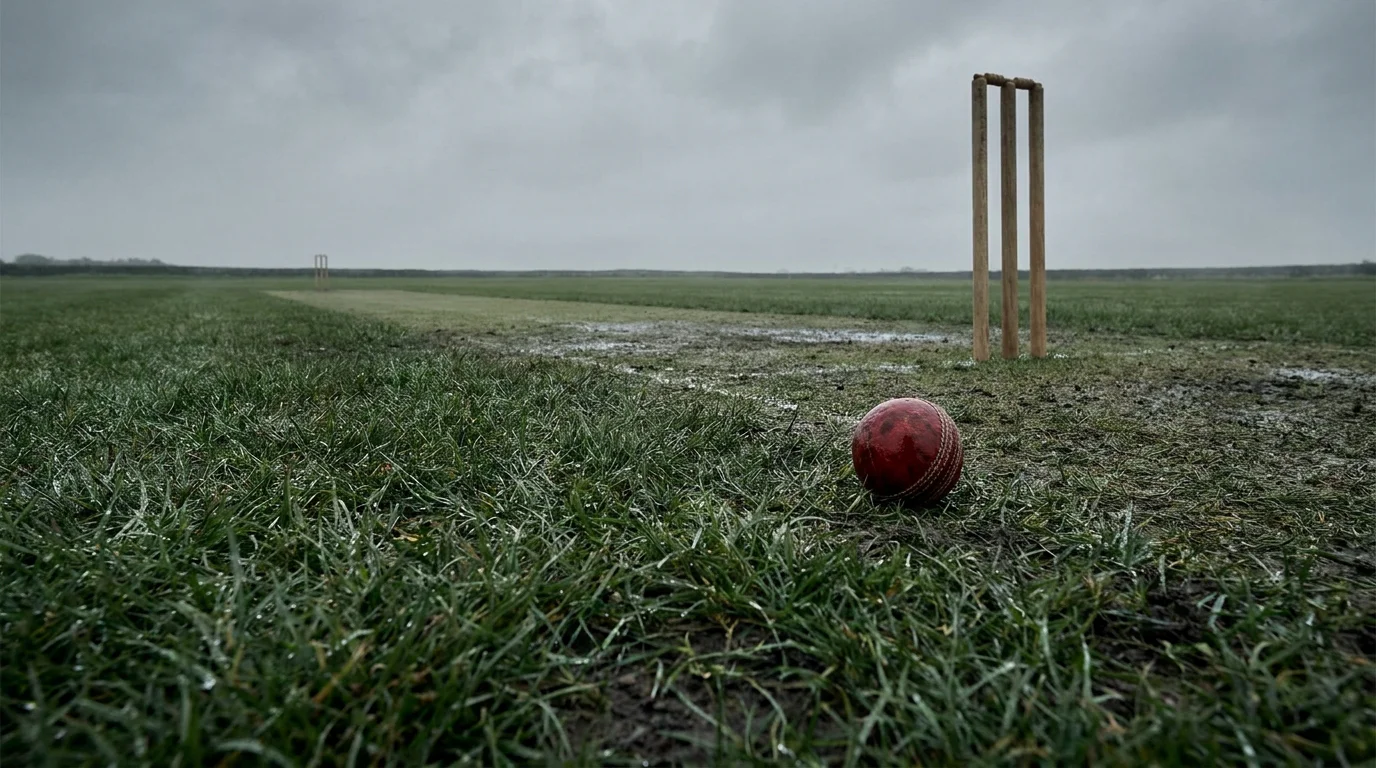
A green pitch, with a visible covering of grass, helps the seam bowlers. The ball moves off the surface and through the air, batting is hazardous early, wickets fall, and totals stay low, particularly in the first innings before the grass is worn away and the surface eases. On a green top I lean toward the bowling side, the under on totals, and a quality seam attack, and I treat the toss as crucial because the side bowling first in those conditions has a real advantage. The early-season English game is the archetype: damp, grassy surfaces under heavy skies that flatter the seamers and punish the batters.
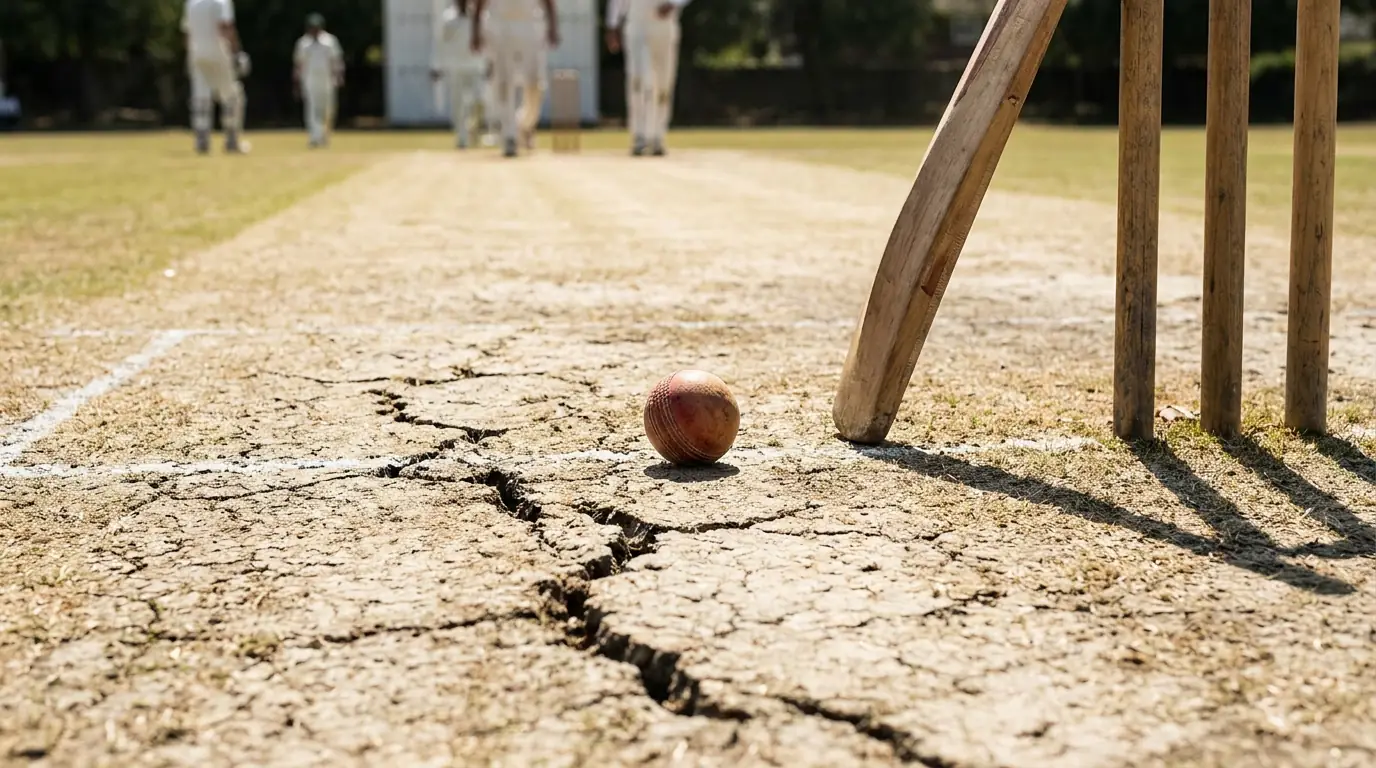
A dry pitch tells a different story that unfolds over time. Early on it may be excellent for batting, flat and true, but as the match wears on it cracks, dust appears, and the spinners come into their own on a surface that grips and turns. This makes the dry pitch a betting puzzle of timing: good for batting first, increasingly dangerous to bat last, which shapes the toss decision, the fourth-innings dynamics, and the value in backing a side with quality spin. The skill is reading not just where the pitch starts but how it will travel, and a dry, cracking surface is a forecast of a match that gets progressively harder for the batters as it goes. That evolution is exactly what makes conditions-reading a richer edge than team-reading, because the pitch’s arc through a match is knowable in a way that human form simply isn’t.
Turning Pitch Knowledge Into Pre-Match Bets
The point of all this reading is to act on it before the market fully prices it, and the pre-match window is where pitch knowledge pays. The report airs, the toss happens, and there’s often a brief gap before the prices settle to reflect what the surface and the toss decision mean, a gap a prepared bettor can exploit.

My pre-match routine is simple and disciplined. I form a view of the pitch from the report, the venue history and the visible conditions, decide what that implies for totals and result, and check whether the market’s prices reflect it. When a pitch screams low-scoring seam-friendly conditions but the totals line looks set for a flat-track feast, there’s value in the under; when a dry turner is obvious but the side with the better spin attack is priced as if conditions are neutral, there’s value in backing them. The pitch read is the foundation on which I build the specific bet, not a vague background feeling but a concrete forecast I’m pricing against the market. The surface is only half the conditions picture, though, and the overhead weather that drives swing and the rain that can rewrite a result are a separate layer entirely, which I’ve covered in my guide to weather cricket betting.
The discipline that matters most is separating the pitch from the other conditions that affect a match, because conflating them muddies the read. The pitch is the surface itself, the soil and grass and cracks; the overhead conditions, the cloud cover and humidity that drive swing, are a separate variable, and the dew that affects evening matches is another again. A clean pitch read isolates what the surface alone is telling you, and then you layer the atmospheric factors on top rather than blending everything into a vague sense of “bowling conditions”. Master the surface first, read it from the report before the market does, and you’ll be making informed pre-match bets while the crowd is still wondering who’ll win the toss.
Does a green pitch favour bowlers for betting?
Yes, particularly the seamers and especially early in the match. A covering of grass means the ball moves off the surface and through the air, making batting hazardous, lowering first-innings totals and giving an edge to the side bowling first. On a green top, the under on totals and a quality seam attack are natural bets.
How does pitch wear change odds by day four?
On a dry surface, the pitch cracks and dusts as the match wears on, so it grips and turns increasingly, bringing the spinners into play and making batting last progressively harder. That evolution shifts the value toward sides with quality spin and shapes the fourth-innings dynamics, which is why reading how a pitch will travel matters as much as how it starts.
