
 Available in US
Content
- Why the Licence on the Footer Matters More Than the Welcome Offer
- The Bet Slip Is Just a Receipt You Build Before You Pay
- Walking Through Your First Bet Without Fumbling It
- Picking a Format So You're Not Drowning on Day One
- The Bankroll Talk Nobody Wants but Everybody Needs
- The Beginner Errors I See on Repeat
The first cricket bet I ever placed was a disaster, and not because it lost. It lost, yes, but the real problem was that I had no idea what I was actually doing. I’d picked a team because I liked their captain, staked more than I’d planned, and sat there refreshing the score with absolutely no understanding of how the market I’d backed would even settle. That was seven years ago. Since then I’ve spent more hours than I’d care to admit watching odds tick across the Ashes, The Hundred and the County Championship, and I’ve learned that the gap between a confused punter and a confident one isn’t talent or insider knowledge. It’s process.
So that’s what this guide is. Not tips, not predictions, not a sales pitch for any particular site. Just the sequence I’d hand to anyone starting from zero. Learning how to bet on cricket properly comes down to four moves done in order: choose a bookmaker that’s actually licensed to take your money, learn to read the bet slip in front of you, place a first bet without fumbling it, and then manage your bankroll so the hobby stays a hobby. Reading odds and finding value are separate skills with their own homes elsewhere on this site. Here we’re concerned with the mechanics, the physical act of getting a bet down correctly and surviving long enough to enjoy it.
Cricket rewards patience in a way few sports do. A Test match unfolds over five days. Even a T20 gives you three hours of shifting probabilities. That tempo is a gift to a beginner, because it means you almost never have to rush a decision. The mistakes I see newcomers make are rarely about cricket knowledge. They’re about haste, about not understanding what a market pays out on, about treating a betting account like a wallet that refills itself. Get the foundations right and the rest is just learning the game you already love from a slightly different angle. One quick note before we start: the regulator has watched this happen for years, with the Gambling Commission noting that operators are reporting a widening of the sports on offer, with cricket explicitly named as one of the verticals growing in use alongside football and horseracing. You’re not alone in finding your way here.
Why the Licence on the Footer Matters More Than the Welcome Offer
Picture two betting sites side by side. One screams a free bet worth a small fortune the moment you land. The other quietly displays a Gambling Commission licence number in the footer and a clean withdrawal policy. New punters gravitate to the first every single time, and it’s the single most expensive instinct in this whole hobby.
A licensed bookmaker is one the UK Gambling Commission, the UKGC, has formally authorised to take bets from people in Britain. That licence isn’t decoration. It means your funds are held to defined standards, that the operator must offer self-exclusion and deposit limits, and that if a dispute arises you have somewhere to escalate it. There’s no shortage of providers, either. As of September 2025 Britain had 8,254 licensed gambling premises, of which 5,782 were betting shops, and that physical footprint sits alongside a vast online market. The point isn’t that you’ll struggle to find an operator. The point is that the legal, regulated ones and the offshore ones can look almost identical on a phone screen, and only one of them is bound by rules designed to protect you.

How do you actually check? Scroll to the bottom of any site. A genuine UK operator will state its licence and link to the Commission’s public register, where you can search the company name and confirm it’s current. If that information is buried, vague or absent, close the tab. I treat this as non-negotiable, the way you’d check a taxi has a licence plate before getting in. It takes thirty seconds and it’s the difference between a regulated environment and a black hole.
The welcome offer, meanwhile, deserves suspicion rather than excitement. Free bets and matched deposits come wrapped in wagering requirements, minimum-odds conditions and expiry dates that the headline number never mentions. I’m not telling you to ignore promotions. I’m telling you to read the terms with the same care you’d read a tenancy agreement, because that’s effectively what they are. A bonus that forces you into markets you don’t understand at odds you wouldn’t normally take is not a gift. It’s a hook. The bookmaker that earns my custom is the one that’s easy to deposit into, transparent about withdrawals, and licensed without me having to dig. Everything else is secondary. When you’re ready to move from choosing where to bet to understanding what you’re betting on, the catalogue of options is worth a proper look, and I cover the full range in my guide to the markets available on a cricket match.
The Bet Slip Is Just a Receipt You Build Before You Pay
I once watched a friend stare at a populated bet slip for a full minute, convinced he’d already lost money. He hadn’t. He hadn’t placed anything yet. He’d just clicked some odds and panicked at the numbers stacking up on the right of his screen. The bet slip is the most misunderstood object in online betting, and it’s genuinely simple once you see it for what it is.
When you click on a price anywhere on a bookmaker’s cricket page, that selection drops into the bet slip, usually a panel on the side or a tab at the bottom on mobile. Think of it as a basket in an online shop. Nothing is committed. The slip shows you three things: what you’ve selected, a box where you type your stake, and a calculated figure for your potential returns. That returns figure already includes your stake back, which trips people up constantly. If you stake ten pounds at decimal odds of 3.00, the slip shows returns of thirty pounds, not thirty on top of your tenner. Your profit is twenty. The stake is part of the number because the bookmaker is showing you what lands back in your account if the bet wins.
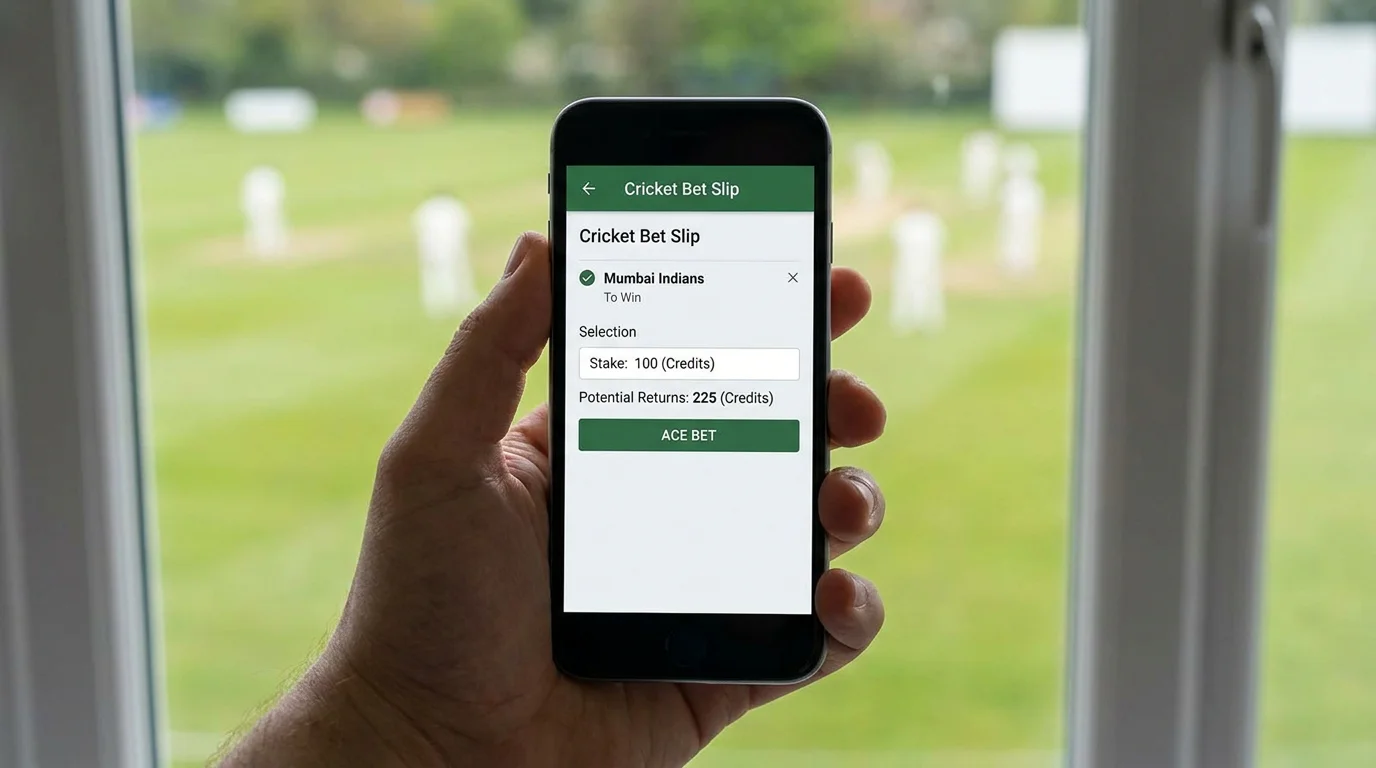
You’ll also see options for the bet type. A single is one selection that stands alone. A multiple, often called an accumulator or acca, combines several selections into one bet where every leg must win. Beginners are drawn to accas because the potential returns look enormous, and they are, but only because the probability of hitting every leg is correspondingly tiny. For your first bets, stick to singles. The slip makes it easy to add selection after selection, and that ease is exactly the trap. One clear bet you understand beats five stacked together that you don’t.
The last thing worth knowing about the slip is the confirmation step. After you enter a stake, you press a button to place the bet, and only then does money leave your balance. Many sites then show a bet reference and the bet appears in an open-bets section. Until that confirmation, you’re still just shopping. I’ve seen newcomers close the app thinking they’d bet when they hadn’t, and others assume nothing went through when it had. Always check your open bets after placing. That habit alone will save you confusion for years.
Walking Through Your First Bet Without Fumbling It
The bet I tell every beginner to start with isn’t glamorous. It’s a straight match-winner on a limited-overs game, the kind of bet where the rules are obvious and the outcome is clear within hours. Let me walk you through exactly how I’d place it, step by step, the way I’d talk you through it sitting next to you.
First, you find the match. On any cricket page you’ll see fixtures grouped by competition, so a T20 Blast game or a one-day international will be listed with the two teams and a set of odds beside them. The match-winner market, sometimes labelled “to win” or “match result”, shows a price for each side. In limited-overs cricket there are only two realistic outcomes, one team or the other, which is why it’s the cleanest place to begin. Test matches add the draw as a third option, and that complication is best avoided on day one.

Second, you click the price next to the team you fancy. It lands in the bet slip. Now comes the discipline: before you type anything, decide your stake away from the heat of the moment. I’d suggest a beginner stakes an amount small enough that losing it changes nothing about your week. Type that figure into the stake box. Watch the returns update. Read them back to yourself so you understand exactly what you stand to win and what you stand to lose. The loss is always the full stake. The win is the returns minus that stake.
Third, you confirm. Press place bet, wait for the reference, and check the bet has appeared in your open bets. That’s it. You’re now in the market, and here’s the part nobody tells beginners: do nothing. Watch the game. Resist the urge to immediately place another bet to “balance” the first or to chase the excitement. The single most valuable skill in your first month is sitting on your hands while a bet runs.
If you want a fuller breakdown of how each individual market settles once you’ve got the basic mechanics down, that’s a deep subject in its own right and I’ve mapped it out separately. But the sequence above, find the match, click the price, set the stake deliberately, confirm, and wait, is the spine of every cricket bet you’ll ever place, whether it’s a fiver on a county game or a considered position on an Ashes series. Master the boring version first.
Picking a Format So You’re Not Drowning on Day One
Here’s a question that decides more beginner outcomes than people realise: which format do you bet on first? The answer matters because cricket isn’t one game, it’s at least four, and each demands a completely different mindset. Get this choice wrong and you’ll either be bored stiff or hopelessly out of your depth.
The shortest formats are the friendliest entry point, and the data backs up why they’ve become so central. The England and Wales Cricket Board launched The Hundred in 2021, a format of 100 balls per side, even shorter than a T20, explicitly designed as an answer to the global franchise leagues, and it has become a hugely popular betting fixture in its own right. The appeal for a beginner is obvious. A short-format match resolves in an evening. The variance is high, which means upsets happen, but the commitment is low, and you get rapid feedback on your decisions. You learn more in a week of T20 cricket than in a month of staring at a drawn Test.
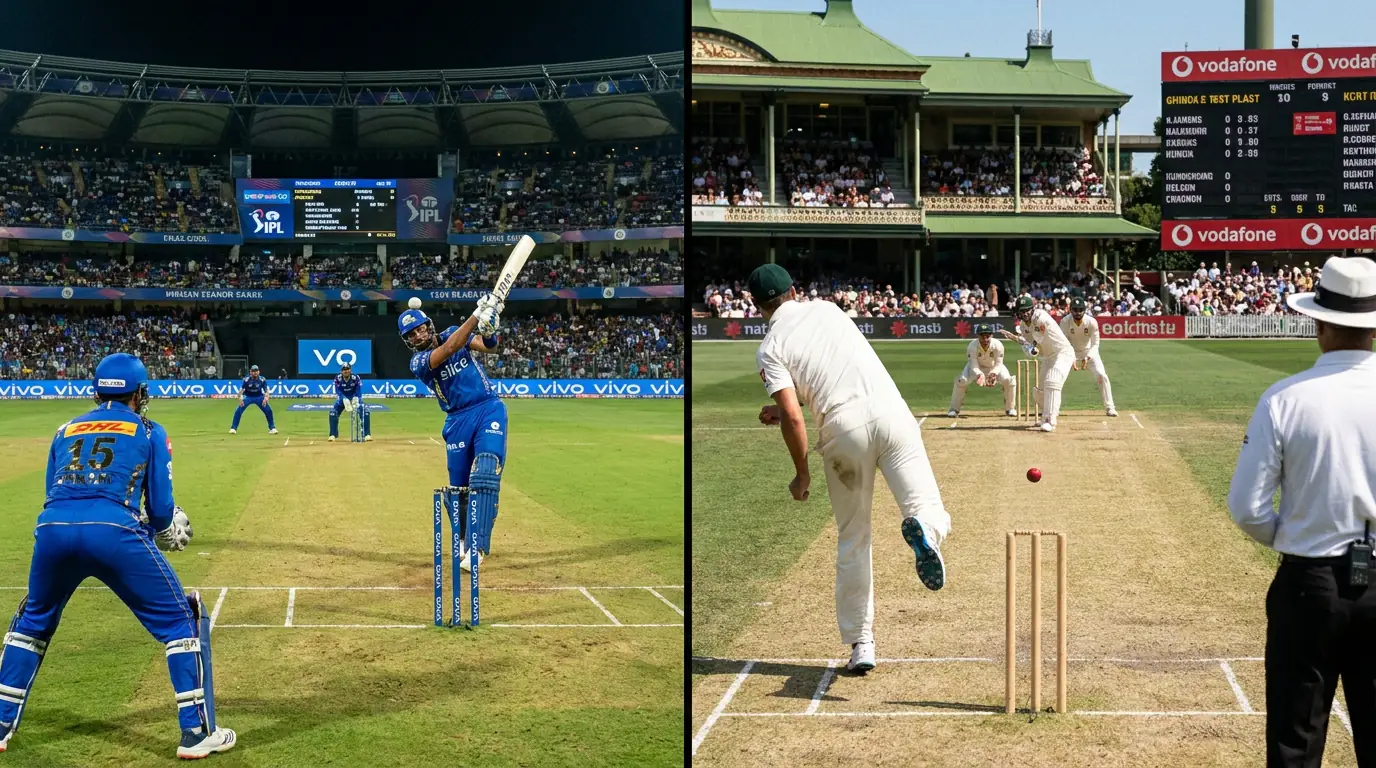
Test cricket sits at the opposite pole. Five days, a draw as a genuine outcome, and a slow accumulation of advantage that can reverse in a single session. I love Test betting now, but I’d never push it on a newcomer. The draw alone catches out everyone at first, because backing a team to win and watching the match peter into a stalemate feels like losing on a technicality, even though that’s exactly how the market is meant to work.
My honest recommendation is to cut your teeth on T20 and The Hundred, where the rules of engagement are simplest, then graduate to one-day internationals, and only then explore Tests and the County Championship once you understand how conditions and time change everything. The County Championship, England’s oldest domestic competition running since 1890 across eighteen counties in two divisions, gives you a long season of four-day cricket from April to September, which is wonderful for the experienced bettor and bewildering for the beginner. Walk before you run. Pick the format that gives you fast, clear lessons, and let the longer games come to you.
The Bankroll Talk Nobody Wants but Everybody Needs
Around 22.5 million adults in Britain place a bet each month, and I’d wager that a sizeable chunk of them have never once sat down and decided, in advance, how much they’re willing to lose. That single omission causes more grief than any bad tip ever could. So let’s have the conversation that the welcome offers never will.
A bankroll is simply the pot of money you’ve set aside for betting, money you’ve already mentally written off, separate from rent, bills and savings. The whole discipline of betting responsibly starts here, because once that pot is defined, every decision gets easier. You’re no longer betting “money”, an abstract and dangerous thing, you’re betting units of a fixed pot you chose with a clear head. I keep mine deliberately modest and treat it like the cost of a hobby, because that’s what it is.
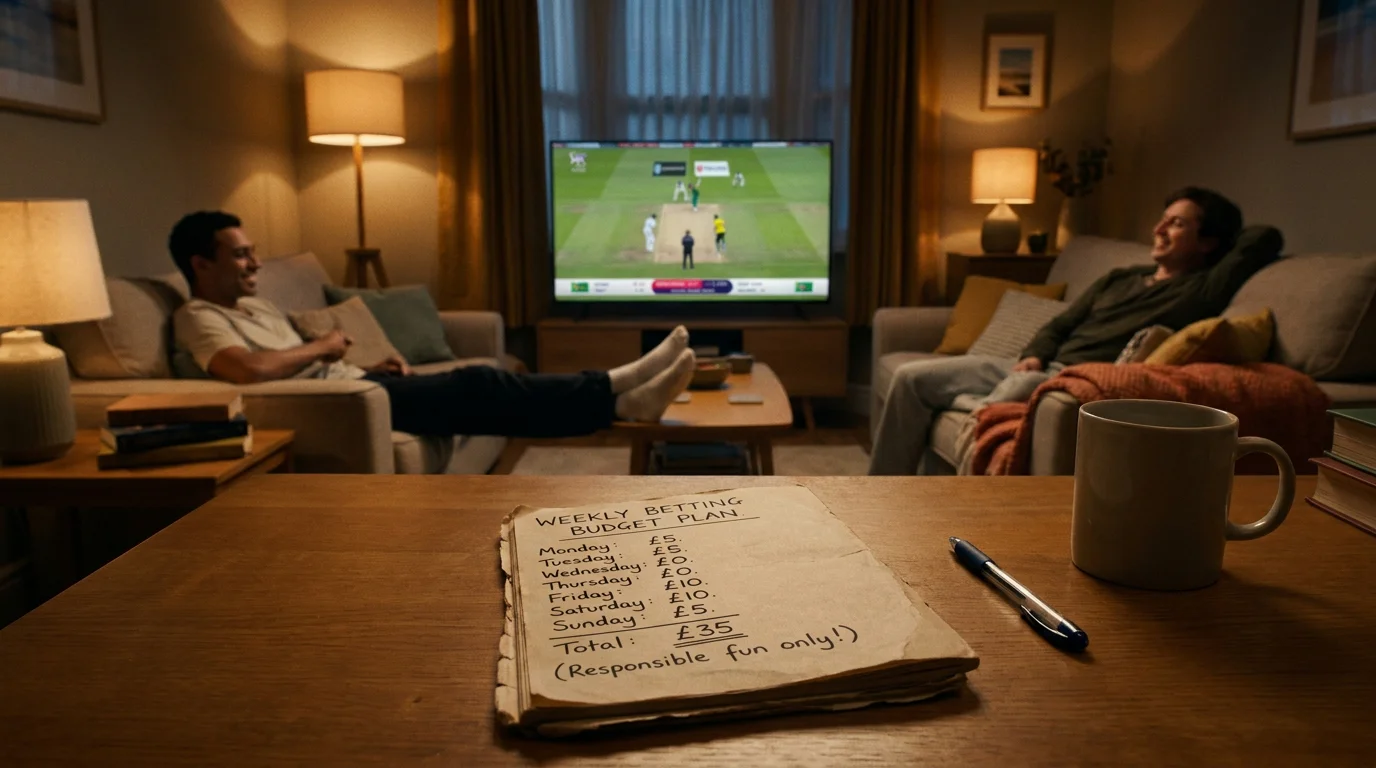
The rule I live by is staking a small, consistent fraction of that bankroll per bet, rather than varying wildly with how confident I feel. Confidence is a liar in betting. The matches I’ve been most certain about have lost as often as the ones I agonised over. By keeping stakes flat and small, you remove emotion from the equation and you make it almost impossible to do real damage in a bad run. A flat-staking beginner who loses ten bets in a row is barely dented. A beginner who doubles up to “win it back” can empty an account in an afternoon.
Chasing losses is the cardinal sin, and it has a specific psychology worth naming. After a loss, your brain wants to make it right immediately, so it whispers that a bigger bet on the next game will square things up. It won’t. It just raises the stakes on a coin you don’t control. The professionals I respect are ruthlessly boring about this. They set limits, they stick to them, and they walk away when the pot for the week is spent. The tools to enforce this are built into every licensed UK site, deposit limits, time-outs, self-exclusion, and they exist precisely because the industry now operates under far stricter expectations. Use them before you think you need them. The bettor who sets a deposit limit on day one is the bettor still enjoying this in year seven.
The Beginner Errors I See on Repeat
If I had a pound for every newcomer who told me they “knew” a heavy favourite was a certainty, I’d have funded my bankroll many times over. Cricket punishes that certainty more than almost any sport, and the gender and demographic patterns in who bets tell part of the story. Around 16% of men reported betting in the previous four weeks against 4% of women, and the most active group by some distance is 25 to 34 year olds, exactly the demographic most prone to the confident, impulsive errors I’m about to list.
The first mistake is overvaluing favourites. A short-priced team in cricket is far from a sure thing, because the sport is riddled with variance. A single collapse, a turning pitch, a dropped catch, and the “certainty” evaporates. New bettors pile onto favourites at odds that offer no value, then feel cheated when cricket does what cricket does. The fix isn’t to avoid favourites, it’s to stop treating any cricket outcome as guaranteed.

The second is betting on too much. There’s a fixture somewhere in the world almost every day, and the temptation to have action on all of it is enormous. Resist it. The bettors who do well are selective, betting the matches they actually understand and passing on the rest. Betting is the third most popular gambling activity in Britain after lotteries and scratchcards, with around 10% participating over a four-week window, and I promise the successful tenth are not the ones betting every match in sight.
The third is ignoring the bet slip details, which loops us right back to where we started. Backing the wrong market, misreading whether returns include the stake, accidentally building an acca when you meant a single, these are unforced errors that cost real money. Slow down. The match isn’t going anywhere. And the fourth, quietly the most damaging, is betting while emotional, after a few drinks, or to recover a bad day. None of those states improve your judgement. The whole point of the process I’ve laid out, the licensed site, the understood slip, the deliberate stake, the defined bankroll, is to build a system that protects you from yourself on the days your judgement isn’t there. That system, not any single winning bet, is what separates the people who enjoy cricket betting for years from the ones who flame out in a fortnight.
What is the smallest stake I can place on a cricket match?
Minimum stakes vary by operator, but most licensed UK bookmakers let you bet from a few pence up to a pound on standard markets, with some allowing single-penny stakes. There’s no regulatory minimum on a bet itself, so you can start as small as you like while you learn. Starting tiny is exactly what I’d recommend for your first dozen bets, because the goal is to understand the mechanics, not to win money.
Do I need an account verified by the bookmaker before betting?
Yes. UK licensed operators are required to verify your identity and age before you can bet, usually by confirming your name, address and date of birth, sometimes with a document upload. This is a legal requirement tied to the operator’s licence and the 18-plus rule, not an optional hoop. Complete verification when you open the account rather than at withdrawal, so there’s no delay when you want to take your winnings out.
How long does it take for a winning cricket bet to be paid out?
Once a market settles, which for a match-winner bet is shortly after the result is confirmed, winnings land in your account balance automatically, often within minutes. Withdrawing that balance to your bank or card is a separate step and typically takes anywhere from a few minutes to a few working days depending on the operator and payment method. Check the withdrawal terms before you deposit, since this is where slow operators reveal themselves.
