
 Available in US
Content

If you only ever place one type of cricket bet for the rest of your life, it’ll be this one. The match winner market, simply backing the side you think will win, is the front door to cricket betting and the market through which the overwhelming majority of money flows. It looks like the simplest bet in the sport, and in limited-overs cricket it very nearly is. In Test cricket it hides a trap that has emptied more wallets than any other single misunderstanding I’ve witnessed.
The match winner market does exactly what the name promises: you pick a team, and if they win the match, you collect. Settlement is clean, the margins are usually among the tightest you’ll find because competition for this turnover is fierce, and the outcome is the one every casual viewer is already rooting for anyway. That accessibility is its strength and, as we’ll see, occasionally its disguise.
How the Market Settles When the Match Ends
The cleanest way to understand match-winner settlement is to picture two completely different scenarios that look identical on your bet slip. In a one-day international, you back a team, they score more than the opposition, you win. Done. In a Test match, you back a team, they comfortably outplay the opposition for four and a half days, rain washes out the last session, the game is drawn, and your bet loses. Same market name. Wildly different reality.

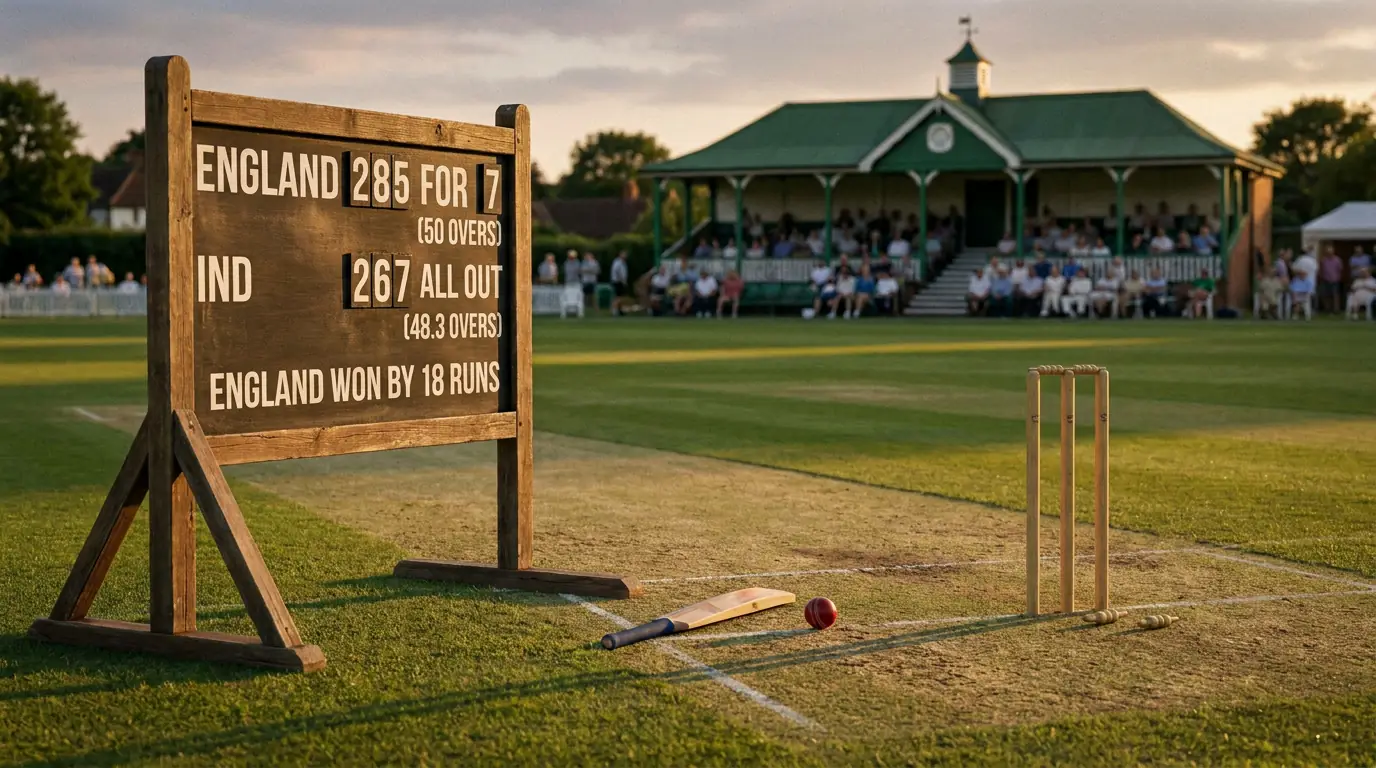
In limited-overs cricket, every completed match produces a winner, so the match winner market is effectively a two-way bet. Either your team wins or it doesn’t. Implied probabilities sit close to a fair 100 per cent plus a thin margin, and because so much money pours through these headline markets, you’ll rarely find a sharper price anywhere in the sport. This is genuinely close to the simplest proposition in betting, and it’s a perfectly sensible place for a newcomer to start.
Test cricket breaks that simplicity, because a Test can be drawn. That makes the market three-way: home win, away win, or the draw, and your “match winner” bet only pays if your chosen side actually wins outright. A draw is a loss for both the home and away backers, which catches out an astonishing number of newcomers who assume their dominant team “did enough”. They didn’t do enough; they needed to finish the job inside the time, and Test cricket gives them only five days to do it. The whole world bet roughly 76.5 billion US dollars on cricket in 2023, and a meaningful slice of those losing stakes were perfectly good predictions undone by a draw the bettor never priced in.
The Draw Problem That Catches Everyone Out
Let me tell you about the bet that taught me to respect the draw. England were grinding a touring side into the dust, two days to play, and I backed them at what looked like a generous price. They batted, declared, had the opposition four down and miles behind, and then the weather closed in. Two full days lost. Drawn match. My “certainty” returned nothing, and the lesson cost me enough to remember it permanently.
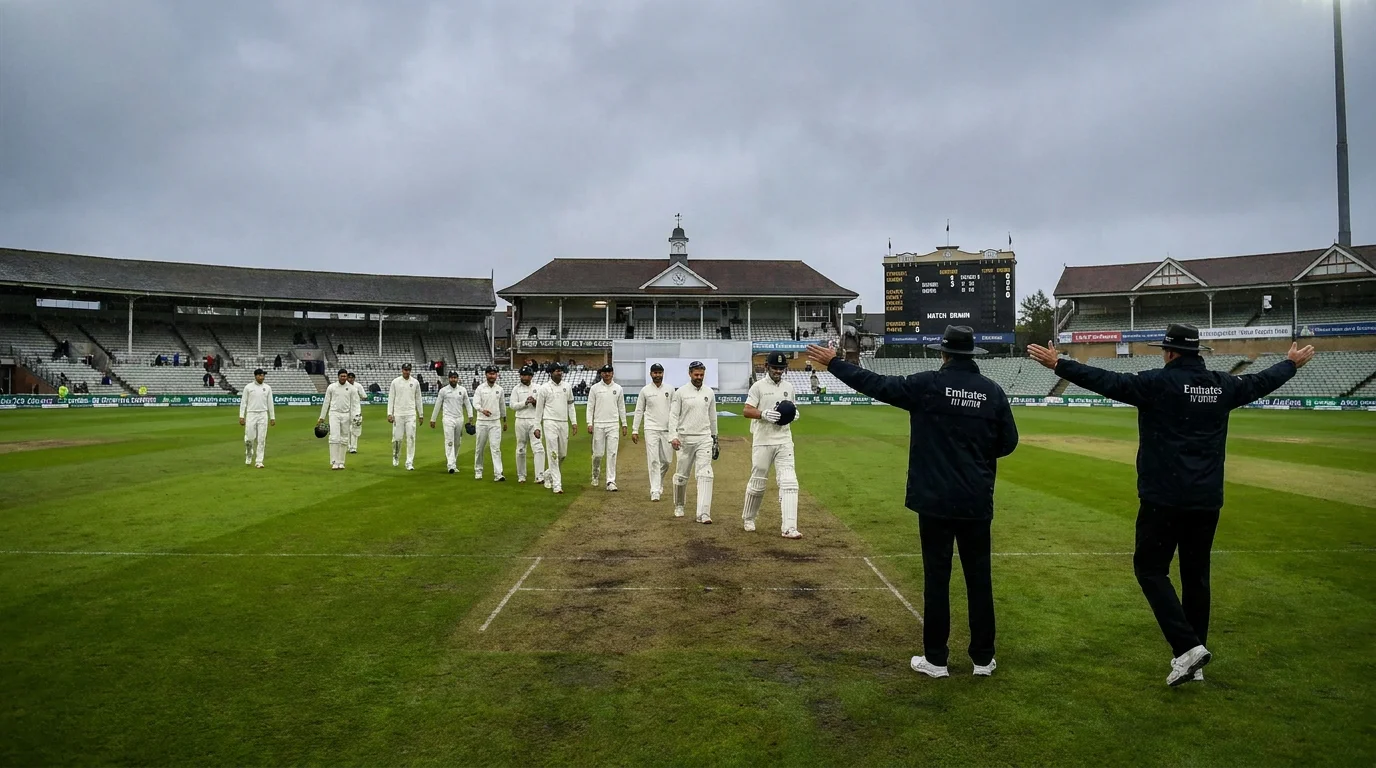
The draw isn’t a quirk to be tolerated; in Test cricket it’s a genuine third competitor that needs pricing into your thinking on every single bet. A side can be dominant and still fail to win, because winning a Test requires taking twenty wickets in the time available, and time is fragile. Rain, a slow over rate, a stubborn lower-order partnership, a flat fifth-day pitch that refuses to deteriorate, any of these can convert a thrashing into a draw. When you back a team to win a Test, you’re not just betting they’re better; you’re betting they’re better and that there’s enough time and enough help in the conditions to convert that superiority into ten more wickets.
This is why I weigh the match situation and the forecast as heavily as the team quality before backing a Test winner. A strong side batting first on a placid surface with rain forecast for the back end is a far worse winner-bet than the same side bowling last on a crumbling pitch under clear skies, even though they might be priced similarly on reputation alone. The draw is the silent variable, and the punters who lose to it are almost always the ones who only looked at which team was better.
There is a clean solution to the draw problem, and it’s a separate market built specifically to neutralise it. If the draw is the thing standing between your good read and a winning bet, the draw-no-bet market refunds your stake when a Test is drawn, and I’ve broken down exactly how that works and when it’s worth the slightly shorter price in my guide to draw no bet in cricket. For now, just internalise the core lesson: in a Test, “they’ll win” and “they won’t lose” are two very different bets.
Reading Favourites and Outsiders With Clear Eyes
Backing favourites feels safe and backing outsiders feels clever, and both instincts will quietly drain your account if you follow them blindly. The market is usually right about who’s more likely to win; what it can’t tell you is whether the price on offer is actually good value, and that’s the only judgement that matters.
A heavy favourite at a short price is a perfectly fine bet only if you think they’re even more likely to win than the price implies. Backing a 1.30 shot because “they’re bound to win” ignores that you’re risking a lot to win a little, and that the occasional upset will wipe out a long run of those small returns. Conversely, an outsider at a big price isn’t automatically value just because the number’s large; it’s value only if the team’s true chance is better than the implied probability the price represents. This is where converting odds into a percentage chance becomes essential rather than optional, and the mechanics of that conversion sit at the heart of reading any cricket price properly.
The other thing to read clearly is what kind of favourite you’re looking at. A favourite priced up on reputation, a famous side having a poor run, is a different proposition from one priced on current form and conditions. The market often clings to reputation a beat longer than it should, which occasionally leaves genuine value on a strong-but-unfashionable side or, more often, leaves you overpaying for a famous name coasting on past glories. I treat every favourite as a question rather than an answer: not “are they good?” but “are they this good, at this price, in these conditions, with this much time?”
Get those reflexes working and the match winner market reveals itself as exactly what it is: not the boringly simple bet it first appears, but a deceptively rich one where format, conditions, time and price all have to line up. It remains the right starting point for anyone learning to bet on cricket, precisely because mastering it teaches you to think about all the things that separate a good prediction from a winning bet. Get comfortable here, respect the draw, read the price as a probability, and you’ll have built foundations that hold up across every other market in the sport.
What happens to a match-winner bet if a Test is drawn?
Both the home-win and away-win bets lose. A standard Test match-winner market is three-way, with home, away and the draw as separate outcomes, so backing a team to win returns nothing if the match ends drawn, no matter how dominant that team was.
Does a tie count as a win on this market?
No. A tie, where the scores finish level, is a distinct result from a win and from a draw, and a match-winner bet on either side will be settled as a loss. Some operators offer specific tie or dead-heat rules, so it’s worth checking the market terms on any format where a tie is possible.
