
 Available in US
Content

Spread betting is the only form of cricket betting that can take more from you than you put in, and that single fact should be tattooed on the inside of every newcomer’s eyelids before they go anywhere near it. It’s a market built for people who understand exactly what they’re doing, where the rewards scale with how right you are and the losses scale with how wrong you are, without the comforting ceiling that a normal bet provides. Used knowingly, it’s a powerful tool. Used carelessly, it’s the fastest way to lose far more than you planned.
In spread betting, the bookmaker quotes a spread, a small range, around a predicted outcome such as total match runs, and you bet on whether the real figure will land above or below it. Crucially, you don’t win or lose a fixed amount; you win or lose your stake multiplied by how far the result lands from the spread. Be a little right and you win a little; be massively right and you win a lot; be massively wrong and the losses keep climbing with no natural stopping point. That variable payout is the entire character of the market, and it’s why I’m spending this whole article warning you as much as explaining.
How Spreads Differ From Fixed-Odds Betting
The cleanest way to feel the difference is to imagine the same opinion expressed two ways. In a fixed-odds over/under, you back the over at a set price; you risk your stake and you can win a defined amount, no more and no less, however the runs pile up. In spread betting, you “buy” runs at the top of the spread, and if the total comes in well above it, your profit grows with every run beyond the spread, but if it comes in well below, your loss grows with every run short. Same view, radically different risk shape.

A worked example makes it concrete. Suppose a spread firm quotes total match runs at 480 to 490. If you think there’ll be a glut of runs, you buy at 490 for, say, two pounds a run. The match produces 560 runs, which is 70 runs above your buy point, so you win 70 multiplied by two pounds, a tidy 140 pounds. But flip it: the match collapses for 380 runs, 110 below your buy point, and you lose 110 multiplied by two pounds, which is 220 pounds, considerably more than you might have imagined risking on a “two pounds a run” bet. The stake-per-point structure hides how large the total exposure can become.
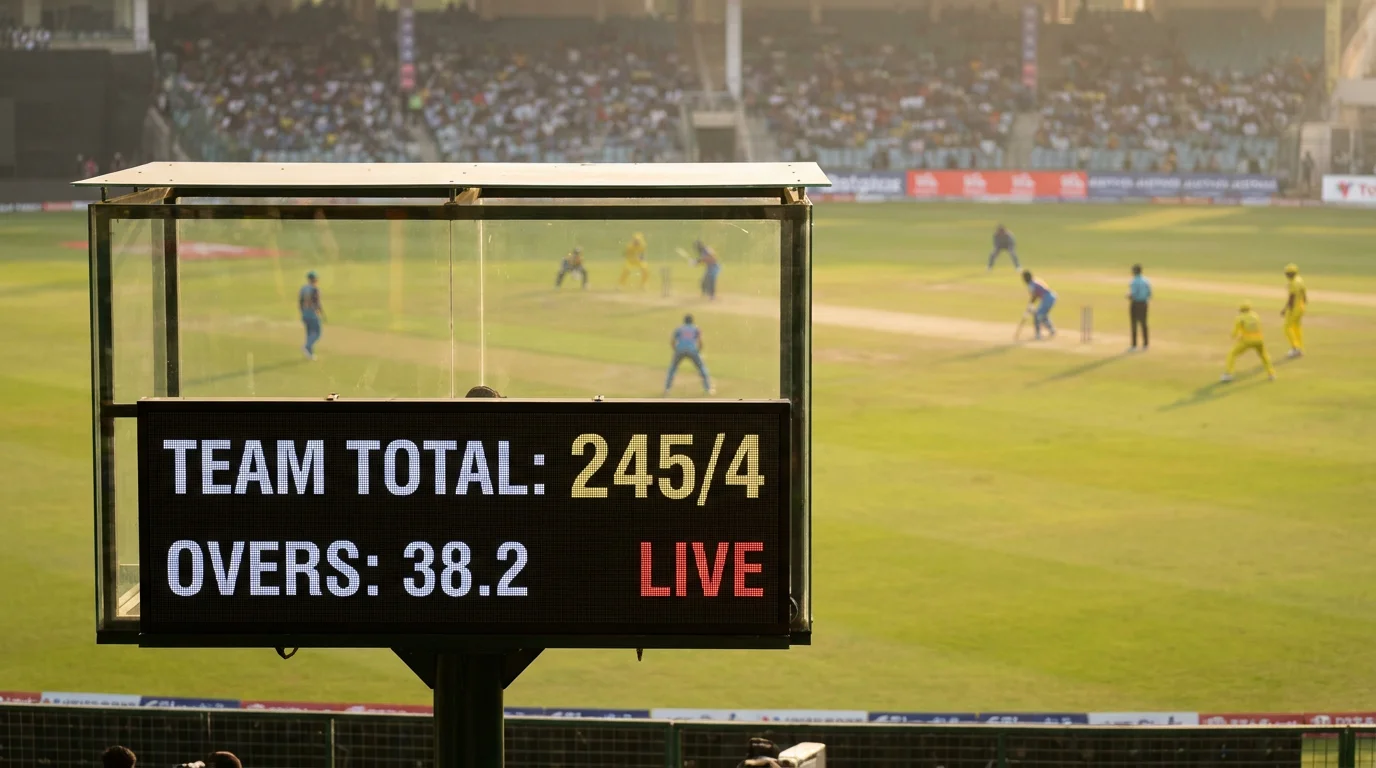
That hidden magnitude is the core danger. In fixed-odds betting your maximum loss is always visible: it’s your stake, full stop. In spread betting your maximum loss on a buy is theoretically capped only by how low the figure can go, and on a sell it can be alarmingly large, because there’s no upper limit on how high runs or other figures might climb. The reason this market sits apart from the broader runs markets is precisely this uncapped downside, and if your interest is really in betting totals safely, the fixed-odds version with its defined risk is the place to be, which I’ve covered fully in my guide to over/under runs betting in cricket.
Buying and Selling the Spread in Practice
Once you’ve internalised the danger, the mechanics themselves are elegant. You “buy” if you think the real figure will be higher than the spread and “sell” if you think it’ll be lower, and your profit or loss is the distance between the result and your entry point, multiplied by your stake per point. It’s a remarkably direct way to express a strong, specific view about a quantity rather than just an outcome.

The markets suit conviction about magnitude rather than about winners. Total match runs, a team’s total, total fours and sixes, the number of wickets in an innings, individual batting performances, all of these can be spread-bet, and they reward a punter who has a genuinely strong read on how extreme a figure will be. If you’re certain a flat pitch and a fast outfield will produce a run feast, buying total runs lets you profit from being not just right but emphatically right, in a way a fixed-odds over can’t match. The flip side, of course, is that a misread on the same market punishes you with the same emphasis.
There’s a particular trap I want to flag, because it catches even experienced bettors: the “in-running” spread bet that you forget to close. Many spread markets stay open during play, and a position you opened expecting a high score can run away from you catastrophically if the game swings, with losses mounting ball by ball while you’re not watching. The relentless pace and the open-ended exposure make this a market where inattention is expensive. Betting is a genuinely mass-market pastime in Britain, with overall four-week participation at 27 per cent once lottery-only players are excluded, yet spread betting is emphatically not a mass-market product, and the gap between the two tells you how specialised and how unforgiving this corner is. Spread betting demands active management, a clear plan for when you’ll close a position, and the emotional discipline to take a defined loss rather than hoping an uncapped one will reverse. That discipline matters across all betting, but here the stakes of getting it wrong are uniquely severe.
Why the Losses Can Spiral and How the UK Treats It
The phrase that should stay with you is “lose more than your stake”, because in cricket spread betting that isn’t a remote edge case; it’s a routine outcome when a market moves hard against you. A single dramatic passage of play, a collapse of seven wickets in a session, a wholly unexpected run glut, can turn a modest-looking position into a loss several times the size you anticipated.

This is why I treat spread betting as categorically different from everything else in cricket wagering, and why the regulatory framework treats it differently too. In the UK, financial spread betting is regulated separately from ordinary fixed-odds gambling, falling under financial-services rules rather than the standard betting framework, precisely because its risk profile resembles a leveraged financial product more than a traditional bet. That distinction isn’t bureaucratic trivia; it’s a signal that the authorities recognise this product as carrying a different and larger order of risk, and you should read that signal seriously. It also attracts a narrow, experienced slice of the betting public rather than the casual majority: across Great Britain, 16 per cent of men against just 4 per cent of women report having bet in the last four weeks, and spread products skew toward exactly the confident, high-conviction end of that already lopsided market, the people who believe they understand the leverage involved.

My honest advice, after years of watching people meet this market, is to approach it last, not first. Master fixed-odds betting, where your risk is always visible and capped, until the principles of value and discipline are second nature. Only then, if the variable-payout structure genuinely suits a strong, specific edge you’ve identified, should you consider spread betting, and even then with stakes small enough that an uncapped loss can’t do real damage. The escalating-loss mechanism that makes spread betting powerful for the few is the same mechanism that ruins the many who treat it like an ordinary bet. Know which group you’re in before you place a single position, and if there’s any doubt, the answer is the safer, fixed-odds market every time.
Can I lose more than my initial stake on a cricket spread?
Yes, and routinely so. Your loss is the distance between the result and your entry point multiplied by your stake per point, with no natural ceiling, so a market that moves hard against you can produce a loss several times what you expected to risk. This uncapped downside is what sets spread betting apart from fixed-odds.
Is spread betting regulated differently in the UK?
It is. Financial spread betting falls under financial-services regulation rather than the standard gambling framework, because its leveraged, variable-payout structure resembles a financial product more than a traditional fixed-odds bet. That separate treatment reflects the larger and different order of risk it carries.
