
 Available in US
Content

The County Championship is the betting market that time forgot, and that’s exactly what makes it interesting. Four-day cricket played at outgrounds in front of a few hundred spectators, often a member dozing in a deckchair, generates the thinnest, least-bet markets in English cricket. Where most punters see tedium, the patient bettor sees prices that nobody is bothering to sharpen, and a season long enough for a real edge to express itself match after match.
The County Championship is England and Wales’s oldest domestic competition, running since 1890, with eighteen counties split across two divisions playing four-day red-ball cricket from April to September. That long, slow rhythm, the longest betting calendar of any English competition, combines with low public interest to produce markets that reward deep knowledge and sustained attention far more than the heavily-bet, tightly-priced glamour formats ever could.
Division Structure and the Markets It Creates
The structure of the Championship shapes its betting in ways that catch out anyone who treats it like a series of one-off matches. Two divisions, promotion and relegation, a long table that takes the whole summer to settle: this is a competition where the season-long outright markets, division winner, promotion, the relegation scrap, often hold more value than the individual match odds, because they reward a punter who reads the campaign rather than the day.

The County Championship’s roots stretch back to 1890, and across that long history the eighteen counties have developed distinct identities, strengths and home conditions that feed directly into the markets. The individual four-day match markets are three-way, like any red-ball game, with the draw a constant and significant presence, and county cricket produces draws at a high rate because four days isn’t always enough to force a result on a placid surface. That makes the draw a live factor in every match bet, and a punter who fails to price it properly will lose perfectly good predictions to stalemates, exactly the trap that catches out Test bettors. The mechanics of neutralising that draw risk, when it’s worth paying for and when it isn’t, carry straight over from the longer international format and I’ve laid them out in my guide to draw no bet in cricket.
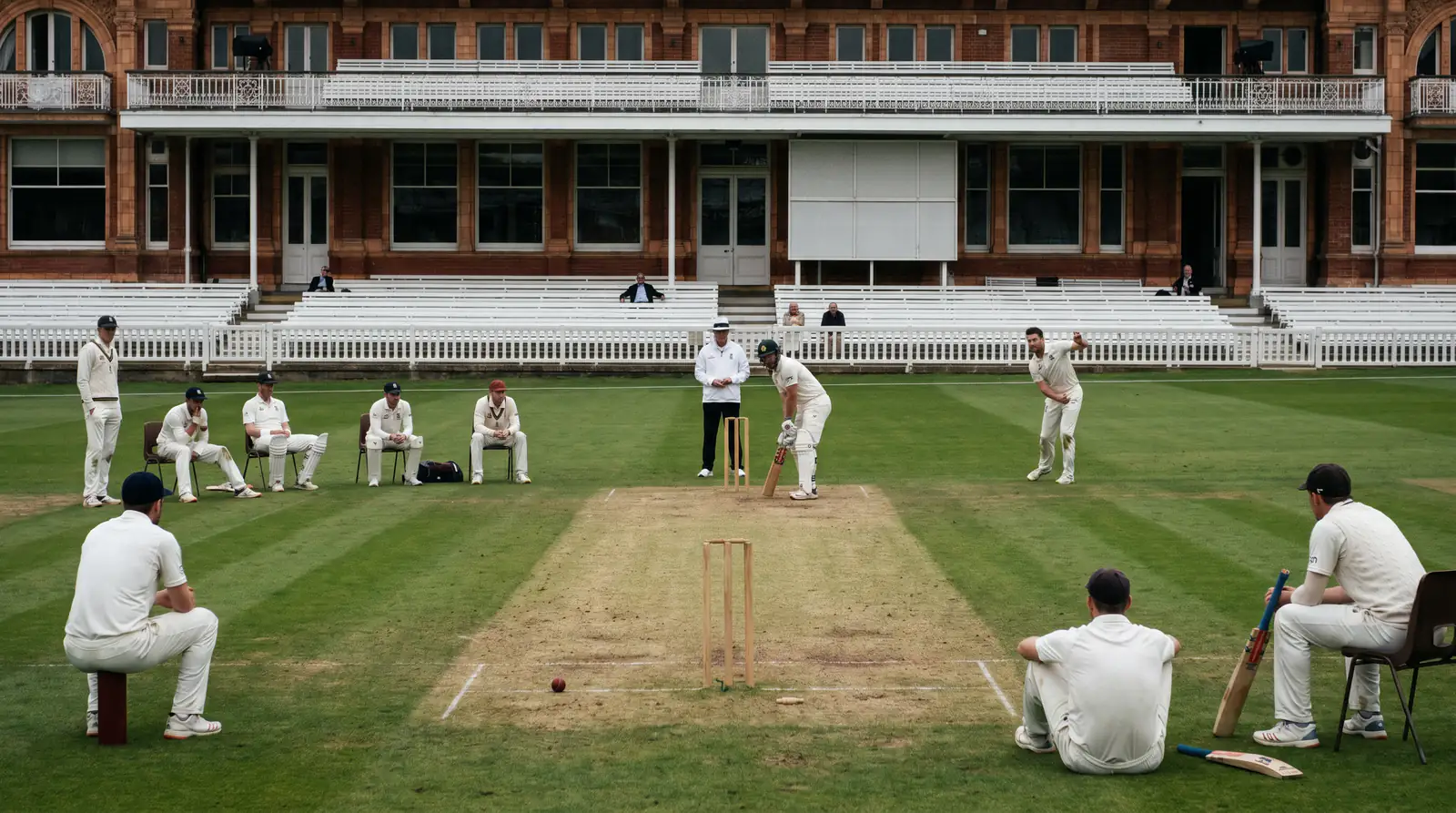
The season-long markets are where I focus most of my Championship attention, because they reward the kind of structural insight that the thin match markets sometimes don’t have the liquidity to express. Which counties have strengthened their bowling, the engine of four-day success; which have lost key players to international call-ups or the white-ball circus; which division a side is genuinely equipped to compete in rather than merely survive: these reads compound across a long season into outright value that the casual market, paying little attention to red-ball county cricket, rarely prices correctly from the start.
Early-Season Conditions and the Bowler’s Advantage
Ask any county pro which part of the season they dread batting in, and they’ll point to April, and that single fact is one of the most reliable betting edges in the English calendar. Early-season County Championship cricket is played in cold, often damp conditions on pitches with grass left on for protection, under skies that keep the ball swinging, and the result is a pronounced and persistent advantage for the bowlers.

The pattern is concrete enough to bet on with confidence. In April and early May, the combination of green pitches, heavy atmosphere and lateral movement means scores are routinely lower than punters conditioned by midsummer cricket expect, wickets fall in clusters, and the seamers dominate. Totals markets that haven’t fully adjusted for early-season conditions offer real value on the under, and match markets can underrate a county with a strong seam attack playing at home on a helpful surface. I’ve made more reliable money betting low totals in April than in any other phase of the county season, simply because the conditions are so predictable and the broad market is so slow to respect them.

As the season warms, the edge reverses and demands a different read. By midsummer the pitches dry and harden, the grass is cut, the atmosphere lightens, and run-scoring becomes far easier, which lifts totals and brings the spinners into play on surfaces that start to take turn. The punter who tracks this seasonal arc, bowler-friendly in spring, batter-friendly in summer, spin-friendly as pitches wear, has a framework for reading every county match that the occasional bettor lacks entirely. Conditions, more than reputation, drive four-day cricket, and the County Championship’s long calendar gives those conditions time to swing through their full range.
Long-Season Value and the Patience It Demands
The defining feature of County Championship betting is that it’s a marathon, and the edge belongs to the bettor with the temperament for a marathon. There’s no instant gratification here, no Saturday-afternoon thrill; there’s a long, slow accumulation of value across a summer of matches that most of the betting public ignores entirely, and that neglect is the whole opportunity.

Long-season value comes from the simple fact that thin, lightly-bet markets are mispriced more often than deep, heavily-bet ones. The international and white-ball markets are kept honest by huge volumes of sharp money; the County Championship is kept honest by almost nobody, which means a bettor who actually does the work, following the counties, the conditions, the team news that barely makes the national press, finds genuine inefficiencies that simply don’t survive in higher-profile markets. The catch, and it’s a real one, is liquidity: county markets can be so thin that getting a meaningful stake matched at a good price is itself a challenge, which caps how much an edge is worth in practice and rewards the betting exchange over the traditional bookmaker for anyone wanting to lay a position or trade out.
The patience this demands is genuine and not everyone has it. You’re betting a competition that unfolds over five months, where a single match means little and the value reveals itself only across the long arc of a season, and where the markets are so quiet that you’ll often be one of very few people taking a particular price. That solitude is the point: it’s precisely because the County Championship is unfashionable, slow and lightly bet that it rewards the diligent so well. It’s a striking contrast with the wider direction of travel, where the cricket segment is forecast to be among the fastest-growing in the entire betting market on the back of the short formats, while the long red-ball game quietly remains the least-bet and most mispriced corner of all. If you have the temperament to follow red-ball county cricket properly, to read the conditions and the campaign rather than chasing the next quick result, the oldest competition in English cricket offers an edge that the glamorous formats have long since priced away. The unglamorous truth is that the markets nobody watches are the ones most worth watching.
Why do early-season county matches favour bowlers?
Because April and early-May cricket is played in cold, often damp conditions on pitches with grass left on, under skies that keep the ball swinging. The combination of green surfaces, heavy atmosphere and lateral movement means lower scores, clustered wickets and seamer dominance, a pattern reliable enough to bet on with confidence in the totals and match markets.
How thin are county betting markets?
Very. The County Championship attracts little public money compared with international or white-ball cricket, so markets can be illiquid and getting a meaningful stake matched at a good price is itself a challenge. That thinness is why the markets are often mispriced, but it also caps how much an edge is worth in practice.
