
 Available in US
Content

People imagine a bookmaker setting cricket odds as a wise old hand gazing at a pitch and deciding, on a hunch, that England are about 4/6. The truth is far less romantic and far more interesting. A modern price is born from a statistical model, refined by a human trader, and then shoved around relentlessly by the weight of money landing on it. Understanding that journey, from model to screen to your bet slip, is what lets you work out whether a price is sharp, soft, or about to move under your feet.
The official line on why all this machinery exists is blunt. As the ICC’s anti-corruption people put it, “advancing technology and increasing popularity have led to a substantial increase in the amount, and the sophistication, of betting on cricket matches.” That sophistication runs in both directions: the bettors got sharper, so the pricing had to get sharper too, and what was once a chalkboard guess is now a continuously updated forecast competing against thousands of other forecasts in real time.
The Models, the Data and the Traders Behind a Price
I once asked a former trader how he’d have priced a county match with two key players rested, and his answer stuck with me: “The model gives me a number, and then I decide how much I trust it.” That sentence is the whole job. The price you see is never purely a machine output and never purely a human opinion. It’s a negotiation between the two.

It starts with the model. Bookmakers run statistical engines fed on enormous historical datasets: head-to-head records, venue scoring patterns, player form, the behaviour of similar matches in similar conditions. The model digests all of that and spits out a baseline probability for each outcome, which is then converted into odds with the margin folded in. For a high-volume international, that baseline is genuinely formidable, drawing on far more data than any individual could hold in their head. The cricket segment is forecast to be among the fastest-growing in the whole betting market thanks to the surge in short formats, and that growth has poured investment into ever-better pricing models, because the operators taking the most cricket money simply cannot afford to price it crudely.

Then the trader steps in, and this is where judgement enters. The model doesn’t know that a captain hinted at resting his strike bowler, or that the groundsman has left extra grass on, or that overnight rain has changed everything the historical data assumed. The trader overlays that soft information, nudging the model’s output up or down, and decides how much liability the book can carry on each outcome. On obscure matches the model leans heavily on thin data and the trader leans heavily on instinct, which is precisely why margins are wider there: the price is less certain, so the house protects itself with a bigger cushion. On a marquee Test, the model is confident and competition is brutal, so the trader squeezes the margin thin and the price ends up sharp.
How and Why Those Prices Move
The single biggest misconception I meet is that odds move because the bookmaker has changed its mind about who’ll win. Sometimes that’s true. Far more often, odds move because money has moved, and the bookmaker is simply managing its book rather than revising its forecast. Mistake one for the other and you’ll badly misread the market.

A bookmaker’s first instinct is to balance its book, taking roughly even liability on each outcome so it profits from the margin regardless of the result. When a flood of money lands on one side, the bookmaker shortens that side’s price to discourage further bets and lengthens the other to attract them, pulling the book back toward balance. So a price drifting in is often telling you where the money’s going, not where the truth is. The concentration of UK betting magnifies this: with William Hill and Bet365 together drawing more than half of all British betting search clicks in early 2026, a surge of money through the biggest operators can shift a price across the whole market in minutes.
That said, there’s a second, sharper kind of move, and learning to tell the two apart is a genuine edge. When a small amount of money from a handful of known-sharp accounts moves a price, bookmakers react far more aggressively than the stake size alone would warrant, because they suspect that money knows something. This is “sharp money” versus “public money”, and a price that lurches on tiny volume is usually responding to the former. I watch for prices that move against the run of public sentiment, because those moves tend to carry real information rather than just the crowd’s mood.
The honest practical lesson is about timing. If you’ve genuinely found a price you believe is wrong, the value is liable to evaporate the moment enough other people notice, so hesitation costs you. But chasing a price that’s already moved, piling in after it’s shortened, usually means you’re buying the move rather than beating it. Reading why a price is moving, money or information, is what tells you which of those two situations you’re in.
Reacting to Team News and Conditions
Team news is where cricket pricing gets genuinely frantic, and where an attentive punter can occasionally be quicker than the machine. The most dramatic regular swing comes from one piece of information that lands at a fixed moment before play: the toss, and the team sheets that surround it.
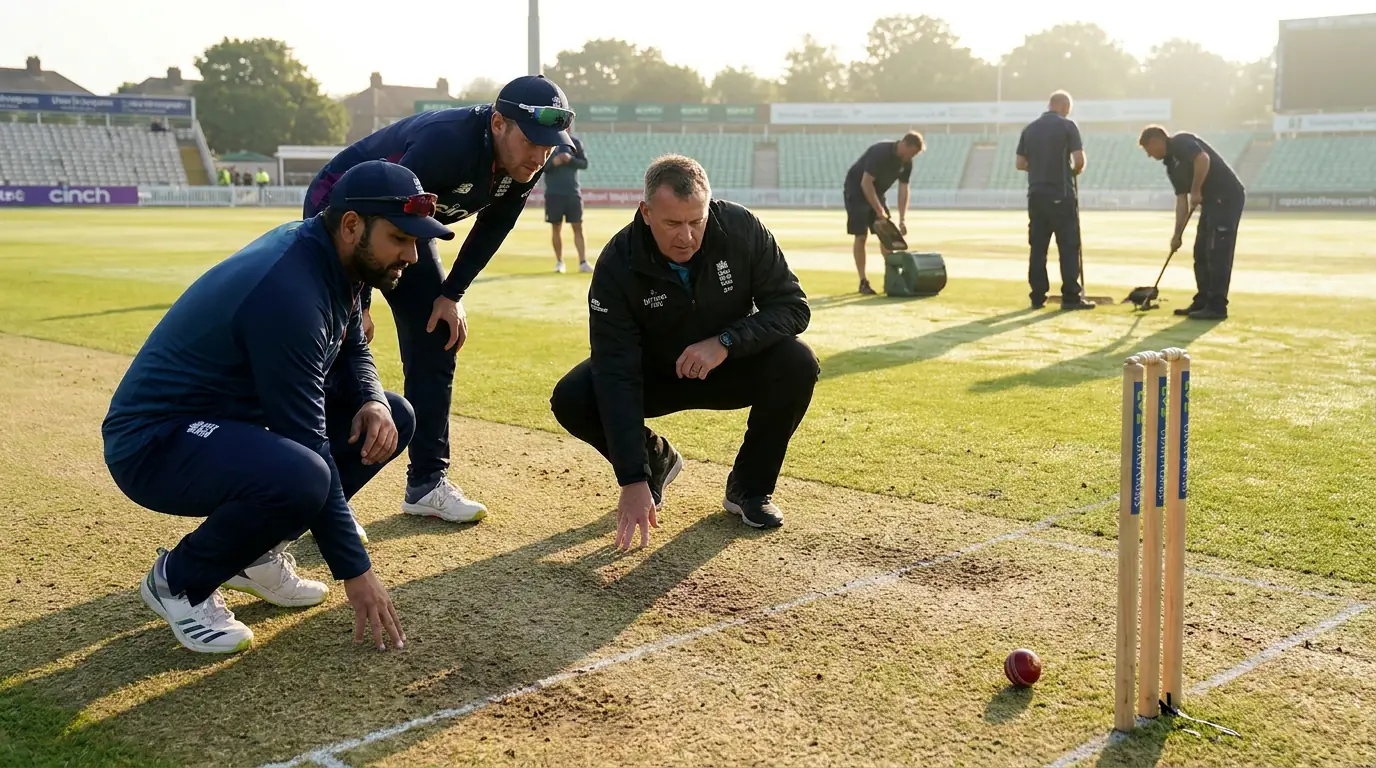
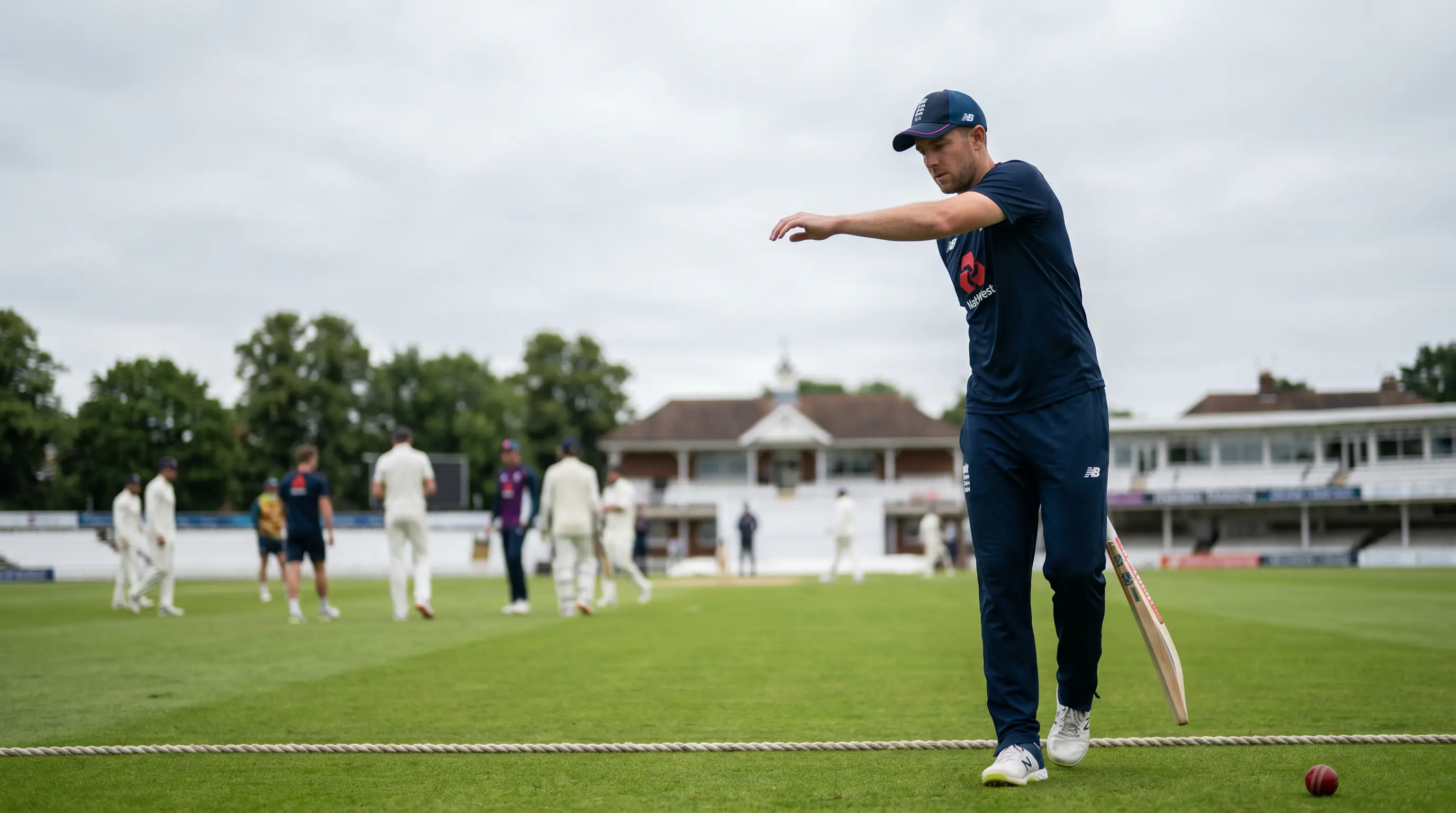
The instant a captain wins the toss and chooses to bat or bowl, every result and totals price in the market lurches, because the toss in certain conditions is a meaningful edge. The same goes for a late withdrawal: a strike bowler ruled out an hour before play can move a match-result price several points in seconds, as the model is re-fed and the trader scrambles to reprice. In a sport where a single player can swing an outcome, these are not gentle adjustments; they’re step-changes. This is also why I’m wary of betting too far ahead of confirmed line-ups, because the price I take in the morning may bear little relation to the price once the eleven is known.
Conditions feed in continuously rather than at a single moment, and the model handles them well in aggregate but poorly at the edges. Historical venue data tells the model that a particular ground tends to produce high scores, and the totals are priced accordingly. What the model handles less well is the specific, current state of the surface and the sky, which is where a trader who’s actually watched the pitch report earns their salary. The people setting the prices are reading exactly the same signals you are, just slightly faster, and turning that observation into a repeatable approach is the entire subject of my guide to value betting in cricket, where the goal is to act on a price you believe is wrong before the trader corrects it.
None of this means you can outgun a professional trading desk armed with a model you’ll never see. You can’t, and anyone selling you that fantasy is selling you a loss. What you can do is understand the forces shaping every price, so that when a number lands in front of you, you can ask the right question: is this a sharp price I should respect, a soft one I can attack, or a moving one I shouldn’t chase. Answer that honestly and consistently, and you’re already thinking like the people on the other side of the bet.
Do bookmakers copy each other’s cricket prices?
To a degree, yes. Operators watch the wider market and especially the sharpest exchanges, and a price that moves at a market-leading book will often be mirrored elsewhere within minutes. But each has its own model and risk position, so prices rarely match exactly, which is why shopping around still pays.
How fast do odds change after a wicket?
Almost instantly in live markets. A wicket re-feeds the pricing model with a materially different match state, and the trader’s screen updates within seconds. This is why in-play prices are frozen for a beat after each delivery, to let the model recalculate before bets are accepted.
